
Department Of Dubious Ideas: Dolphin-Assisted Therapy

Lori Marino digs into the long and twisted history of human belief in the healing and spiritual powers of dolphins, and then zeroes in on the claims (versus the ethics and reality) of “dolphin-assisted therapy” (DAT):

DAT typically involves several sessions either swimming or interacting with captive dolphins, often alongside more conventional therapeutic tasks, such as puzzle-solving or motor exercises. The standard price of DAT sessions, whose practitioners are not required by law to receive any special training or certification, is exorbitant, reaching into the thousands of dollars. It has become a highly lucrative international business, with facilities in Mexico, Israel, Russia, Japan, China and the Bahamas, as well as the US. DAT practitioners claim to be particularly successful in treating depression and motor disorders, as well as childhood autism. But DAT is sometimes less scrupulously advertised as being effective with a range of other disorders, from cancer to infections, to developmental delays.

While not always promising a cure, DAT facilities clearly market themselves as offering real therapy as opposed to recreation. Under minimal standards, authentic therapy must have some relationship to a specific condition and result in measurable remedial effects. By contrast, DAT proponents cite evidence that is, more accurately, anecdotal, offering a range of explanations for its purported efficacy, from increased concentration to brainwave changes, to the positive physiological effects of echolocation (high-frequency dolphin sonar) on the human body. Parents of autistic children and others who appear to benefit from DAT believe that these explanations are scientifically plausible. The photos of smiling children and the emotional testimonials from once-desperate parents are hard to resist. Even those sceptical of DAT’s scientific validity often just shrug and say: ‘What’s the harm?’ In the worst-case scenario a child who typically knows little enjoyment and accomplishment in life can find joy, a little bit of self-efficacy and connection with others for what is sometimes the first time in his life. But amid all the self-justification, the question most often left out is: what about the dolphins?

Great piece. Here is just one example what Marino and others who would debunk DAT are up against. It’s a classic example of human exploitation of other (needy) humans, and animals, for profit.
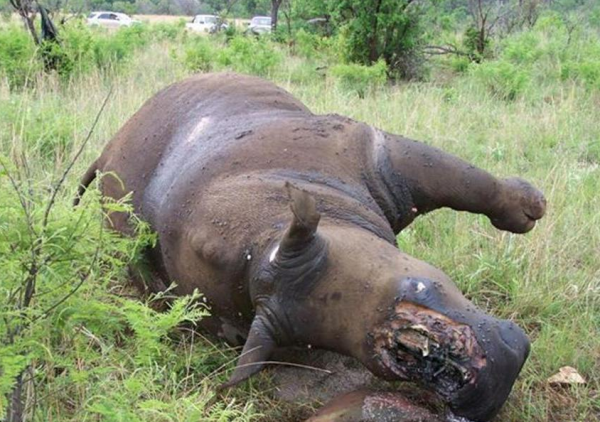
Seeing Is Important: Rhino Poaching

Screen Shot 2013-06-13 at 3.43.10 PM

I wonder if the (likely) Asian man who is using rhino horn powder to try and amp up his apparently unfulfilling life knows that this is on the other end of his desires.

What is truly devastating to see is that this rhino, found last April in Kruger National Park, is still alive [WARNING: very graphic and disturbing–but that’s the point]:

More info here.

Dalai Lama’s Instructions For Life

You could do a lot worse than these:

1. Take into account that great love and great achievements involve great risk.
2. When you lose, don’t lose the lesson.
3. Follow the three Rs:
—Respect for self
—Respect for others and
—Responsibility for all your actions. 
4. Remember that not getting what you want is sometimes a wonderful stroke of luck.
5. Learn the rules so you know how to break them properly.
6. Don’t let a little dispute injure a great friendship.
7. When you realise you’ve made a mistake, take immediate steps to correct it.
8. Spend some time alone every day.
9. Open your arms to change, but don’t let go of your values.
10. Remember that silence is sometimes the best answer.
11. Live a good, honourable life. Then when you get older and think back, you’ll be able to enjoy it a second time.
12. A loving atmosphere in your home is the foundation for your life.
13. In disagreements with loved ones, deal only with the current situation. Don’t bring up the past.
14. Share your knowledge. It’s a way to achieve immortality.
15. Be gentle with the earth.
16. Once a year, go someplace you’ve never been before.
17. Remember that the best relationship is one in which your love for each other exceeds your need for each other.
18. Judge your success by what you had to give up in order to get it.
19. Approach love and cooking with reckless abandon.

There are a few I need to work on (naturally). I especially like #15, though I would add “Be sure to spend some time in nature every day,” and “Value all life as you value your own.” 

Do Sharks “Spyhop”?

Sort of. Maybe.

Especially oceanic whitetips, according to Dr. Demian Chapman, via Blue Ocean Institute:

Is it akin to spy-hopping behavior of killer whales or great white sharks? Probably not, because these two apex predators use spy-hopping to see prey that spend part of their time or land or ice, such as seals. Oceanic whitetips feed on prey that live exclusively underwater, like fish and squid.

I remember reading a paper by a Russian scientist who speculated that oceanic whitetips pick up scents in the air and that they may spy-hop to pick up windborne scents of floating animal carcasses.  Who knows? We are free to speculate. One of the crew suggests the sharks are trying to startle us and make us fall in the water!

It’s (Still) Getting Hot Up In Here

The latest World Energy Outlook is out. And it ain’t looking so good:

Global energy-related carbon dioxide emissions increased by 1.4 percent in 2012, a pace that could lead to a temperature increase of as much as 5.3 degrees C (9 degrees F) over pre-industrial times, according to the International Energy Agency’s (IEA) latest World Energy Outlook. Despite significant improvements in some regions, including the U.S. and Europe, a record 31.6 gigatons of carbon dioxide were emitted worldwide during the year, including a 5.8-percent increase in Japan, where more fossil fuels were burned to compensate for reductions in nuclear power. While the rate of emissions growth in China was dramatically lower than in recent years, it still emitted 3.8 percent more carbon dioxide in 2012 than in 2011.

The Importance Of “Useless” Acts

Charles Eisenstein encounters a traditional boatbuilder, walks away with a sense of optimism, and ponders its meaning:

What reason had I to feel positive?

What good is a renaissance in traditional boat-building in the context of climate change, fracking, nuclear waste, forest death, neoliberalism, the security state, child hunger, human trafficking, sweatshop labor, juvenile incarceration, and all the other horrors sweeping our planet?…

…When any of us meet someone who rejects dominant norms and values, we feel a little less crazy for doing the same. Any act of rebellion or non-participation, even on a very small scale, is therefore a political act. Building boats by hand is a political act. That is not to say that the banking industry, Monsanto, the military-industrial complex, and so forth would magically change their ways if only more of us built boats. It is that boat-building and other kinds of change-making come from the same place.

It wasn’t because he thought it would change the world that the boatbuilder chose his path. If we condition our choices on what could practically change the world, we are often paralyzed, because the changes that must happen today are so enormous that we have no idea how to practically accomplish them. Every plan is impractical and every hope is naïve.

The cynic thinks that he is being practical and that the hopeful person is not. It is actually the other way around. Cynicism is paralyzing, while the naïve person tries what the cynic says is impossible and sometimes succeeds.

Paradoxically, it is through the totality of billions of useless acts that the world will change.

This is essentially where I come down. To find meaning and beauty in boatbuilding is to live according to values that have little to do with the the predominant values–of success, achievement, material gain–that are at the root of most global problems. Measuring personal action against the seemingly impossible goal of changing the world, and changing the predominant culture, leads you into a black hole. But making ethical choices and taking action according to your beliefs and values (even if, or especially if, those choices and actions are a radical rejection of the status quo), can inspire happiness and a sense of purpose and meaning.

Those qualities are infectious. No one can really calculate their impact over time.

Protecting Captive Chimps

This could be big:

The United States Fish and Wildlife Service proposed Tuesday to bring captive chimpanzees under the protection of the Endangered Species Act, a move that would create one more major barrier to conducting invasive medical research on the animals for human diseases.

If the proposal is enacted, permits will be required for any experiment that harms chimps, and both public and privately financed researchers will have to show that the experiment contributes to the survival of chimps that remain in the wild. The recommendation is now open to public comment for 60 days.

And this would be even bigger, and an interesting precedent for other captive species that are listed as endangered:

Wayne Pacelle, the president of the Humane Society, who praised the Fish and Wildlife Service’s decision, said his organization and others would use the comment period to pursue the issue of using chimps in entertainment.

While the argument for medical research has been that there is a compelling human need, he said there was no such argument for using young chimps in television advertisements, for example, which he described as “entirely frivolous.”

But under the Endangered Species Act, only uses that are considered harmful or harassing require permits. And use in entertainment has not traditionally been considered to be in the same class as taking blood or other invasive procedures.

In separate interviews, Mr. Pacelle and Dr. Goodall said chimps who are trained for entertainment are taken away from their social group when they are young, which is very harmful to them.

For All You Foie Gras Lovers Out There….

Not sure how anyone can see this and justify the excess and self-indulgence foie gras represents.

More here

Man And Nature

Destroying nature, destroying ourselves.

This looks interesting:

Here’s more:

Elemental tells the story of three individuals united by their deep connection with nature and driven to confront some of the most pressing ecological challenges of our time.

The film follows Rajendra Singh, an Indian government official gone rogue, on a 40-day pilgrimage down India’s once pristine Ganges river, now polluted and dying. Facing community opposition and personal doubts, Singh works to shut down factories, halt construction of dams, and rouse the Indian public to treat their sacred “Mother Ganga” with respect. Across the globe in northern Canada, Eriel Deranger mounts her own “David and Goliath” struggle against the world’s largest industrial development, the Tar Sands, an oil deposit larger than the state of Florida. A young mother and native Denè, Deranger struggles with family challenges while campaigning tirelessly against the Tar Sands and its proposed 2,000-mile Keystone XL Pipeline, which are destroying Indigenous communities and threatening an entire continent.

And in Australia, inventor and entrepreneur Jay Harman searches for investors willing to risk millions on his conviction that nature’s own systems hold the key to our world’s ecological problems. Harman finds his inspiration in the natural world’s profound architecture and creates a revolutionary device that he believes can slow down global warming, but will it work?

Separated by continents yet sharing an unwavering commitment to protecting nature, the characters in this story are complex, flawed, postmodern heroes for whom stemming the tide of environmental destruction fades in and out of view – part mirage, part miracle.

De-Beaking

Of all the practices that convey the casual cruelty and industrialization of the modern livestock industry, cutting the beaks off young chicks with a hot knife machine has to be one of the most revelatory.

Whenever people ask my why they can’t eat eggs from “happy chickens,” de-beaking (which is used on cage-free, organic, free-range, you name it, chickens) is one of the reasons I give. Tossing newborn male chicks alive into a grinder, because they have no value in the egg industry, is another.

You don’t need to watch much of this to get the idea.

Here’s a fuller explanation:

The debeaking machine depicted in this video is exactly the same as those used on U.S. farms, but because the video was made as a marketing demo by a company that sells the machines, it provides a fuller picture of what actually happens to hens during the debeaking process. Debeaking, also known euphemistically as “beak trimming,” is a painful procedure in which ½ to ⅔ of each bird’s sensitive beak is seared off with a hot blade, without anesthetic. While farmers will often dismiss the practice as harmless by comparing it to clipping our own fingernails, chickens’ beaks are the avian equivalent not of human fingernails, but fingertips— loaded with blood vessels, pain receptors, and specialized sensory nerves that facilitate food detection in the wild. Debeaking is so painful for these birds that some die of shock on the spot; others die of starvation or dehydration because using their beaks is so excruciating, or their mutilations are so disfiguring that they cannot properly grasp and swallow food.

The more you know….