Getting Trashed: The Electronics Pile-Up

We love flat screens. We buy flat screens. We throw away the old stuff.

But what happens with all that old stuff, which has lots of toxic components? It piles up, and pollutes, making mountains of our hyper-consumer addictions.

Here’s the New York Times:

As recently as a few years ago, broken monitors and televisions like those piled in the warehouse were being recycled profitably. The big, glassy funnels inside these machines — known as cathode ray tubes, or CRTs — were melted down and turned into new ones.

But flat-screen technology has made those monitors and televisions obsolete, decimating the demand for the recycled tube glass used in them and creating what industry experts call a “glass tsunami” as stockpiles of the useless material accumulate across the country…

…In 2004, recyclers were paid more than $200 a ton to provide glass from these monitors for use in new cathode ray tubes. The same companies now have to pay more than $200 a ton to get anyone to take the glass off their hands.

So instead of recycling the waste, many recyclers have been storing millions of the monitors in warehouses, according to industry officials and experts. The practice is sometimes illegal since there are federal limits on how long a company can house the tubes, which are environmentally dangerous. Each one can include up to eight pounds of lead.

The scrap metal industry estimates that the amount of electronic waste has more than doubled in the past five years.

A little over a decade ago, there were at least 12 plants in the United States and 13 more worldwide that were taking these old televisions and monitors and using the cathode ray tube glass to produce new tubes. But now, there are only two plants in India doing this work.

This is just another reminder of how a failure to price the environmental impact of goods into the sales price (instead of the production cost alone) leads to manufacturing and consumption habits that trash the planet. Add in the carbon lifecycle cost, the environmental impact cost, and the recycling cost to a television, and manufacturers will make different, more durable, and less harmful TVs. And consumers will not be so quick to throw the old one away when they suddenly want to upgrade.

The failure to use this sort of pricing is, to me, the single biggest failure of capitalism and the free market approach. Externalities matter. A lot.
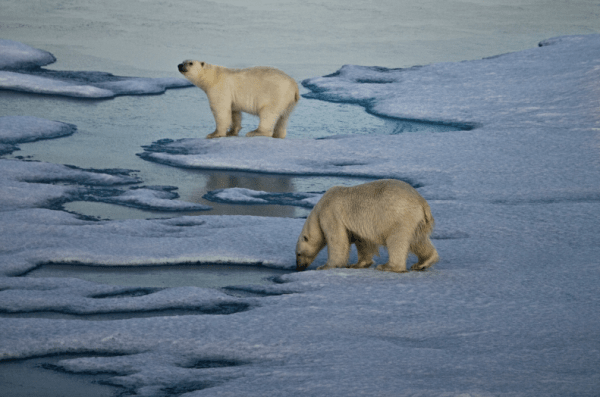
The Last Iceberg

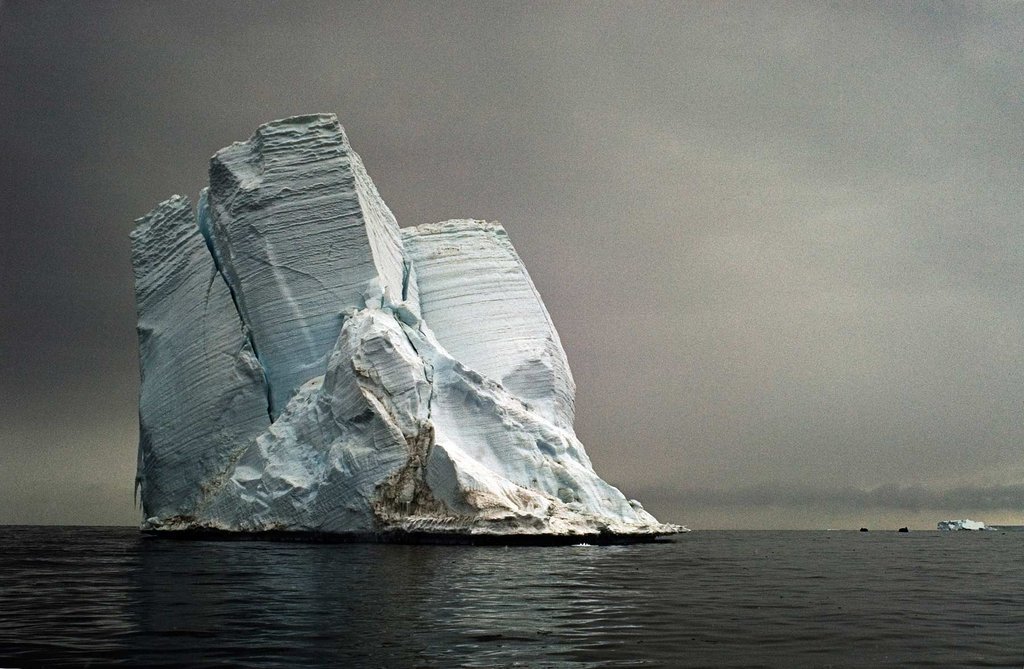
A haunting image from photographer Camille Seaman. It’s from one of her powerful galleries depicting ice, the oceans, and polar life.

Screen Shot 2013-03-22 at 10.04.59 AM

As regular readers know, I believe Seeing Is Important. So I find this kind of photojournalism invaluable in terms of documenting change as well as eliciting emotion–which is a prelude to action.

Here, Seaman talks about her work:

Bill Gates Wants To Reinvent Meat

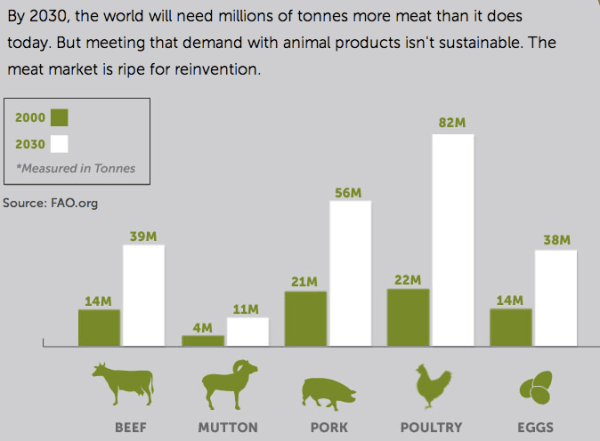
Bill Gates is a smart guy (obviously), and very good at looking at global problems and exploring creative global solutions. So it’s good news that he has focused his brainpower and advocacy on the fact that producing meat for everyone who wants to eat it simply isn’t sustainable (i.e. meat is killing the planet). The bad news he is promoting the wrong solution.

On his GatesNotes site, he now has an interesting section on “The Future Of Food.” It’s got lots of good data and thinking about why we can’t go on eating meat the way we do.

Screen Shot 2013-03-21 at 1.54.09 PM

Now, you’ll notice that one of the comparative items in the second and third slides is “Beyond Meat.” That is a meat substitute that Gates seems to be excited about.

His thinking is that we’ll never get the human race to move beyond meat and go vegetarian, so the solution to the impending meat bomb is to develop meat Continue reading “Bill Gates Wants To Reinvent Meat”

Climate Change IS An Existential Threat

Oddly, though, despite repeated warnings from the scientific and conservation community, it never seems to get elevated above all the other problems publics and governments face. And in the United States, I would argue, it is a lower priority than many.

And that’s despite the steady accumulation of data and research, like this, which indicates that every centigrade degree of global temperature increase could result in seven times as many Katrinas.

For anyone who wants to make the case for urgency and sacrifice, David Roberts has a really nice piece (explaining for the 545th time) that there are 2 big reasons that climate change really is a different beast from the many global challenges it gets lumped in with:

The public-policy implications are straightforward: Because CO2 is slow to drain, and the damages are cumulative, we need to reduce the amount of CO2 we’re spewing out of the faucet now, as much as possible, as quickly as possible. Yes, we’ll need new technologies and techniques to drive emissions down near to zero, and we should R&D the hell out of them. But we absolutely cannot afford to wait. There is no benign neglect possible here. Neglect is malign….

….The damage we’re doing now is something the next 40 to 50 generations will have to cope with, even if we stop emitting CO2 tomorrow. And the CO2 we’ve already released has locked in another 50 or 100 years of damage (because of the slow draining). There is no “reversing” climate change. There is only reducing the amount we change the climate.

Both these facts about climate change set it apart from other environmental problems. They also, for what it’s worth, set it apart from social problems like poverty, crime, or poor healthcare. All of those problems are serious; they all have an impact on public health. But they can all be measurably affected by public policy within our lifetimes. They are bad but they are not cumulative. They are not becoming less solvable over time.

Climate change, on the other hand, is forever.

Or at least a few eons. (Click image for full size)

To me, there are three existential threats we face: 1) nuclear war; 2) a highly contagious, drug-resistant, virus or bacteria; and 3) climate change. Those are the key problems humanity should be working on together, with climate change arguably being the most difficult to address, and requiring the most sacrifice.

But we are asleep. History will not, and should not, be kind. Our willful avoidance will be inexplicable. It is already inexplicable.

Shell: Not Really Ready For Arctic Prime Time

That seemed pretty obvious as Shell suffered one setback after another in the Arctic over the past 6 months. But it’s nice to know the Interior Department noticed, as well:

U.S. Secretary of the Interior Ken Salazar on Thursday released the findings of a Departmental review of Shell’s troubled 2012 Arctic operations, painting a scathing picture of Shell and its inability to oversee and manage key components of its arctic program…

…The assessment found that Shell entered the 2012 drilling season without having finalized key components of its program, including its Arctic Challenger containment system, which put pressure on Shell’s operations and schedule and limited Shell from drilling into oil-bearing zones last summer. Weaknesses in Shell’s management of contractors on whom they relied for many critical aspects of its program – including development of its containment system, emission controls to comply with air permits, and maritime operations – led to many of the problems that the company experienced, the report found.

Well, yeah. Plus, it’s the, um, Arctic.

You might think that Shell’s failures would cause a re-think of the Obama Administration’s “”all-of-the-above” energy strategy, of which Arctic resource exploitation is a prominent component. But you’d be wrong. Apparently, it will take some sort of spill or oil drilling disaster to cause a re-think of the idea that the climate-warmed Arctic is there for the drilling (and mining, and fishing, and…).

William Hogarth On The Four Stages Of Animal Cruelty

There’s a fantastic post over on Our Hen House, about the graphic work of Hogarth relating cruelty to animals to the human condition:

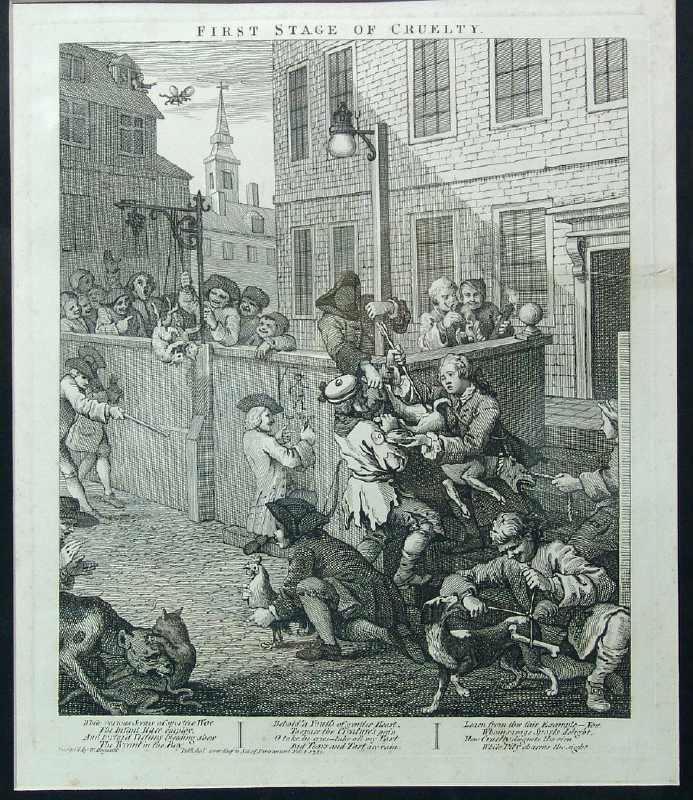
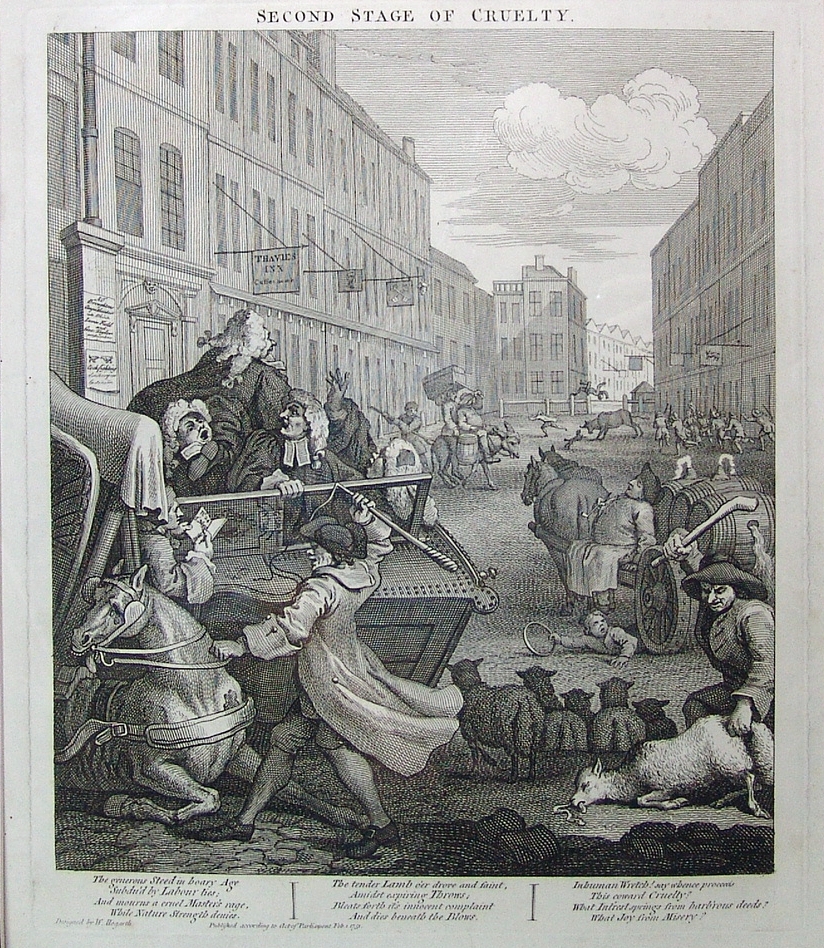
Specifically, Hogarth used visual imagery to underscore his belief that cruelty to animals would lead to other forms of social ills. In other words, Hogarth did not see the mistreatment of animals as a distinct issue but, rather, understood it to be part of a larger pattern of social problems. Hogarth’s series, entitled The Four Stages of Cruelty, was released in February 1751 and was comprised of four separate prints, each furthering the narrative of a fictional character named Tom Nero. Of this series, Hogarth noted that he created these images “in hopes of preventing in some degree that cruel treatment of poor Animals which makes the streets of London more disagreeable to the human mind…the very describing of which gives pain.”

You can imagine what Hogarth might think of a factory farm, the Taiji slaughter, or the ivory trade. But these days he’d probably tackle it on Vimeo.

His series of drawings on the four stages of animal cruelty are still worth looking at, though, because they make a powerful point that I think it is critical to understand: cruelty to animals (and cruelty to the environment, for that matter), is not an isolated problem. Instead, it is just one consequence of a chronic human failure, which is a lack of wisdom or enlightenment. So addressing these problems is not simply a matter of trying to end animal cruelty, but trying in the first place to cultivate a completely different understanding about the human role on earth, and human relationships with other species–one that moves away from profit and exploitation, and toward compassion and stewardship. Do that, and lots pf problems are open to solution.

Let’s take a look (click images for full resolution, and Wikipedia has more detail on the scenes):

From Our Hen HouseIn the first image (appropriately titled “The First Stage of Cruelty”), we are introduced to Tom Nero as a young boy. He is on a London street with several other children, most of whom are engaged in some form of cruelty: a pair of cats are suspended from a lamppost, a stray dog has an object tied to his tail, a bird is being blinded by a hot object inserted in her eye. Tom Nero, Hogarth’s protagonist, is in the center of the composition torturing a dog by sticking an arrow in the animal’s anus while another friend pulls harshly on a rope tied around the dog’s neck. While this scene of unchecked cruelty is bad enough, the artist hints at worse to come through the inclusion of a compositional device foreshadowing Tom Nero’s mounting violence: a young man sketches Tom Nero’s eventual demise on the brick wall that the children cluster around.

Our Hen House:

In “The Second Stage of Cruelty,” Tom is no longer a child, and in this print he is shown beating a horse who has collapsed on the street from exhaustion and Continue reading “William Hogarth On The Four Stages Of Animal Cruelty”

Revolution Comes To DC

We really need the real thing here in the nation’s capital. But for now I will settle for a viewing of Rob Stewart’s new documentary, Revolution, which will screen at the DC Environmental Film Festival (sponsored by GM??!!) this weekend.

Stewart’s Sharkwater was a revelation for audiences. I hope Revolution will be too.

And here is the synopsis:

Revolution is a film about changing the world. The true-life adventure of Rob Stewart, this follow-up to his acclaimed Sharkwater documentary continues his remarkable journey; one that will take him through 15 countries over four years, and where he’ll discover that it’s not only sharks that are in grave danger – it’s humanity itself.

In an effort to uncover the truth and find the secret to saving the ecosystems we depend on for survival, Stewart embarks on a life-threatening adventure. From the coral reefs in Papua New Guinea and deforestation in Madagascar to the largest and most destructive environmental project in history in Alberta, Canada, he reveals that all of our actions are interconnected and that environmental degradation, species loss, ocean acidification, pollution and food/water scarcity are reducing the Earth’s ability to house humans. How did this happen, and what will it take to change the course that humanity has set itself on?

Travelling the globe to meet with the dedicated individuals and organizations working on a solution, Stewart finds encouragement and hope, pointing to the revolutions of the past and how we’ve evolved and changed our course in times of necessity. If people were informed about what was really going on, they would fight for their future – and the future of other generations. From the evolution of our species to the revolution to save it, Stewart and his team take viewers on a groundbreaking mission into the greatest war ever waged.

Startling, beautiful, and provocative, Revolution inspires audiences from across the globe to start a revolution and change the world forever.

That would be nice. If you are in DC and want to join me, just message me via my Facebook page.

Meat Is Killing The Planet (Part 2): The Carbon Chasm

Forget the floating pigs (I know you are eager to forget the floating pigs). Perhaps the most compelling planet-saving rationale for giving up meat is the massive carbon footprint generated by the global meat industry. When people think about reducing their personal carbon footprint (if they think about it), they usually turn their thermostats down, buy fuel-efficient cars, and shut off lights when they are not using them. All good things to do.

But a choice that people don’t usually think about–and that has an outsized impact on their personal carbon footprint–is meat-eating. Numbers are inherently slippery, but one recent study concluded that the contribution to greenhouse gas (GHG) emissions to global warming contributed by a vegan are about 40% less than the GHG contributions of a meat-lover:

Screen Shot 2013-03-14 at 11.34.49 AM


America’s most prominent vegan?

So in some ways, choosing to eat meat is like choosing to have a few Hummers in your garage, cranking your heat and AC up, and leaving all your lights on. Most environmentally conscious people would be appalled by a neighbor that lived like that. But somehow meat doesn’t enter into the carbon equation when people are thinking about their personal impact on the planet. And it should because it is such a major factor.

So think about getting rid of those Hummers on your plate. And if you are worried that your friends and family will scorn you for going vegetarian or vegan, I’ve got good news for you. America, despite it’s meat-celebrating culture, is warming up to the meatless:

About half of American voters view vegetarians favorably, and less than a quarter view them unfavorably. Vegans are viewed less positively, but still have significantly more than a third of American voters seeing them favorably. Generally, women, Democrats, and younger respondents have a more positive opinion of vegetarians and vegans. These are among the results of a poll of 500 registered American voters conducted by Public Policy Polling (PPP), a North Carolina-based firm, from February 21st to 24th. The survey asked what respondents like to eat, what they think of fast-food, which chain restaurants they like most, and a number of other food-related issues, as well as key demographic information.

So you can be healthy, planet-friendly, AND popular (though apparently you’ll need to go easy on the vegan righteousness). And there will be fewer dead pigs floating in the rivers.


Meat Is Killing The Planet: A River Full of Pigs

I know, I know. You can’t take any more grotesque meat news. Well, it is what it is, so deal with it next time you are tucking into a pulled pork sandwich.

The latest installment in this cringe-inducing series comes from China, where the public, though it doesn’t mind a few dead pigs floating in Shanghai’s rivers, is not very happy about 6,000 dead pigs floating by. Here’s the Washington Post:

When hundreds of porcine bodies started surfacing this weekend in rivers upstream from the city, it prompted only mild shock, showing perhaps how routine safety scares about food and water have become in China.

But worries turned to panic late Tuesday, when authorities revealed that the number of pigs pulled out of waterways had climbed in the course of three days to an astonishing 5,916.

Shanghai officials pleaded for calm and insisted drinking water for Shanghai’s 23 million residents is still safe. They said there is no disease epidemic at cause. Instead they pointed their fingers at farmers in a nearby city of Jiaxing, who they say are dumping pigs who die in the course of their farming into the Huangpu River instead of properly burying or incinerating them. Local authorities near the pig farms in turn blamed their recent spike in dead pigs on colder temperatures, which they say caused the pigs to freeze or catch colds.

But all such explanations have been met online with equal measures of skepticism, anger and gallows humor, with some residents joking that perhaps the pigs killed themselves after refusing to breathe China’s increasingly polluted air or in protest of being force fed hormones and antibiotics.

Just another indication that of all the meat production industries, pig farming is the worst.

In case the above words don’t adequately convey what is happening, here’s a video report.

Most Of What You Need To Know About Climate Change

Via David Roberts at Grist, comes this infographic which conveys a lot of, well, useful info. The key thing it achieves is a nice graphic representation of what will happen no matter what, the scale of action required to hit certain targets, and the scale of impact if we miss certain targets. (Click image for full size).