They are in court again right now, debating trainer-killer whale protocols, and an Orlando reporter is live-tweeting the proceedings.

They are in court again right now, debating trainer-killer whale protocols, and an Orlando reporter is live-tweeting the proceedings.

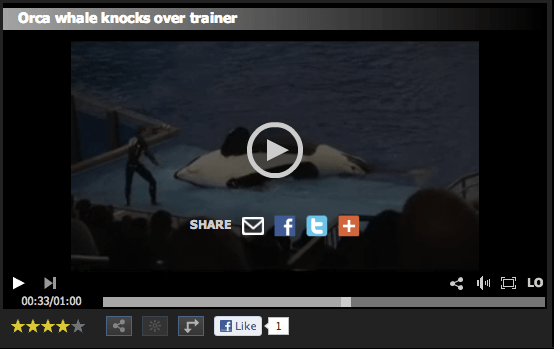
As SeaWorld and OSHA continue their backroom and courtroom dealings over what sort of interactions SeaWorld trainers should be allowed to have with SeaWorld’s killer whales, the question of the risks inherent in drywork is central.
“Drywork” is when trainers interact with the killer whales on slideouts, stages, and shallow ledges. That is in contrast to waterwork, which is interactions in which trainers are in the pools with the killer whales. SeaWorld stopped performing waterwork after Dawn Brancheau was killed by Tilikum (even though Brancheau was in fact doing drywork according to SeaWorld’s definition). Given the OSHA citations and court rulings so far, it doesn’t seem likely that SeaWorld will feature waterwork again anytime soon.
However, SeaWorld, it appears, would like to work out a deal that would modify OSHA’s stipulation that trainers maintain a minimum distance or work from behind a barrier, and allow SeaWorld trainers during shows to have close contact with killer whales when the trainer (and often the killer whale, too) is out of the water on the stage or a slideout.
I think that we can stipulate that a trainer in the water with a killer whale is much more vulnerable than a trainer out of the water. But even if that is so, OSHA’s main concern has to be what sort of risks to trainers exist during drywork. OSHA’s expert witness when it faced off against SeaWorld in court in 2011, Dr. David Duffus (who also features in Blackfish) has long been of the view that a killer whale’s speed, power and intelligence means that the risks to trainers are inversely correlated to the distance that exists between a trainer and a killer whale. No distance = higher risk. Greater distance = lower risk.
As OSHA ponders how much risk there is in trainers getting close to killer whales, I thought I would ask an expert, John Hargrove, a former SeaWorld senior trainer with long experience at both the SeaWorld California and SeaWorld Texas parks.
Hargrove told me that the risk for trainers who are out of the water “is low.” But he also made clear that risks remain, and “that we have documented past incidents which prove trainers can be struck.”
He cited as an example an incident at SeaWorld California in which Orkid broke off a requested behavior underwater and instead came up on the stage and struck a trainer, sending her tumbling, and putting her in the hospital. “Orkid intentionally slid out and struck her,” Hargrove says, noting that any time a whale is sliding across the stage–which is a popular behavior–it has the opportunity to strike trainers. “The only safe place to be during a stage slide is far stage right or left, in a place where there is no set blocking the trainer from jumping back. Anywhere else the whale can crush you if they want to.”
Another time, during a sonogram, Orkid came up out of the water and struck that same trainer as she stood poolside, knocking her over a wall. Continue reading “Trainer Corner: John Hargrove On “Drywork” Risk”

Nice. I can finally answer questions about when and where Blackfish might be screening by pointing fans to the Screenings link on the Blackfish The Movie Facebook page.
Here’s what’s on tap so far:
April 17th Bermuda International Film Festival
April 25th-27th London Sundance Festival
April 27th and May 1st San Francisco International Film Festival
April 29th Boston Indepedent Film Festival
April 30th – May 3rd Hot Docs, Toronto
May 4th Montclair Film Festival, New Jersey
May 24th – 27th Mountainfilm Telluride
May 3rd -11th Docville, Belgium
May 9th – 16th Green Film Festival, Seoul
May 31st – June 5th Cinemambiente, Italy
June 5th -16th Sydney International Film Festival

Alternate titles: “Taku’s Follies,” or “The Challenges of Killer Whale Calves.”
The more you dig, or get taken, into the art of killer whale training, the more you understand how variable and distinctive the killer whale personalities are, how context (what is going on in the back pool, what happened the night before, who has a calf, etc) is everything, and how killer whale trainers must constantly make subjective judgements about how to deal with the almost infinite challenges or wrinkles which can pop up at any time.
That’s why experience is so crucial. It’s also why the “risk” attached to killer whale training does not just involve the major incidents (which can mean severe injury or death) that are apparent to everyone, but runs through all the small decisions, or minor incidents as well. Because a small decision, or minor incident, if not handled with the right judgement can easily become a major incident, with major consequences.
Here’s a quiet case in point, from the film archives of former SeaWorld Florida trainer Jeff Ventre. It was filmed in November 1994 by the stadium producers, who have have watched enough whale behaviors to know something is not right, and shows a young Taku (just over a year old) coming up under Ventre and bumping him.
Here’s Ventre’s explanation of what you are seeing, and how he handled the situation:
From a safety/behavioral standpoint I ignored Taku and elected to exit the scene by mounting Katina. I made a decision to get up on her and steer her away (you can see the touch steering stimulus and she makes a quick right turn). I felt that trying to exit the water right in front of Taku might become a game and he could pull me in.
So Ventre had to make a lightning quick judgement about how to exit the pool, and had the experience or presence of mind (or both) to Continue reading “Anatomy Of A Minor Killer Whale Incident”

I often hear (or see) a lot of commentary from young aspiring orca trainers, whose passionate dream it is to work at SeaWorld. So it is very refreshing to be hearing from aspiring orca trainers who changed their minds.
Take, for example, Kelsey Prosser, who just posted this comment:
As a 3-yr old little girl, my parents took me to SeaWorld in SD, California. I fell in love with the orcas, and from then on, it was my lifelong dream to become a “marine biologist” and work with orcas. SeaWorld was my goal, and nothing was going to stop me from becoming an orca trainer. Until I went on a whale watch in the San Juan Islands and saw orcas in the wild for the first time: powerful, social, vocal, and free. They had the ocean to roam, and no concrete tank to stop them. I even had the great privilege of watching Residents hunt for salmon and Transients hunting harbor seals. I spoke with local orca biologists who work with these animals in the wild and read as much as I possibly could on orcas in captivity, and after 21 years as an aspiring orca trainer, I have changed my mind. These animals belong in the ocean. They are intelligent, social, incredible marine mammals and they deserve a life of freedom. In the wild, orcas can reach 90+ years! J-2, an orca known as “Granny,” is 102 years old! In captivity, a 30-yr old orca is considered lucky. To all of you want-to-be-trainers, I simply ask that you think about the animals you are so in love with. What’s best for them? To be locked in an acoustically-straining tank with no natural surroundings, no social structure, and no room to roam and hunt? Or to live free with their family pods for their entire lives, hunting and playing at will? If this is your passion, won’t you want what is best for them? Is it selfish to want to work with them in a tank, even though deep down you know it’s not the best living situation for an intelligent marine mammal? I, too, was once that young girl with a dream. Now, I finally see the reality of the situation and know that my dream is to ensure that these animals are protected and studied in our world’s oceans, so that they may live full, happy lives. Now a Master’s student in Biology, I am still aiming toward a career with orcas, but my dream has changed: instead of working as an orca trainer, I am striving to study orca in their natural environment as well as teach others about their beauty and their behavior in the wild and the importance of conservation.
Kelsey zeroes in on the number one contradiction of orca training: if it is about loving the animals how do trainers rationalize the aggression, rakes and injuries, and captivity-related stress that they see? This is the contradiction that every trainer I know who eventually turned against captivity struggled with. And to the oft-asked question of why they worked so long at SeaWorld if the were uncomfortable with what they saw and experienced, they almost always explain that they had a hard time stepping out of SeaWorld because they worried that no one would care for the whales as well as they did (though some just say it took a while for the reality to supplant the corporate and management BS).
Kelsey’s comment is especially on point, because it tracks the logic and questions that arise when an aspiring killer whale trainer focuses not on his or her own interests and dreams but on the interests of the whales. I have always felt that a dream to train killer whales is not about love for the whales. It is about love for the thrilling experience of working with whales. But that thrill is the trainer’s thrill. The whales did not choose to be at a marine park, or dream of working with humans (okay, I don’t know that for sure, but I think it’s a pretty reasonable assumption). So to me a dream of training killer whales is about the dreamer’s fantasy, and what the dreamer wants. It is not at all about what the whales might want or prefer, if they could have been given a choice to work at SeaWorld or live a normal killer whale life in the wild.
By the way, the photo above is from Kelsey, who has found a different and beautiful way to engage her love of working with whales.
Here’s another comment in a similar vein, from Jennifer Jackson:
I once wanted to be a trainer and was probably one of the happiest people when San Antonio got SW… I wanted to go everyday and eventually move there for work. Later I met a friend who trained dolphins in Hawaii and she showed me video of the dolphin she trained and told me the story about his death, its so sad to me so I began to do a little more research on captivity. I had heard tons of arguments from both and I just couldn’t make up my mind and eventually I kept researching but not the parks but the habitat of these sea animals and that was it I was convinced they did NOT belong in captivity!!
Now I just try and educate my friends on what I have learned and I am very proud to say I have convinced several people NOT to go to SW and it is one of the best feelings in the whole worldI just want to say Thank You to ALL who participate in helping educate others as to why these amazing creatures belong in the sea and only in the sea!! Love you all from the bottom of my heart ❤
I’d love to hear from more people who had a dream to work at SeaWorld and then changed their minds, including their reasons.
I’d also love to hear more from anyone who still aspires to be a trainer at SeaWorld, and would like to address Kelsey’s questions about whether love of killer whales can be consistent with wanting to work with them in captivity. I totally get why being a SeaWorld trainer would be thrilling and appealing from the human point of view. But I have a harder time understanding how aspiring trainers justify their dreams from the whales’ point of view. It’s an excellent conversation to have.

The back and forth over criticism of Blackfish in this post is generating some great comments. I wanted to call out a few:
First, from former SeaWorld Jeffrey Ventre, who I mentioned in the post, and who features prominently in Blackfish:
Tim, thanks for writing this. Just for clarity, I worked directly with Tilikum (as opposed to just being around) especially when opening the stadium. In the a.m., a Sr Trainer is usually paired with one or more junior staff, and conducts morning sessions, including exercise, play, learning, relationships, husbandry and more. In 1994-95, i usually opened 1-2 days per week. This involved direct, hands on contact with Tilikum. During show situations, I was typically with a waterwork animal (Kat/Tai), thus would rarely work him in shows, but it did happen, from time to time. In regard to fame and fortune, I’m personally down (net loss) about ten thousand due to hotels, travel expenses, and lift tickets involved with places like Park City and Sarasota. In regard to speaking out, and as stated at the SFF Q&A, most of us got into this position by default. We did have an opinion, which we’ve shared. Had other current and former marine mammal trainers stepped up to the plate, there’d be plenty of “fame” to spread around. None of us have a history of activism. If any current or former trainers want to join our expanding group, please track us down at Voice of the Orcas.
Jeff was good enough to include this video that conveys some of how Blackfish was received at the Sarasota Film Festival:
Next, this thoughtful comment and perspective, from Dana:
I am by no means an ex- marine mammal trainer but I would like to share my story with you. I grew up and still live in Ohio about 45 minutes from what was the Ohio SeaWorld. I grew up at Shamu Stadium. When I was 17 I had been accepted as a student for a internship/career workshop (at this time the park was Six Flags). A week before I was to start my internship working at Dolphin Cove I received a phone call that I will never forget. “We must cancel your internship because the park will be closing down permanently. We are very sorry.” I didn’t let this setback stop me from my dream. I went to college at Kent State Univeristy and graduated in 2011 with a B.A. in Psychology. During my undergrad at Kent I was fortunate enough to become a professional dog trainer. I figured if I could not work at SeaWorld I may as well train animals somehow! Today I have 5 years of professional dog training experience and I am an AKC Evaluator for their Canine Good Citizen Program. I am currently working towards my CPDT (Certified Professional Dog Trainer) title. My 5 years of experience training dogs has also allowed me to gain valuable insight to the marine mammal industry. The past 5 years has allowed me to reflect on Dawn’s death, read the book “Death at Seaworld,” watch several whales die including a few of our past Ohio whales- (Sumar, Kalina), and allow me to form an opinion for myself. It took me a long time to come to my conclusions. I am very anxious to see the film “Blackfish.” In response to Robin and Future Orca Trainer : I am that person who has gone to college, spent thousands of dollars, earned a degree, and I have 5 years as a professional trainer under my belt so I could one day become a marine mammal trainer. I am not ashamed but rejoiced that I could find a career that I love. I may never train a killer whale but sure can train dogs! I can direct my passion to the animals that really need training. Thousands of dogs need help in shelters and dogs that are rescued from shelters often need training. If SeaWorld and their IPO continues to skyrocket as Blackfish becomes more public there are other career paths you may take that will fufill your dream. Jeffrey, thank you for being a voice for the orcas. If I can share my voice even as a professional dog trainer, I am happy to.
Plus, this honest comment from Lexie, who wants to be an orca trainer but is open to at least seeing and hearing what Blackfish has to say:
I like how in this article, it states that this movie shows how great and passionate Dawn Brancheau was with her job, I’m very glad this isn’t demeaning her in any way. I also like how it briefly explains who was interviewed in the movie, and their history with the SeaWorld Parks. The thing I do not like, however, in the “teaser”, they showed Katina and her trainers, and that gave me the vibe that every time a trainer enters the water with an orca, there is some sort of aggression shown, which isn’t true. They were performing a simple stunt and the clips they showed makes it look like the orca is going after the trainer. Nevertheless, I’m interested in seeing the movie. I am, indeed, a pro-cap, and I have a dream much like several others: I want to be an orca trainer, and unlike some of the other pro-captive people, I don’t resent the movie without even seeing it, and I’m interested to see what they have come up with. However, a movie isn’t going to change my mind about the career I want, nor are peoples’ comments. I’m really hoping other pro-captive people watch this movie as well, because it’s not a valid argument if you don’t understand both side, so we’ll see.
Finally, this wasn’t left as a comment, but it is a post on the blog of Jenna Costa Deedy (from an essay she wrote in 2011 for a Human Growth And Development Class), whose feelings about Blackfish got this useful discussion of Blackfish going. It helps explain where she is coming from, particularly with regard to former SeaWorld trainer John Hargrove’s decision to speak out and participate in Blackfish:
John. J Hargrove is a killer whale trainer at SeaWorld San Antonio who I first met in August 2010 during a camp that I attended at the time. There, John shared with us his story of how he got started in working with killer whales before going on to share some stories about his experience working with these large marine mammals. He has been working with killer whales at SeaWorld parks in California and Texas, and Marine Land in France for the past eighteen years. His intellect and life story is a very interesting case of how one person’s passion for animals and the sea can sometimes result into a life-long career of working with them over a long period of time. John’s story is very unique because not only does it focuses on the life story of a boy from Orange, Texas who grew up to be one of the world’s most influential whale trainers, but also, a story about how he has grown to love and appreciate the animals he works with everyday.

Jenna’s whole post is worth reading, and her connection with Hargrove helped fuel her dream and determination to become an orca trainer. Which goes to show how complex and emotional the whole issue of orca captivity is.

Here’s an interesting comment posted by “Future Orca Trainer” in the Comments section of this post about the Q&A that followed the Blackfish screening at the Sarasota Film festival last Friday:
An email from Jenna Costa Deedy, author of The Winter Dolphin Chronicles:
I think that Blackfish is just a movie that is doing more injustice to Dawn’s memory and the whole 2010 SeaWorld tragedy by making money off the whole situation. Yet, I find it funny that of all the five ex-trainers featured in that movie, only one of them did work with Tillikum and I don’t why the other four get to have a say on his case all because they are “activists” who once worked at SeaWorld for a period of time, but only John Hargrove worked longer than eight years at two SeaWorld Parks in San Diego and Texas, but NOT Orlando. It would not surprise me if SeaWorld and Dawn’s family intends to sue the filmmakers of the movie for defamation of character and emotional distress because a lot of people have come to the point where they are just getting tired of seeing Dawn’s death being exploited for money when they should honor her memory based on how she lived her life.
Though I strongly suspect that Jenna Costa Deedy (who has a blog and apparently is an aquarium intern) has not seen the film, I am highlighting the comment because I want to address some of the points, which seem to be making the rounds on internet forums. I hope people who support SeaWorld and killer whale captivity will have the courage and open-mindedness to see Blackfish. And that we can continue to debate the issues raised. So here’s a start:
1) Of the five ex-SeaWorld trainers featured in Blackfish, one was a Tilikum team leader (who got in trouble with management when he refused orders to start masturbating Tilikum every day to stockpile his semen). The others, however, all spent time around Tilikum. The only ex-trainer who was not around Tilikum much was John Hargrove, though he did spend some time at the Florida park (even though he never worked there). And Hargrove does not speak about Tilikum.
Update: Carol Ray, one of the former-SeaWorld trainers in Blackfish, e-mailed to clarify that she had left SeaWorld Orlando by the time Tilikum arrived. So the three trainers in Blackfish who had direct experience with Tilikum, and speak about him in the film, are John Jett, Jeffrey Ventre, and Samantha Berg.
2) None of the trainers were “activists” while they worked at SeaWorld. They were all thrilled to be SeaWorld trainers. It was the experience of working at SeaWorld that changed their views on issues related to keeping killer whales in captivity.
3) More broadly, while the story of Tilikum and Dawn Brancheau is the backbone of the movie, Blackfish delves into issues that ALL SeaWorld’s killer whales face. John Hargrove, for example, discusses the separation of young calves from mothers, and an incident in which Splash and Orkid pull a trainer into the pool and nearly drown her. The former trainers who were interviewed all speak about their personal direct experience, and are not asked to speculate about topics about which they have no first-hand experience or knowledge.
4) I don’t know whether any of Dawn’s family has seen the film, and what they think of it if they have. But Blackfish does everything it can to be respectful of Dawn, and her love of working with killer whales. Her death is not shown (though the Dine With Shamu Show that led up to her death is reviewed and dissected to show that Tilikum’s work with Dawn just before he killed her was not as flawless as SeaWorld has asserted). And, most import, Blackfish honors and defends Dawn by strongly rebutting SeaWorld’s initial effort to suggest that she made a mistake, when in fact she was following SeaWorld protocols with the same professionalism and discipline that made her such a great trainer. In fact, that is one of the major takeaways of Blackfish. Dawn is not defamed in any way in the film. She is portrayed as a passionate and talented killer whale trainer who was let down by the system in which she worked, and suffered the ultimate tragedy.
5) None of the trainers in Blackfish were paid anything to participate. They agreed to be interviewed because they want people to understand the reality of killer whale captivity as they experienced it. Anyone who knows anything about the economics of documentary film-making knows that almost all documentaries lose money. People nevertheless make them because they are passionate about a subject, and passionate about telling stories. That was what motivated the making of Blackfish. If it ends up making any money, it is the investors who will be rewarded for the faith they had in Gabriela Cowperthwaite, the director, and in the importance of explaining what happened with Tilikum and Dawn. And if that is the case, hopefully they will turn around and invest in another great documentary production!
…here’s the post-screening Q&A with Director Gabriela Cowperthwaite and former SeaWorld trainers, at the Sarasota Film Festival last Friday. It’s from a handheld, but it gives you a good sense of how Blackfish impacts audiences, and how Gabriela went about making the film.
Part 1:
Part 2:
Former SeaWorld trainers discuss what they did (and didn’t) know about the 1987 tragedy in which trainer John Sillick was crushed by a killer whale at Sea World San Diego.
Recently announced: Blackfish will make its Canadian premiere in Toronto at the Canadian International Documentary Film Festival.
Screening times and tickets here.

 The Earthist Chronicles