UK’s Guardian Looks At The Future Of Marine Parks

Seems like everyone is trying to peer into SeaWorld’s future these days (and they should be!). But Will Coldwell of the Guardian does a really nice job of picking up all the trends in play right now:

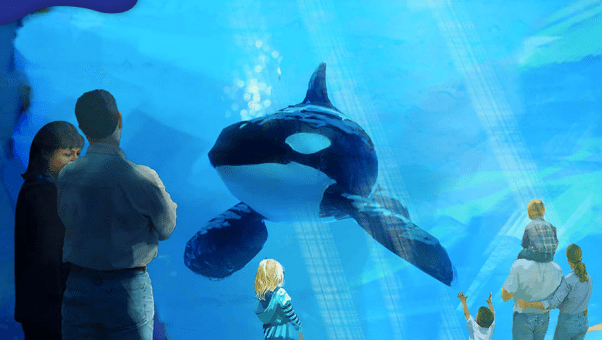
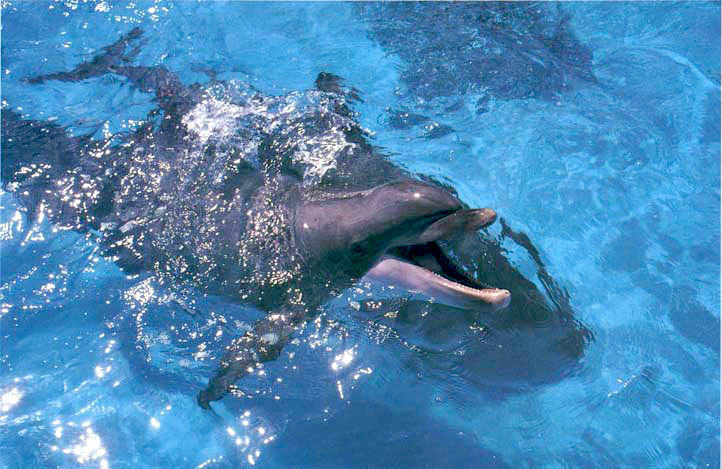
While SeaWorld continues to dig its heels in – pointing out that tens of thousands of visitors are in its parks right now – others are responding more progressively. In 2012 the National Aquarium in Baltimore, a highly regarded institution synonymous with its dolphin show, cancelled its performances. Since then visitors have been able to sit and watch the dolphins as they are simply taken care of by staff. Now, the aquarium is considering retiring their eight bottlenose dolphins altogether and is in talks to create the first ocean-side dolphin sanctuary in the US. Its decision was based on regular polling of visitors; it learned that people no longer felt comfortable with the show.

“Our audience has evolved,” Aquarium CEO John Racanelli told Baltimore Magazine. “Baby boomers grew up on Flipper, but millennials grew up on Free Willy and The Cove. They are interested in these animals being treated more humanely.”

Others are following suit. This September, the Clearwater Aquarium in Florida announced it would also end animal shows, choosing to focus on rehabilitation and marine resources instead. When asked by the Guardian if SeaWorld would ever consider a similar move, the company said the terms “retire” and “sanctuary” are misplaced in the context of animal care. But added: “The short answer is no.”

I think it’s very telling that Baltimore’s National Aquarium based its evolutionary leap toward the future on polling its own visitors. Presumably SeaWorld is regularly polling its audience as well, and I wonder what those surveys are saying (maybe that info will turn up in one of the imminent shareholder lawsuits).

Read the whole thing. You’ll finish with a good understanding of all the forces in play right now.

NPR Takes A Look At SeaWorld’s Post-Blackfish Troubles

Screen Shot 2014-09-11 at 9.03.25 PM

Greg Allen, NPR’s Miami reporter got in touch earlier this week while reporting a story on SeaWorld’s efforts to rebound from its post-Blackfish malaise. Here’s the story Allen aired on All Things Considered this evening.

It’s interesting to note that SeaWorld seems to have decided that its head vet, Chris Dold, is SeaWorld’s most effective spokesperson (when I did my Shamu Stadium tour, in 2010, head trainer Kelley Flaherty-Clark was my guide.

Dold is definitely smooth, but he constructs a popular SeaWorld straw man when he says that Blackfish attacks SeaWorld’s staff as uncaring or abusive with SeaWorld’s killer whales. Quite the contrary. SeaWorld’s killer whales are worth millions and are the core of SeaWorld’s business, and therefore SeaWorld has every incentive to do everything it can to keep them healthy (and breeding). And I’ve always felt SeaWorld’s personnel, especially the trainers and Animal Care staff, are sincere in their efforts to care for the whales.

But when SeaWorld’s business interests conflict with the killer whales’ interests (such as the age or frequency with which females are bred; of mother-calf separations, for example) it is usually the business interests which prevail. And, more broadly, there is a limit to what can be achieved even with sincere efforts to care for the killer whales if the environment itself is inherently unsuitable. So I wouldn’t say SeaWorld’s people are abusive. I would say the killer whale entertainment business is abusive.

Animal Care Chronicles Wrap-Up

King Ralph

The final installment of my conversations with former Animal Care workers Jim Horton, Cynthia Payne, and Krissy Dodge is now up on The Dodo. (Previous conversations are here and here).

In this round, Jim and Cynthia talk about what it was like to try and dive the dolphin feeding pools to keep them clear of objects that either fell in or were thrown in by guests. And Jim explains the impossible situation he faced with an irate male dolphin called Ralph:

The young calves would maybe grab your flippers and drag you back. That was kind of fun, though the number one rule was never to react. You didn’t want to reinforce it so we would never react to any behavior. We’d just ignore the animals totally. But Ralph would really mess with you. He’d get in your face and be jaw popping really hard. He’d be 6 inches from your face slamming his mouth shut with 200 pounds of force. It would sound like firecrackers going off underwater. You could tell [he was coming]. He’d start vocalizing really loud, and you’d go ‘Oh lord, Ralph is getting worked up.’ He’d get right in your face and scream and vocalize, really, really loud. Or he’d grab you by the head and pull you around. He’d lay on top of you.

Krissy concludes with the traumatic death of a sea lion named Eric, which prompted her to quit SeaWorld. It is a story she has never before told publicly:

We went to give him fluids and Eric began to go into convulsions. His head was shaking involuntarily. All of a sudden he arched his back into what they call the ‘death arch’ and he laid down and stopped breathing. He had no pulse. We thought he had died. Several people left to get ready for the necropsy. I stayed with him. He then started breathing again and I felt a pulse in his neck. The decision was made to euthanize him. But Eric’s body was not taking the poison. Even though it was injected into his heart, he didn’t die. Eric was taken to necropsy anyway. He was hoisted onto the truck, taken to the necropsy room and laid on the floor. He was still breathing. I figured we’d just wait for him to die, but I was wrong. What happened next I will never forget.

Read the whole thing here.

Since this is the last in the series I want to emphasize that it took courage for Jim, Cynthia, and Krissy to tell their stories, especially because they knew that doing so would provoke criticism and personal attacks from all sides of the spectrum. And, already, I have seen many unthinking and knee-jerk comments on social media that add nothing to the debate our our thinking about animal care, marine mammal captivity and marine parks.

We all expected that. But the reason to put these stories on the record is to add to the growing wealth of information and experience that comes from people who have worked in the industry. So anyone who really wants to learn and think about marine mammal captivity, and what it is like for both animals and those who work and care for them, can now read what Jim, Cynthia and Krissy had to say. And hopefully that will help deepen, inform, and expand the post-Blackfish debate about marine mammal captivity.

So I greatly appreciate the spirit Jim, Cynthia and Krissy have shown in sharing their experiences. And I hope you do too, no matter how you react to the information.

More Animal Care Chronicles: Into The Dolphin Feeding Pools

Krissy Dodge feeding the dolphins at SeaWorld San Antonio.

Over the past year I’ve had some fascinating and revealing conversations with three dedicated former SeaWorld Animal Care workers: Jim Horton, Cynthia Payne and Krissy Dodge. Their experiences have given me a much deeper understanding of the lives of the animals at marine parks (and the lives of the employees!), and last month I published some of what they had to say over on Outside Online.

Today, The Dodo is publishing another installment of my conversations with Jim, Cynthia and Krissy. It focuses on the dolphin feeding pools, a steady and important source of revenue at SeaWorld. This installment will be followed by another either later this week, or early next week.

Here’s a sample of the conversations that are up today (Jim Horton talking about doing medical check-ups on the dolphins):

Occasionally we’d have to get a young calf whose Mom was still in the pool. Mom would do anything trying to get the calf away from us. I broke my nose once on [the vet’s] head. I had the calf. He was trying to stop the female from getting to me, and she whacked him. And he went flying and his head went right into my face and knocked me practically unconscious.

We did not mess with calves until they were one year old. But when we did at that age of one year and up, the little ones really put up a good fight as this was something new. So that generally took two to three guys. But then the mothers would come after us in attempts to dislodge the calf. A coordinated effort was required to grab both mother and calf at the same time and hold them very close together, face to face. We would handle only one animal at a time, unless it was a mom and calf. So it was always a battle in that pool and those animals weren’t really trained to do much.

Read the whole thing here. You will learn lots of new things about dolphin feeding pools. I promise.


Zoos Couldn’t Save The Passenger Pigeon

There are lots of interesting lessons (most of them cautionary) in the extinction of the passenger pigeon 100 years ago, and most of them are raised in Carl Zimmer’s excellent story about why it happened and what scientists are doing to try and bring the species back (did you know social media played a role in wiping the passenger pigeon out?).

But here’s a point that really caught my attention:

Soon this technology-driven slaughter was decimating the passenger pigeon. Its decline was so worrisome that Congress passed the Lacey Act, one of the first laws to protect wildlife in the United States. The Lacey Act would eventually help protect many species, but for the passenger pigeon it came too late.

In 1900, the year in which the act was made into law, naturalists spotted a single wild passenger pigeon in Ohio. They never saw another one in the wild again.

For the next 14 years, the species clung to existence in a few zoos. But the birds proved to be poor breeders in captivity. Martha, the last of her kind, was barren.

That history should be kept in mind the next time you hear a zoo or marine park justify captivity and their business model by saying they are helping preserve species that might be threatened or endangered in the wild. Some species will presumably be easier to breed in captivity than passenger pigeons. Some presumably less. That will affect how long a species can “cling” to existence. But the point is that zoos and captivity are not a way to save or preserve a species. That work has to take place in the wild.

And that is completely apart from the question of whether a species can be considered “preserved” or in “existence” if it only exists in a zoo. The difference between a wild passenger pigeon and “Martha” is like the difference between a facsimile and the real, dynamic, thing. Here is how Zimmer describes Martha’s life in the Cincinnati Zoo:

People coming to the zoo to see the last passenger pigeon were disappointed by the bird, which barely budged off its perch. As Joel Greenberg writes in his recent book A Feathered River Across the Sky, some threw sand into its cage to try to force it to walk around. But on that first day of September a century ago, Martha no longer had to put up with such humiliations.

It was a quiet end to a noisy species. As recently as the mid-1800s, deafening flocks of billions of passenger pigeons swarmed across the eastern half of the United States. But they proved no match for humans, whose rapidly advancing technology drove the birds to extinction in a matter of decades.

Martha (and the story of her species), it seems, is well worth remembering.

Quote Of The Day

“I think a question that we’re not asking ourselves is: ‘Isn’t humanity committing suicide with this indiscriminate and tyrannical use of nature?’”

–Pope Francis (from his list of tips to becoming a happier person).

Sylvia Earle Does Not Eat Fish

And here she explains why:

Except for those living in coastal communities — or even inland if we’re talking freshwater species — for most people, eating fish is a choice, not a necessity. Some people believe that the sole purpose of fish is for us to eat them. They are seen as commodities. Yet wild fish, like wild birds, have a place in the natural ecosystem which outweighs their value as food. They’re part of the systems that make the planet function in our favor, and we should be protecting them because of their importance to the ocean. They are carbon-based units, conduits for nutrients, and critical elements in ocean food webs. If people really understood the methods being used to capture wild fish, they might think about choosing whether to eat them at all, because the methods are so destructive and wasteful. It isn’t just a matter of caring about the fish or the corals, but also about all the things that are destroyed in the process of capturing ocean wildlife. We have seen such a sharp decline in the fish that we consume in my lifetime that I personally choose not to eat any. In the end, it’s a choice.

There are few people on the planet who have thought more about that choice, so Earle is worth listening to (though she isn’t quite willing to tell people not to eat meat as well; attention Cowspiracy).

And, since we are on documentaries today, you can hear a lot more about her and her work in the Netflix doc Mission Blue.

Documentary Watchlist: Cows, Pipelines and Dams

One of the interesting insights I came to through my involvement in Blackfish, is that in the age of infotainment and cable-news superficiality, documentaries are filling an increasingly important niche. They are increasingly the best format to learn about almost any subject you choose. Not only are documentaries proliferating as film-making technology becomes more affordable and sophisticated, and as platforms on which to stream and view documentaries proliferate (making documentaries more accessible). But other news sources are becoming increasingly trivial, celebrified, and irrelevant.

So if you want facts, engagement, and inspiration, documentaries are where you should turn.

That’s what I have been doing, and I want to flag three documentaries I have recently seen that are worth seeking out and watching.

The first is Cowspiracy. It tackles an issue that is almost inexplicable, and that is the degree to which environmental organizations and nonprofits avoid educating their communities about the single most powerful choice an individual can make to protect the planet: stop eating meat.

Cowspiracy does a really nice job both explaining why this is so and calling the environmental movement out on this failure of courage. That makes for sometimes humorous, sometimes intriguing, but always enraging and enlightening viewing.

Here’s the trailer:

Cowspiracy Official Trailer from First Spark Media on Vimeo.

And here’s how you can find a local screening. I’m hoping to take my kids to the Sept. 23 screening in DC.

The second is Above All Else, which was recently screened here in DC as part of the long-running and invaluable Environmental Film Festival.

Above All Else is ostensibly about the Keystone pipeline, and the fight put up by some east Texas families whose private property was seized under the principle of “eminent domain” so the pipeline could cross their lands. But it is not really a film about climate change (though that hovers in the background, and helps makes the fight worth fighting) so much as it is a devastating exegesis on corporate power, and all the ways in which a large, multi-billion dollar entity can marshall all the resources of the legal system, the political system, and even local law enforcement to crush the rights and privacy of the individual.

If you don’t already think we live in a corporate oligarchy then this movie will slap you awake. And even if you do, the way in which the film builds your empathy for the families and individuals who painfully and inevitably get run over by the Keystone project and the corporate power behind it will hopefully sharpen your desire to take a stand against the growing imbalance between corporate power and individual rights.

And maybe the twenty-somethings who converge on east Texas to sit in trees and try to stop the shockingly efficient industrial process which clears them will both inspire you and maybe even motivate you to go sit in a tree somewhere too.

Here’s the trailer:

ABOVE ALL ELSE Trailer from John Fiege on Vimeo.

And here’s info about screenings.

Finally, make sure you also find time to check out Dam Nation. It’s a powerful film about how the relentless damming of America’s rivers during the growth of industrialization had devastating consequences for the fish (especially salmon)  and other species that happened to, um, live in and and rely on the rivers. It’s also about the inspiring movement to undo at least some of that damage.

Here’s the trailer:

And here’s info about screenings.

All three of these movies will inform you, inspire you, and (hopefully) energize you. The thing I love about the documentaries that are being made these days is that they are SUPPOSED to do all those things to you. Gone are the days of droning presentation of fact, with a tedious voice-over.

Film is such a powerful medium, it is so increasingly central to how we view our lives and the planet, and we are in such crisis that it is exciting and reassuring to see film-makers everywhere trying to shock and move audiences that are being narcotized and distracted by the pablum and consumerism being spoon-fed by the corporate media.

No one should have any qualms about film-making that aspires to motivate audiences to change how they live, and take action to try and change the world around them. That’s exactly what documentary film-making should be about in this era.
Kahana And Kenau: Two Orca Deaths Deconstructed

Kahana Rising

The analysis of how and why orcas die in captivity provides interesting and often surprising insights into how they lived. So orca necropsies (which are the equivalent of human autopsies) can make for interesting reading. However, you need a specialist to interpret their meaning. So when I saw that the FOIA document dump from NMFS that Russ Rector secured contained two full orca necropsies, I sent them on to veterinarian Jon Zern for comment.

Zern is a straight shooter, and always has something interesting to say when asked about marine mammal health issues. Here is a brief summary of his background:

 I have been a small animal veterinarian for 20+ years with 14 years of critical care experience and perform a variety of soft tissue and orthopedic surgeries.  I have a keen interest in evolutionary and marine biology.  Years of scuba diving have provided me with a great appreciation for the marine environment.  I am not a marine mammal specialist, whatever that means, but am very knowledgeable with disease and disease processes.

The two orca necropsies were contained in NMFS’ files on the Tilikum purchase and import from Sealand, because SeaWorld updated NMFS on the deaths of Kahana (5/14/1991 at SeaWorld Texas, six months after a miscarriage) and Kenau (8/6/1991 at SeaWorld Florida and 12 months pregnant) as part of the permit application process.

 Kahana’s death is the more mystifying, as she was found with skull trauma that SeaWorld posited had resulted from a collision with the pool wall that occurred as a consequence of Kahana thrashing around in agony from an intestinal tumor. But Kenau’s death is also revealing, in that it is an example of the sorts of infections that can threaten the health of captive orcas.

Here are the necropsies, and the analysis SeaWorld provided NMFS regarding the orca deaths:

Read on to see Jon Zern’s analysis of each death.

Continue reading “Kahana And Kenau: Two Orca Deaths Deconstructed”

Threat Assessment Gone (Very, Very) Wrong


So, we are filling our oceans with plastic:

I have just returned with a team of scientists from six weeks at sea conducting research in the Great Pacific Garbage Patch — one of five major garbage patches drifting in the oceans north and south of the Equator at the latitude of our great terrestrial deserts. Although it was my 10th voyage to the area, I was utterly shocked to see the enormous increase in the quantity of plastic waste since my last trip in 2009. Plastics of every description, from toothbrushes to tires to unidentifiable fragments too numerous to count floated past our marine research vessel Alguita for hundreds of miles without end. We even came upon a floating island bolstered by dozens of plastic buoys used in oyster aquaculture that had solid areas you could walk on.

Plastics are now one of the most common pollutants of ocean waters worldwide. Pushed by winds, tides and currents, plastic particles form with other debris into large swirling glutinous accumulation zones, known to oceanographers as gyres, which comprise as much as 40 percent of the planet’s ocean surface — roughly 25 percent of the entire earth.

And we are filling our atmosphere with greenhouse gases:

Runaway growth in the emission of greenhouse gases is swamping all political efforts to deal with the problem, raising the risk of “severe, pervasive and irreversible impacts” over the coming decades, according to a draft of a major new United Nations report.

Global warming is already cutting grain production by several percentage points, the report found, and that could grow much worse if emissions continue unchecked. Higher seas, devastating heat waves, torrential rain and other climate extremes are also being felt around the world as a result of human-produced emissions, the draft report said, and those problems are likely to intensify unless the gases are brought under control.