Climate Change Could Cost The Global Economy Up To $792 Trillion By 2100

Fixing it would cost $16-$103 trillion:

The global economy could lose between $150 trillion to $792 trillion by 2100 if nations fail to meet their current targets to cut greenhouse gas emissions, according to a new analysis in the journal Nature Communications. In contrast, it would cost G20 countries just $16 trillion to $103 trillion to limit warming to 1.5 or 2 degrees Celsius, the analysis said.

The United States’ investment to avoid the effects of severe warming, for example, would be from $5.4 trillion to $33 trillion. The study, led by economists at the Beijing Institute of Technology, called such investments and policy decisions “a self-preservation strategy” for nations. It also found that if countries manage to meet their current targets, known as nationally determined contributions, most will actually experience economic gains in the long-run.

Um, fixing it sounds like a pretty good deal to me.

“Surely the link between abusing animals and the world’s health is now clear”

Yes, yes it is

Imagine a world where facts changed minds. The United Nations, governments and everyone with influence would now be saying we should abandon meat or at a minimum cut down on consumption. Perhaps my reading is not as wide as it should be, but I have heard nothing of the sort argued. Making the case would be child’s play and would not be confined to emphasising that Covid-19 probably jumped species in Wuhan’s grotesque wet markets. The Sars epidemic of 2002-04 began in Guangdong, probably in bats, and then spread to civet cats, sold in markets and eaten in restaurants. The H7N9 strain of bird flu began in China, once again, and moved to humans from diseased poultry.

The question is: can we somehow transcend the powerfully ingrained meat culture and re-invent our relationship with animals.

Dept. Of Small Steps (And Mercies): China May Ban Dog Meat Consumption

Yes, I think we can agree this is very uncivilized. (Photo: Whoisgalt)

Won’t do much for wildlife and farmed animals, but it’s always a plus when any species gets a reprieve:

The Chinese government has signalled an end to the human consumption of dogs, with the agriculture ministry today releasing a draft policy that would forbid canine meat.

Citing the “progress of human civilisation” as well as growing public concern over animal welfare and prevention of disease transmission from animals to humans, China’s Ministry of Agricultural and Rural Affairs singled out canines as forbidden in a draft “white list” of animals allowed to be raised for meat.

The ministry called dogs a “special companion animal” and one not internationally recognised as livestock.

Of course, if eating dogs is uncivilized, then eating cows, pigs, sheep, and all other sentient farmed animals is equally uncivilized. What the progress (and protection) of civilization truly requires is a massive and rapid shift to plant-based diets. But that is for another day…

Yes, Electrify Everything…

It is a key to combatting climate change, so lots of cities and towns are starting to ban gas hookups on new construction.

Two key factors have recently aligned to make going all-electric more feasible for policymakers, homeowners, and developers, as both a carbon- and cost-cutting measure. Electricity generation produces far fewer greenhouse emissions than it once did. And electric appliances have become more efficient, user-friendly, and reliable.

A few decades ago, gas furnaces were a cheaper and less-polluting choice than electric space heating systems plugged into a grid dominated by coal-fired power plants. But today’s electric grid is cleaner. In California, more than half of the electricity used by consumers is now zero-carbon; state law requires this share to reach 60 percent by 2030, and 100 percent by 2045. Nationally, about 38 percent of electricity was generated by zero-carbon (renewables or nuclear) sources in 2019, up from about 23 percent in 1980. Along with new mandates and market trends, recent improvements in energy devices, such as air-source heat pumps that can efficiently keep spaces warm or cool in a wide range of climates, have the potential to make conventional gas-burning heaters — and the vast infrastructure required to fuel them — obsolete.

Inside Asian “Wet Markets”

Butchering pig carcasses at an outdoor market. Thailand, 2019. (Jo-Anne McArthur / We Animals for The Guardian)

And it ain’t pretty. We Animals documents Asian wet markets in photos, and if the sight of lots of butchered animals doesn’t tweak your conscience, then at least consider that you are looking at exactly the sort of close human-animal interaction that will likely give us our next pandemic if wet markets aren’t closed permanently.

Vendors chop slabs of meat and hang them for sale at a wet market in Taipei. (Jo-Anne McArthur / We Animals)

One last one, but you can view them all here.

Newly-slaughtered chicken carcasses await cleaning and chopping at a wet market in Taipei. (Jo-Anne McArthur / We Animals)

Planting A Trillion Trees…

…would be great for the climate and also a great way to generate post-Covid19 jobs. Win-win:

An incentive for growing trees would contribute to exactly the sort of economic stimulus the United States badly needs. Every dollar the federal government gives landowners and tree-planting contractors multiplies economic activity in communities that plant trees and manage forests, including underserved urban and rural communities. Rural communities are already more vulnerable to certain impacts of the coronavirus pandemic due to an ongoing trend of rural hospital closures and the scarcity of high-speed internet access for remote work. An annual federal investment of $4-4.5 billion in tree restoration could help these communities recover by bringing in $6-12 billion per year in economic growth. That investment could also fight climate change cost-effectively, removing nearly 10% of annual U.S. emissions at less than $10 per ton of carbon dioxide.

Right Whales Vs The Lobstering Industry

Right whales and fishing gear do not go well together. (NOAA Photo Library)

And right whales may finally get some protection:

A federal district court judge ruled last week that the National Oceanic and Atmospheric Administration (NOAA) violated the Endangered Species Act by failing to protect right whales adequately from the risks posed by lobster fishing.

It is too early to know exactly how the ruling in a lawsuit brought by a group of environmental organizations will affect the lobster industry. U.S. District Court Judge James Boasberg asked those groups and NOAA to file briefs suggesting an appropriate “injunctive remedy” against further violations of the Endangered Species Act.

Good. It’s long past time for the interests of other species to be valued and considered outside a human commercial frame, and the Endangered Species Act is a powerful legal imperative to do just that. The lobstering industry is already challenged by change (and now COVID-19). Now it will also have to figure out a way to stop putting down gear that entangles and kills right whales. All this probably means a smaller industry and fewer lobstermen, which will be a rough transition. But if state and federal aid can help ease that transition, the world will become a better place for right whales (and lobster).

A Mutant Bacteria That Breaks #Plastic Down?

Of course, that would be a good thing:

A mutant bacterial enzyme that breaks down plastic bottles for recycling in hours has been created by scientists.

The enzyme, originally discovered in a compost heap of leaves, reduced the bottles to chemical building blocks that were then used to make high-quality new bottles. Existing recycling technologies usually produce plastic only good enough for clothing and carpets.

The company behind the breakthrough, Carbios, said it was aiming for industrial-scale recycling within five years. It has partnered with major companies including Pepsi and L’Oréal to accelerate development. Independent experts called the new enzyme a major advance…[snip]

…“It makes the possibility of true industrial-scale biological recycling of PET a possibility. This is a very large advance in terms of speed, efficiency and heat tolerance,” McGeehan said. “It represents a significant step forward for true circular recycling of PET and has the potential to reduce our reliance on oil, cut carbon emissions and energy use, and incentivise the collection and recycling of waste plastic.”

Scientists are also making progress in finding biological ways to break down other major types of plastic. In March, German researchers revealed a bug that feasts on toxic polyurethane, while earlier work has shown that wax moth larvae – usually bred as fish bait – can eat up polythene bags.

But there is always a hitch:

Waste bottles also have to be ground up and heated before the enzyme is added, so the recycled PET will be more expensive than virgin plastic. But Martin Stephan, the deputy chief executive at Carbios, said existing lower-quality recycled plastic sells at a premium due to a shortage of supply.

And you can be sure as long as recycled plastic is more expensive to make (and buy) than virgin plastic, recycled plastic will struggle.

In fact, this is the sort of scientific discovery that reveals that there really are no technological silver bullets (and why breathless reporting on them is actually harmful). What really needs to happen is that governments need to take the initiative to re-price plastic, so that its cost better reflects the environmental impact it inflicts on our health and on the oceans, which will also make recycled plastic more competitive. If that happened, both manufacturers and consumers would get a lot more careful about making, marketing and using plastic.

Pricing social, health and environmental impacts into all sorts of products is the one silver bullet that really could change what is made, how it is made, and what is purchased, and start to slow the relentless pollution and destruction that results from rampant consumption and worshipping the  God Of Convenience. That is the real breakthrough we should all demand.

Blackfish Archives: Birth And Death At Dolphins Plus

Over the past decade I have accumulated a lot of documentation related to marine mammal captivity. So I am going to start publishing items of interest.

This video comes from Russ Rector, who died in 2018 and was a colorful, relentless and vocal critic of dolphinariums. One of his key strategies was simply to send people out to film at various facilities, because he knew that the realities of captivity could not be hidden from view, and when things happened he wanted it on video.

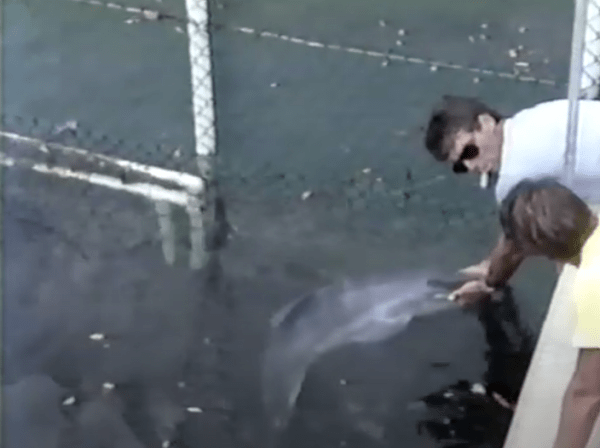
He sent me this edit of a longer video a few years ago. It shows the birth of a calf at Dolphins Plus in the Florida Keys, and how a moment of creation turns into a moment of tragedy.

Russ had no love for Dolphins Plus, and also in 1993 secured from former employee David Valdez this sworn testimony about practices and incidents at Dolphin Plus.

Friday Night Music

There is no better anthem for this apocalyptic era than the Grateful Dead’s “Morning Dew.”

And in honor of John Prine, here’s an excellent playlist, John Prine’s Life In 10 Songs, compiled by NPR. This is one of my favorites.