This is just a quick vignette illustrating the compassion and sympathy some people are capable of with regard to animals that provide humans with sustenance. It’s a story about a farmer in Portland, Oregon (of course!) who has gotten into the business of helping people retire their egg-laying chickens to a farm, instead of retiring them to the dinner table:
While many Portlanders still pluck aging birds for the broiler, others seek a blissful, pastoral end for them. Because most chickens lay the majority of eggs early in life, and can live about 10 years, the quest for a place where chickens can live out their sunset years has brought a boom to at least two farm animal sanctuaries and led Pete Porath, a self-described chicken slinger, to expand the portion of his business that finds new homes for unwanted birds.
“I would say I’m a halfway house for chickens on the move,” he said.
Mr. Porath, who brokers chicks to feed stores and other buyers from his five-acre farm in Estacada, first began finding new homes for birds as a free service to smooth bad feelings about misdelivered roosters. Now he “rehomes” 1,000 to 2,000 birds a year, most belonging to a unique subset he dubs “the Portland birds.”
Most people will laugh at this story, as an eccentricity. And I can see it being written into Fred Armisen’s often funny TV show, Portlandia. But imagine what the world would be like if this sort of thinking, and respect for animals, was mainstream instead of scoffed at as too inconvenient (or costly) for humans. And imagine what the world would be like if our moral calculus demanded such concern for the welfare of animals we exploit. Would be fun to find out (and you gotta love the fact that Portland allows each homeowner to keep 3 chickens).
But I guess “Colin” is one chicken that didn’t make it:
Can’t believe I just discovered this: ProPublica has been curating the best of watchdog journalism, via the Twitter hashtag #MuckReads.
This is the kind of journalism I love to read. It’s not good for your blood pressure, or for your view of humanity. But it’s the kind of journalism that’s essential in mobilizing people to tear down the status quo, reinvent, and rebuild.
Among the many disappointing truisms of human history: if there is a way to commercialize nature, nature will be commercialized.
That’s a dynamic that thousands of scientists are trying to stop, at least when it comes to industrial fishing in the Arctic Ocean. As global warming slowly pushes back, and even eliminates, the summer ice cover, it is opening up pristine waters and fish stocks that are barely understood to fleets of fishing boats that are eager for new fishing grounds.
Thousands of scientists from 67 countries have called for an international agreement to close the Arctic high seas to commercial fishing until research reveals more about the freshly exposed waters.
Recent Arctic sea-ice retreat during the summer months has opened up some of the waters that fall outside of the exclusive economic zones of the nations that circle the polar ocean. In all, more than 2.8 million square kilometres make up these international waters, which some scientists say could be ice free during summer months within 10–15 years. Although industrial fishing hasn’t yet occurred in the northernmost part of the Arctic, the lack of regulation may make it an appealing target for international commercial-fishing vessels.
“The science community currently does not have sufficient biological information to understand the presence, abundance, structure, movements, and health of fish stocks and the role they play in the broader ecosystem of the central Arctic Ocean,” says the letter, which was released by the Pew Environment Group on Sunday on the eve of the opening of the International Polar Year 2012 scientific conference in Montreal, Canada. More than 2,000 scientists, including 1,328 from Arctic coastal countries, signed the letter.
Keep an eye on this. It will be a good indicator of whether we have the capacity to learn and change, and elevate conservation and science to balance pure commercialism. But if you take any bets on it, make sure you are offered some serious odds.
Probably few practices are sustainable for a species which a) is relentlessly expanding; and b) has an economic and social culture that reveres and requires consumption. But this op-ed, “The Myth Of Sustainable Meat,” caught my eye a few weeks ago, because it argues–for all my meat-loving, environmentally-conscious friends–that organic, grass-fed, meat, is not really sustainable.
Grass-grazing cows emit considerably more methane than grain-fed cows. Pastured organic chickens have a 20 percent greater impact on global warming. It requires 2 to 20 acres to raise a cow on grass. If we raised all the cows in the United States on grass (all 100 million of them), cattle would require (using the figure of 10 acres per cow) almost half the country’s land (and this figure excludes space needed for pastured chicken and pigs). A tract of land just larger than France has been carved out of the Brazilian rain forest and turned over to grazing cattle. Nothing about this is sustainable.
Advocates of small-scale, nonindustrial alternatives say their choice is at least more natural. Again, this is a dubious claim. Many farmers who raise chickens on pasture use industrial breeds that have been bred to do one thing well: fatten quickly in confinement. As a result, they can suffer painful leg injuries after several weeks of living a “natural” life pecking around a large pasture. Free-range pigs are routinely affixed with nose rings to prevent them from rooting, which is one of their most basic instincts. In essence, what we see as natural doesn’t necessarily conform to what is natural from the animals’ perspectives.
The economics of alternative animal systems are similarly problematic. Subsidies notwithstanding, the unfortunate reality of commodifying animals is that confinement pays. If the production of meat and dairy was somehow decentralized into small free-range operations, common economic sense suggests that it wouldn’t last. These businesses — no matter how virtuous in intention — would gradually seek a larger market share, cutting corners, increasing stocking density and aiming to fatten animals faster than competitors could. Barring the strictest regulations, it wouldn’t take long for production systems to scale back up to where they started.
This is an important point. Factory farming is both a blight on the planet and a daily holocaust for millions of animals. And while small, organic farms address the toxic outputs, as well as the inhumanity, of industrial meat production, they do not really resolved the climate change impact of meat farming. And if all the world’s meat lovers abandoned factory-farmed meat, and demanded organic meat from small, humane, farms, meat-eating would still wreak environmental destruction on the planet (more pasture, fewer trees, more carbon output, etc., etc.).
Click image for full-size version.
The inevitable conclusion: while industrial meat-farming is an abomination for all sorts of reasons, the real environmental problem is that humanity eats WAY TOO MUCH meat. So the best thing our species could do for the planet and the animals is to stop eating meat. But the next best thing, a point made by many who wrote letters in response to the op-ed, is to eat a lot less meat.
So go ahead, enjoy your grass-fed, happy-cow steak, if you insist on eating meat. It’s better for you and better for the animals. But don’t feel smug or righteous about what you are doing for the planet. The only way you get to honestly feel you are doing something with impact is if you cut your meat consumption to near zero, or zero (basically, eat like a Bangladeshi–see below). Sorry, that’s just the reality. As Jonathan Safran Foer wrote in Eating Animals, if you eat meat you can’t really claim to be an environmentalist.
So each and every time the cyclist who died was at fault and the motorist broke no laws, or the police just couldn’t put down their doughnuts long enough to track down a suspect? I’d be willing to bet that a bunch were hit and run, at a minimum.
With those kinds of stats every cyclist should wear a headcam. It won’t save your life, but it may help jail the bastard who killed you.
There are probably a few, but good luck figuring out which. When my daughter and I went vegetarian we grappled with the question of whether we were just going meat-less, or meat-less AND fish-less. My daughter, bless her heart, had no question that we should leave fish alone. And I was fine with going along with her, partly for humane reasons, but also very much because all the evidence is that there are very few species of fish (whether wild-caught, or farmed) that are sustainably managed. And even fewer that don’t have some negative environmental impact (such as bycatch, disease transmission, antibiotic resistance, etc., etc.). So meat-less and fish-less we became.
We didn’t put a ton of research into that decision, but it feels vindicated by the news over the weekend that Whole Foods has decided to stop buying certain New England fish because it doesn’t believe that they are being fished sustainably (despite existing fisheries management, and “sustainable” certifications):
Starting Sunday, gray sole and skate, common catches in the region, will no longer appear in the grocery chain’s artfully arranged fish cases. Atlantic cod, a New England staple, will be sold only if it is not caught by trawlers, which drag nets across the ocean floor, a much-used method here.
“It’s totally maddening,” Mr. Sanfilippo said. “They’re just doing it to make all the green people happy.”
Whole Foods says that, in fact, it is doing its part to address the very real problem of overfishing and help badly depleted fish stocks recover. It is using ratings set by the Blue Ocean Institute, a conservation group, and the Monterey Bay Aquarium in California. They are based on factors including how abundant a species is, how quickly it reproduces and whether the catch method damages its habitat.
“Stewardship of the ocean is so important to our customers and to us,” said David Pilat, the global seafood buyer for Whole Foods. “We’re not necessarily here to tell fishermen how to fish, but on a species like Atlantic cod, we are out there actively saying, ‘For Whole Foods Market to buy your cod, the rating has to be favorable.’ ”
The company had originally planned to stop selling “red-rated” fish next year but moved up its deadline. The other fish it will no longer carry are Atlantic halibut, octopus, sturgeon, tautog, turbot, imported wild shrimp, some species of rockfish, and tuna and swordfish caught in certain areas or by certain methods. (Whole Foods has already stopped selling orange roughy, shark, bluefin tuna and most marlin.)
Many retailers tout the environmental credentials of their seafood, but a growing number of scientists have begun to question whether these certification systems deliver on their promises. The labels give customers a false impression that purchasing certain products helps the ocean more than it really does, some researchers say.
Backers respond that they are helping transform many of the globe’s wild-caught fisheries, giving them a financial incentive to include environmental safeguards, while giving consumers a sense of what they can eat with a clear conscience.
To add to the confusion, there are a variety of certification labels and guides, prompting retailers to adopt a hybrid approach, relying on multiple seafood rating systems or establishing their own criteria and screening products that way….[snip]
…The most stringent and commonly used certification is that of the Marine Stewardship Council, which has certified 148 wild-caught fisheries, or between 6 and 7 percent of the global supply. It uses independent reviewers to determine whether a fishery earns an MSC-certified label and can be classified as sustainable — meaning that the fish is relatively abundant, the fishery is well managed, and catching it does not harm other species or ocean habitats.
It is a measure of the attention focused on the world’s fish stocks that the council’s work has come under scrutiny.
A study published online last week in the journal Marine Policy showed that, for fish stocks where there was sufficient information, 31 percent of MSC-certified stocks were overfished and subject to continuing overfishing.
There’s no question that if you are going to eat fish, you should buy only fish that is certified as sustainable by…someone (and hope that it really is). But, to me, the only unambiguous way to protect and preserve fish stocks is….not to eat them.
Here’s a good graphic the Washington Post included, which reinforces the point that it is hard to know whom to believe:
Sailboat racing on the ocean can be thrilling. It can also be hard and dangerous, and sometimes people are killed. That happened this past weekend. One person died, and four are presumed dead, after a boat in the San Francisco Yacht Club’s Farallon Race was hit by a series of waves that washed crew overboard, and then drove the sailboat onto the rocks.
I wrote about the tragedy yesterday at SailingWorld.com, if you would like more details. And you can read the latest, from my friend Ronnie Simpson, on Sailing Anarchy (which inexplicably does not have permalinks to individual posts, so scroll down).
SFGate.com also has a good update, and has published a series of pictures showing the wreck, the Farallons, and some of the crew (full set is here). The photos, as they always do, help convey the sadness and loss.
I’ve been working on a story for Washingtonian magazine about drivers in the DC-region who are afflicted with what I call Cyclist Derangement Syndrome, and use their cars to target cyclists that annoy them.
A theme in bicycle-vehicle collisions around the country, whether premeditated or accidental, is that cyclists are often cited (sometimes incorrectly) for breaking some rule, and drivers who injure (and sometimes) kill them too often cruise away with no repercussions.
It’s one of the most puzzling and frurstrating elements of current traffic enforcement culture, and the cycling community has been trying to push back and get police officers and prosecutors to try and take a more even-handed, objective look at collisions involving cyclists. My article for Washingtonian is about an incident that illustrates this problem in the Washington region, but even I was surprised to see how much worse the situation is in NYC.
Last year, 21 cyclists were struck and killed but only two drivers were arrested. And about 40 percent of the time a driver is involved in a fatality – a pedestrian, cyclist, other motorist or themselves – not even a ticket is issued.
“We as a society have chosen to drive these big cars,” said Joe McCormack, an assistant District Attorney for the Bronx whose job it is to prosecute traffic crimes. “And we also as a society have chosen not to criminalize every single small mistake that just has a dramatic consequence because you’re driving a car.”
Well, I would say that when someone dies or is seriously injured it’s not really a “small” mistake and it might be time to start criminalizing the action.
So NYC seems to have a lot of deaths and injuries, and a pretty low penalty rate. Part of the problem is that there is often little evidence, or no witnesses, or a driver-said/cyclist-said dynamic. Regardless, it’s hard not to feel that cyclist injuries and deaths are not investigated with the same energy and persistence that other homicides get.
I don’t know for sure, but I am tempted to say that some law enforcement officers are predisposed to assume a cyclist that becomes a victim probably did something wrong, and is therefore at fault or somehow deserves what he or she got. To me, it is similar to the way in which the Sanford Police Department leaned over in the direction of George Zimmerman (no, he’s not related!) instead of investigating Trayvon Martin’s death with open eyes, and an objective attitude.
So there you have it: cycling is the equivalent of wearing a hoodie.
But for those of you who don’t: If you’ve ever been to St. Maarten’s Maho Beach, you know that it sits right at the end of the main runway to Princess Juliana Airport. That makes for a very unique beach experience, as large, tourist-packed, airliners land right over your head.
It’s a plane buff’s paradise. Sun, sand, cold beer, and large aircraft. But when I was there it never for a second occurred to me to try this. Which, apparently, is a good thing.
 This is just a quick vignette illustrating the compassion and sympathy some people are capable of with regard to animals that provide humans with sustenance. It’s a story about a farmer in Portland, Oregon (of course!) who has gotten into the business of helping people retire their egg-laying chickens to a farm, instead of retiring them to the dinner table: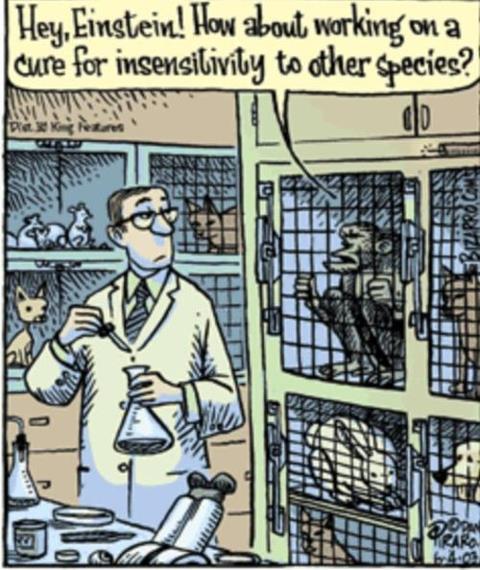
 Can’t believe I just discovered this:
  Among the many disappointing truisms of human history: if there is a way to commercialize nature, nature will be commercialized.


 I’ve been working on a story for Washingtonian magazine about drivers in the DC-region who are afflicted with what I call Cyclist Derangement Syndrome, and use their cars to target cyclists that annoy them.
 The Earthist Chronicles