It was in his Tallahassee office that Schweizer began what he thought was a promising research project: combing through congressional financial-disclosure records dating back to 2000 to see what kinds of investments legislators were making. He quickly learned that Capitol Hill has quite a few market players. He narrowed his search to a dozen or so members—the leaders of both houses, as well as members of key committees—and focused on trades that coincided with big policy initiatives of the sort that could move markets.
While examining trades made around the time of the 2003 Medicare overhaul, Schweizer experienced what he calls his “Holy crap!” moment. The legislation, which created a new prescription-drug entitlement, promised to be a huge boon to the pharmaceutical industry—and to savvy investors in the Capitol. Among those with special insight on the issue was Massachusetts Sen. John Kerry, chairman of the health subcommittee of the Senate’s powerful Finance Committee. Kerry is one of the wealthiest members of the Senate and heavily invested in the stock market. As the final version of the drug program neared approval—one that didn’t include limits on the price of drugs—brokers for Kerry and his wife were busy trading in Big Pharma. Schweizer found that they completed 111 stock transactions of pharmaceutical companies in 2003, 103 of which were buys.
“They were all great picks,” Schweizer notes. The Kerrys’ capital gains on the transactions were at least $500,000, and as high as $2 million (such information is necessarily imprecise, as the disclosure rules allow members to report their gains in wide ranges). It was instructive to Schweizer that Kerry didn’t try to shape legislation to benefit his portfolio; the apparent key to success was the shaping of trades that anticipated the effect of government policy.
It’s all part of a reality in which Congress is a path to wealth, or increasing wealth, which is one reason legislators so often fail to put the national interest first, and are willing to do whatever it takes to stay in their jobs.
I caught up with Roz while she was traveling the East Coast, and managed to speak with her as she was making her way toward the Apple store in Manhattan for a technology fix:
What made you quit the real world and go to sea? It was the realization that they just weren’t paying me enough to be that miserable. I was doing a job I didn’t like to buy stuff I didn’t need. The insanity of it suddenly dawned on me. So I had to do some serious thinning about what would make me happy. I sat down and wrote the two versions of my own obituary, the one that I wanted, and the one that I was heading for, and realized that working in an office cubicle was definitely not the legacy I wanted to leave to the world.
What do you love most about being at sea? I actually find it very tough out there. It’s definitely not my natural habitat, and I’m always relieved to get back to dry land. At the same time, I do enjoy the solitude and perspective it gives me on what’s important in life. You realize how little stuff you actually need. And you also realize how amazing and how powerful nature is. She has a way of really letting you know who is boss when you’re facing 20-foot waves and adverse winds.
Do you have any favorite moments? There have been some pretty amazing things that I’ve seen, especially at the nighttime. I saw a moonbow, something I didn’t even know existed. It’s what you get when there is a really, really bright moon and a rain shower, and it’s like a rainbow but it’s sort of monochrome. That was very cool. Of course there is the wildlife as well. Probably the coolest creature I’ve ever seen was the baby whaleshark that spent about 20 minutes swimming around my boat.
What have been the most difficult moments? Well, capsizing is never fun. I did that a couple of times this year and three times back in 2007. That’s just miserable really. But apart from the capsizing, in between the capsizes you are wondering when the next big wave is going to hit. I wouldn’t recommend it. It’s not a fun way to spend the night.
What do you think about Olly Hicks’ plan to try and row the Southern Ocean?
I’m a bit worried about Olly. I absolutely wish him all the best, but the Southern Ocean is just brutal. I wish he wouldn’t do it, but I know what it’s like when you get a bee in your bonnet, and you just really have to do something. So I completely understand why he is doing it, but I’ll be very relieved when he makes it back to dry land.
Why row? Sailing is so much nicer. [Laughs] You’re right. I think sailors do have the right idea. I can’t tell you how many times that occurred to me this year. They get to go a lot faster for a lot less effort. But I am not very good at sailing, and I seem to have a bit of a mental block about it. So for me rowing was something that I had done before and it seemed that much more doable. And I suppose another attraction was that—probably for very good reason—there are very few people who have rowed across oceans. So if you’re trying to get sponsorship and bag a few world records, then there are more records to be had by rowing. The records aren’t really that important to me, but I have ended up with four of them.
What have you seen at sea in terms of plastic and garbage? Most of the plastic is not very visible. I wish I had seen more conspicuous signs of it because if I could have brought back some really shocking photos that would have been really helpful. But most of it is isolated items or a thin soup of very tiny pieces. Still, when you read the estimates of how much plastic is really out there—like they guess three and a half million tons of trash in the North Pacific Garbage Patch alone, and that is just one of five gyres around the world—it really is quite staggering. Sometimes it surprises me that it’s not even worse than that when you look at just how much plastic we are generating every single day. The main thing is to just try and stop generating so much plastic in the first place. Once it gets into the ocean, it’s really challenging to try and get it back out.
When you speak about the oceans and your voyages, what are your primary messages? The main message is more on the inspirational level. I think a lot of people are concerned about what’s happening in the environment. We sort of know intuitively that it’s just not sustainable to carry on the way that we are. But a lot of people feel like they really can’t make a difference. So my key message really is that every single action we take is helping to create our future. It took me five million oar strokes to row across three oceans. One oar stroke doesn’t get you very far. But if you take five million tiny actions, it really adds up. So I’d like to get everybody realizing that they’re having an impact on the future, and they have that power. But with that power comes responsibility, and we all just need to be a lot more mindful of how much we are using in the way of resources and stuff that we throw away, and where that’s going to. On a finite earth, what goes around comes around.
So having rowed all those oceans, what’s next? Roz plans to make a film with her “message of inspiration.” Beyond rowing, she’s also looking to do a lot more speaking, travel, and land-based adventure, “because the opportunity cost of spending five months in the middle of an ocean is just too high.” Oh, yes, she has also agreed to sail around Borneo.
The story of how the life of Tilikum, the SeaWorld orca, came to mean the death of Dawn Brancheau, is complex and takes some telling. So I am glad to say that the uncut version of the story, which was originally published in Outside, is now available in e-book format.
This version is based on the original 11,500 word draft I wrote of the story, which chronicles Tilikum’s capture and separation from his family, and the physical and psychological stress he experienced in marine park pools over some 30 years. It explores Tilikum’s involvement in two previous deaths. And it details the history of the killer whale industry and the inherent risks of using captive killer whales for human entertainment.
The e-book version is available at the iTunes store, for iPad, iPhone, and iPod Touch.
Item #462 in the Corporatization of EVERYTHING Watch: Coca Cola steps in to derail a plan to ban plastic water bottles–which comprise 30% of the garbage left in the Grand Canyon National Park. Because why would you think that keeping a national treasure pristine is more important than selling Dasani water?
Weary of plastic litter, Grand Canyon National Park officials were in the final stages of imposing a ban on the sale of disposable water bottles in the Grand Canyon late last year when the nation’s parks chief abruptly blocked the plan after conversations with Coca-Cola, a major donor to the National Park Foundation.
Stephen P. Martin, the architect of the plan and the top parks official at the Grand Canyon, said his superiors told him two weeks before its Jan. 1 start date that Coca-Cola, which distributes water under the Dasani brand and has donated more than $13 million to the parks, had registered its concerns about the bottle ban through the foundation, and that the project was being tabled. His account was confirmed by park, foundation and company officials.
A spokesman for the National Park Service, David Barna, said it was Jon Jarvis, the top federal parks official, who made the “decision to put it on hold until we can get more information.” He added that “reducing and eliminating disposable plastic bottles is one element of our green plan. This is a process, and we are at the beginning of it.”
Two other telling items in this story: That visitors feel fine just tossing away so many bottles. And the ban would only have applied to smaller water bottles, and not big old soda and juice bottles. Really?
Quick: what was the first major terrorist attack by a foreign power on the United States?
If you answered an ingenious German plot in 1916 to blow up a major weapons depot in New York Harbor, you win a prize.
Aftermath of the Black Tom explosion, an act of sabotage on American ammunition supplies by German agents which took place on July 30, 1916 in Jersey City, New Jersey
However, I am guessing that you didn’t come up with that answer. But it is a story worth knowing. It’s got spies, heroic rescue efforts, a pencil bomb, and an investigation that took years, and Smithsonian’s awesome Past Imperfect blog has the details:
All was dark and quiet on Black Tom Island in New York Harbor, not far from the Statue of Liberty, when small fires began to burn on the night of July 30, 1916. Some guards on the island sent for the Jersey City Fire Department, but others fled as quickly as they could, and for good reason: Black Tom was a major munitions depot, with several large “powder piers.” That night, Johnson Barge No. 17 was packed with 50 tons of TNT, and 69 railroad freight cars were storing more than a thousand tons of ammunition, all awaiting shipment to Britain and France. Despite America’s claim of neutrality in World War I, it was no secret that the United States was selling massive quantities of munitions to the British.
The guards who fled had the right idea. Just after 2:00 a.m., an explosion lit the skies—the equivalent of an earthquake measuring up to 5.5 on the Richter scale, according to a recent study. A series of blasts were heard and felt some 90 miles in every direction, even as far as Philadelphia. Nearly everyone in Manhattan and Jersey City was jolted awake, and many were thrown from their beds. Even the heaviest plate-glass windows in Lower Manhattan and Brooklyn shattered, and falling shards of glass preceded a mist of ash from the fire that followed the explosion. Immigrants on nearby Ellis Island had to be evacuated.
German Master Spy Franz Von Rintelen and his "pencil bomb" were responsible for acts of sabotage in the United States during World War I. Photo: Wikipedia
The German masterminds of the attack are straight out of central casting:
One of those newcomers to America was Count Johann Von Bernstorff, the German ambassador to Washington. He arrived in 1914 with a staff not of diplomats, but of intelligence operatives, and with millions of dollars earmarked to aid German war efforts by any means necessary. Von Bernstorff not only helped obtain forged passports for Germans who wanted to elude the Allied blockade, he also funded gun-running efforts, the sinking of American ships bringing supplies to Britain, and choking off supplies of phenol, used in the manufacture of explosives, in a conspiracy known as the Great Phenol Plot.
One of his master spies was Franz Von Rintelen, who had a “pencil bomb” designed for his use. Pencil bombs were cigar-sized charges filled with acids placed in copper chambers; the acids would ultimately eat their way through the copper and mingle, creating intense, silent flames. If designed and placed properly, a pencil bomb could be timed to detonate days later, while ships and their cargo were at sea. Von Rintelen is believed to have attacked 36 ships, destroying millions of dollars worth of cargo. With generous cash bribes, Von Rintelen had little problem gaining access to piers—which is how Michael Kristoff, a Slovak immigrant living in Bayonne, New Jersey, is believed to have gotten to the Black Tom munitions depot in July of 1916.
Investigators later learned from Kristoff’s landlord that he kept odd hours and sometimes came home at night with filthy hands and clothing, smelling of fuel. Along with two German saboteurs, Lothar Witzke and Kurt Jahnke, Kristoff is believed to have set the incendiary devices that caused the mayhem on Black Tom.
It’s hard to know how to respond to the overwhelming sense that the priorities and inertia of human culture are trashing the planet. But I just came across a thought-provoking review of a fascinating book. Revolutions That Made The Earth, which helps frame the choices.
First off, the book is about how life on earth has previously adapted to dramatic change, and it argues something critical: that the forces humanity has set in motion, particularly with regard to climate, are going to cause major transformations to earth no matter what we do now. In other words, an Apocalyptic change is coming. Here is how the book explains it:
Even the normally cheerful and creative Jim Lovelock argues that we are already doomed, and nothing we can do now will stop the Earth system being carried by its own internal dynamics into a different and inhospitable state for us. If so, all we can do is try to adapt. We disagree—in our view the game is not yet up. As far as we can see no one has yet made a convincing scientific case that we are close to a global tipping point for ‘runaway’ climate change.
[…]
Yet even without truly ‘runaway’ change, the combination of unmitigated fossil fuel burning and positive feedbacks from within the Earth system could still produce an apocalyptic climate for humanity. We could raise global temperature by up to 6 °C this century, with more to come next century. On the way there, many parts of the Earth system could pas their own thresholds and undergo profound changes in state. These are what Tim [Lenton] and colleagues have called ‘tipping elements’in the climate system.
They warrant a book by themselves, so we will just touch on them briefly here. The tipping elements include the great ice sheets covering Greenland and West Antarctica that are already losing mass and adding to sea level rise. In the tropics, there are already changes in atmospheric circulation, and in the pattern of El Niño events. The Amazon rainforest suffered severe drought in 2005 and might in the future face a climate drying-triggered dieback, destroying biodiversity and adding carbon to the atmosphere. Over India, an atmospheric brown cloud of pollution is already disrupting the summer monsoon, threatening food security. The monsoon in West Africa could be seriously disrupted as the neighboring ocean warms up. The boreal forests that cloak the northern high latitudes are threatened by warming, forest fires and insect infestation. The list goes on. The key point is that the Earth’s climate, being a complex feedback system, is unlikely to respond in an entirely smooth and proportional way to significant changes in energy balance caused by human activities.
A popular answer to apocalyptic visions of the future is retreat, into a lower energy, lower material consumption, and ultimately lower population world. In this future world the objective is to minimize human effects on the Earth system and allow Gaia to reassert herself, with more room for natural ecosystems and minimal intervention in global cycles. The noble aim is long-term sustainability for for people as well as the planet.
There are some good and useful things we can take from such visions of the future, especially in helping to wean ourselves off fossil fuels, achieve greater energy efficiency, promote recycling and redefine what we mean by quality of life. However, we think that visions of retreat are hopelessly at odds with current trends, and with the very nature of what drives revolutionary changes of the Earth. They lack pragmatism and ultimately they lack ambition. Moreover, a retreat sufficient to forestall the problems outlined above might be just as bad as the problems it sought to avoid.
REVOLUTION:
Our alternative vision of the future is of revolution, into a high energy, high recycling world that can support billions of people as part of a thriving and sustainable biosphere. The key to reaching this vision of the future is to learn from past revolutions: future civilizations must be fueled from sustainable energy sources, and they must undertake a greatly enhanced recycling of resources.
Baez writes that he thinks that we could have a combination of Apocalypse and Revolution:
For now, I would just like to suggest that ‘apocalypse’ and ‘revolution’ are not really diametrically opposed alternatives. All three previous revolutions destroyed the world as it had been!
For example, when the Great Oxidation occurred, this was an ‘apocalypse’ for anaerobic life forms, who now struggle to survive in specialized niches here and there. It only seems like a triumphant ‘revolution’ in retrospect, to the new life forms that comfortably survive in the new world.
So, I think we’re headed for a combination of apocalypse and revolution: the death of many old things, and the birth of new ones. At best we have a bit of influence in nudging things in a direction we like. I don’t think ‘retreat’ is a real option: nostalgic though I am about many old things, time always pushes us relentlessly into new and strange worlds.
And I would say I agree. Except I want to add that this does not seem like a very appealing future to me. Both Baez and Revolutions That Made The Earth more or less dismiss Retreat as unrealistic (though Baez does indicate he would find it appealing). They could be right. They probably are right. But Retreat–with its emphasis on conservation, anti-consumerism, and balance with the natural world–has to be the central theme of the Revolution (though I wouldn’t call it Retreat, I would call it something more positive). In fact, it is the key to real revolution. And while technology, which seems to be at the core of the Revolution scenario, might give us a world in which we can survive, it doesn’t really promise a world in which we can LIVE.
When you want to know how to rob a bank, it’s good to listen to a bank robber. When you want to know how to buy votes in Congress, it’s good to listen to Jack Abramoff, who just published an autobiography and appeared on 60 Minutes.
Abramoff was convicted for buying influence in Congress, but his playbook on how he operated tells you all you need to know about how corrupt our system is, and why Congress consistently puts special interests above the public interest.
One of his most effective tactics, Abramoff says, was to promise Congressional staffers high paying jobs:
The movement of congressional figures to lobbying is pervasive in Washington. The Internet site LegiStorm tracks those who move from the Hill to K Street, where many lobbying firms have offices, and says there have been 493 already this year.
Abramoff said he would often get access inside congressional offices by suggesting to key staffers that they come work for him when they were finished with their congressional careers.
“Assuming the staffer had any interest in leaving Capitol Hill for K Street — and almost 90 percent of them do — I would own him and, consequentially, the entire office,” Abramoff writes. “No rules had been broken, at least not yet. No one even knew what was happening, but suddenly, every move that staffer made, he made with his future at my firm in mind. His paycheck may have been signed by the Congress, but he was already working for me.”
The Congress to K St and back connection is one of the reasons Congress has become just one more way for people to get rich. And the reason lobbying shops can pay high salaries is that they can charge high fees to corporate clients for special legislative provisions that are worth billions. Stop the money that the lobbying shops spread around Congress, which buys those legislative give-aways, and you can make K St a lot less profitable, and limit the allure of K St. and the corrupting influence the promise of a job on K St. has for the thousands who are supposed to be representing your interests in Congress.
But how to do that? Water flows downhill, and money flows into Congress, one way or another, despite every effort to write rules to regulate or limit it. That’s why the only solution–if you want a Congress that isn’t corrupted by money–is to take this simple step: do not vote for any candidate who takes lobbying and PAC money, no matter how much you might agree with their views.
It’s a demand side solution, in contrast to the failed supply side solution of trying to craft laws and regulations which in the end always have loopholes or run into constitutional problems. And if enough voters draw this line, you might get some candidates who you believe in and who are not beholden to special interest money. What would that be like?
It might seem like a radical ask. But watch this 60 Minutes segment and then see how you feel about it.
Since we are on the subject of health, I can’t resist adding that my health care reinvention would include a lot more cycling. Because a new study reconfirms the blindingly obvious: biking reduces obesity and cardiac disease (along with pollution), and saves money:
A study published in the scientific journalEnvironmental Health Perspectives shows that swapping your car for short trips and replacing them with mass transit and active transport provides major health benefits. The study will be presented to the American Public Health Association in Washington, D.C. $3.8 billion per year are saved in avoided mortality and reduced health care costs for obesity and heart disease by replacing half of the short journeys with bicycle trips during the warmest six months of the year.
The researchers calculated that an estimated $7 billion including 1,100 lives from improved air quality and increased physical fitness can be saved each year by applying these measures.
This chart comes from an op-ed by Zeke Emanuel, one of a handful of people everyone should listen to when it comes to reinventing our failed health care system. Emanuel argues that we can spend less on health care without compromising health outcomes, and here is his key point:
The truth is, the United States is not getting 20 or 30 percent better health care or results than other countries. While there are peaks of greatness, especially at some of America’s leading academic health centers and in integrated health care plans, the quality is uneven. And quality is a problem that affects all of us, rich and poor. Almost no matter how we measure it — whether by life expectancy or by survival for specific diseases like asthma, heart disease or some cancers; by the rate of medical errors; or simply by satisfaction with health services — the United States is actually doing worse than a number of countries, like France and Germany, that spend considerably less.
About half of all the health care dollars spent comes from the U.S. government. Which means that if we simply got over our hangups about “European” social programs and adopted the health care system of, say, France, we could have universal health care in the United States with no increase in the amount of money the Federal government is already contributing. And get better health outcomes.
The fact that we don’t is all you need to know about how ossified and absurd our thinking is on health care, and how the lobbies for the status quo have corrupted Congress and are stealing us blind.
One of the reasons people hate the idea of paying congestion fees is that they are often pretty bad at calculating what traffic really costs them. But time is money, as they say, so congestion fees are offset by the time savings you gain. Plus, the revenue can be invested in transit improvements and options that are currently paid for with a gas tax. Think about it.
Anyhow, if you really want to save money, this graphic really drives home the key point: try to live near your work! The Suburban Dream is very expensive.

 The story of how the life of Tilikum, the SeaWorld orca, came to mean the death of Dawn Brancheau, is complex and takes some telling. So I am glad to say that the uncut version of the story, which was originally published in Outside, is now available in e-book format.


 It’s hard to know how to respond to the overwhelming sense that the priorities and inertia of human culture are trashing the planet. But I just came across a
  When you want to know how to rob a bank, it’s good to listen to a bank robber. When you want to know how to buy votes in Congress, it’s good to listen to Jack Abramoff, who just published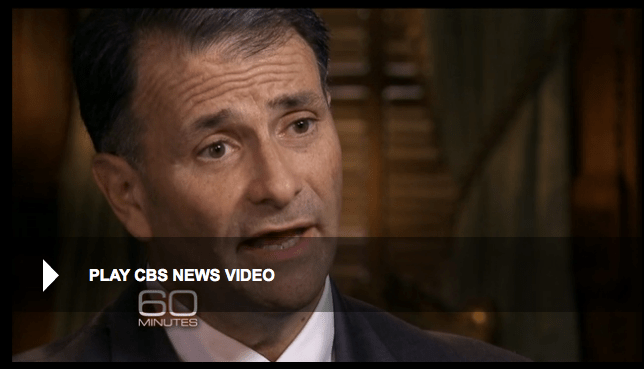


 The Earthist Chronicles