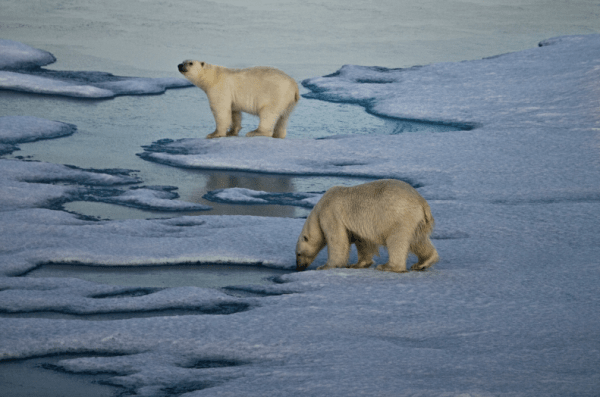
Nature Heals

And calms. And restores.

Of course, you already knew that. But here is an excellent discussion of all the science behind it:

Nature restores mental functioning in the same way that food and water restore bodies. The business of everyday life — dodging traffic, making decisions and judgment calls, interacting with strangers — is depleting, and what man-made environments take away from us, nature gives back. There’s something mystical and, you might say, unscientific about this claim, but its heart actually rests in what psychologists call attention restoration theory, or ART. According to ART, urban environments are draining because they force us to direct our attention to specific tasks (e.g., avoiding the onslaught of traffic) and grab our attention dynamically, compelling us to “look here!” before telling us to instead “look over there!” These demands are draining — and they’re also absent in natural environments. Forests, streams, rivers, lakes, and oceans demand very little from us, though they’re still engaging, ever changing, and attention-grabbing. The difference between natural and urban landscapes is how they command our attention. While man-made landscapes bombard us with stimulation, their natural counterparts give us the chance to think as much or as little as we’d like, and the opportunity to replenish exhausted mental resources.

These folks must be super-healed:

Battle For The Elephants

Via: http://ngm.nationalgeographic.com/2012/10/ivory/stirton-photography#/

Of all the intelligent, self-aware creatures under threat by man, the plight of the elephants is the most urgent and tragic. The reason is simple: they are being killed for the most indefensible of reasons (an Asian love of ivory trinkets), and the killing is so successful that 98% of the African population has been wiped out in a century, leaving a real possibility that African elephants will be extinct in as little as a decade.

That is an epic human failure–perhaps the most epic failure–to respect, steward, and conserve one of Earth’s most fascinating and iconic creatures.

Carl Safina is on it, and recommends the PBS special “Battle For The Elephants” as must-watch TV. It came out of Brian Christy’s epic National Geographic feature, Blood Ivory.

I hadn’t heard about it before, but dug around a bit.

Here’s the description from PBS:

The film tells the ultimate wildlife story — how the Earth’s most charismatic and majestic land animal today faces market forces driving the value of its tusks to levels once reserved for precious metals. Journalists Bryan Christy and Aidan Hartley take viewers undercover as they investigate the criminal network behind ivory’s supply and demand. In Dar es Salaam, Tanzania, one of the world’s main ports for smuggled ivory, Hartley attempts to buy large quantities of tusks from poachers. In China, Christy explores the thriving industry of luxury goods made from ivory and the ancient cultural tradition of ivory carving.

And here is the full episode:

Sharks And Humans

Sometimes an infographic conveys something important (get your scrolling finger ready):

Good Fences Make Good (Large Animal) Neighbors

At least that’s what scientists working on lion conservation have concluded:

After 35 years of field research in the Serengeti plains, Craig Packer, director of the Lion Research Center at the University of Minnesota, has lost all patience with the romance of African wilderness. Fences, he says, are the only way to stop the precipitous and continuing decline in the number of African lions.

“Reality has to intrude,” he said. “Do you want to know the two most hated species in Africa, by a mile? Elephants and lions.” They destroy crops and livestock, he said, and sometimes, in the case of lions, actually eat people.

Dr. Packer’s goal is to save lions. Fencing them in, away from people and livestock, is the best way to do that, he believes, both for conservation and economics. He made that argument in a paper this month in Ecology Letters, along with 57 co-authors, including most of the top lion scientists and conservationists.

I am a romantic when it comes to the wild, but I agree that sometimes you have to be practical. And if fences will save lives all around, then it is hard to argue against them–though the cost estimates are daunting. And even if you could build all that fencing, is there anything to prevent humans from continuing to shrink the fenced area as populations continue to grow?

It would be interesting to try to compare the net benefit of investing tens, if not hundreds, of millions of dollars in fencing versus investing in education and technical training, say, which in turn helps reduce the poverty and desperation that often gets lions (and elephants) killed, slows population growth, and reduces reliance on livestock farming.


Whales vs. Ships

Keeping them out of each other’s way is a complicated business:

A first-of-its-kind study matching whale habitat to Southern California shipping lanes shows that two species, humpback and fin whales, might suffer fewer ship strikes if a new lane were created.

But the solution is not quite so simple for blue whales. These giants of the sea appear to be in the most trouble from ship strikes, and would be unlikely to benefit from any change in the four shipping lanes the study considered.

The scientists who conducted the study also estimated that more blue whales are being struck off the Southern California coast than their population can sustain without raising the risk of depletion.

“At best, the blue whale population is remaining steady,” said Jessica Redfern, a marine ecologist at the National Marine Fisheries Service and the study’s lead author. “Of the three, we’re probably the most concerned about blue whales.”

All three species examined in the study are listed as endangered. The scientists used data on conditions in the marine environment, along with whale sighting records, to map out the most likely habitat for each species.

Four shipping routes were then superimposed over the habitat maps. The result: the clearest picture yet of the places on the Southern California coast where ships and whales are most likely to collide.

The findings reveal the intricate interweaving of ocean corridors used by humans and the massive sea mammals.

The route that presents the least risk to humpback whales, for example, poses the highest risk for fin whales. The reverse also is true.

Humpbacks tend to concentrate farther north, fins farther south.

“Something in the center there seems like it may be good for ameliorating the risks for both species,” Redfern said, though the study does not make specific recommendations about shifts in shipping lanes.

Blue whales, however, occur throughout the area along all four shipping routes, spread so evenly that concentrating shipping in any one of the four routes seemed unlikely to reduce their risk.

Here’s how it looks on paper:

Moving shipping lanes around, especially if it costs shipping companies money, is not an easy ask. Whales–dead or alive–don’t show up on a shipping company’s balance sheet. But shipping slowdowns and re-routing on the Atlantic coast have helped reduce some right whale deaths.

When whale populations are so fragile, and whales are so majestic and intelligent, each life saved is especially important. Shipping companies might resist, but they can pass the incremental cost on to customes. And if that induces people to buy less stuff shipped halfway around the world, then that’s not a bad thing, either.

Killing Coyotes

This is (oxy)moronic. Utah has a bounty program that pays hunters to kill coyotes, to keep coyotes from killing the mule deer, to enable more hunters to kill more mule deer. Seems like the only animal that wins out is the hunter.

The science is dubious:

Officially, the aim of the program is to protect the mule deer, a symbol of Utah. Larger than white-tailed deer, with distinctive oversize ears and impressive antlers, the mule deer is a favorite of hunters and hikers here. Coyotes prey on the fawns, so the Mule Deer Protection Act allots $500,000 for bounties. Gov. Gary R. Herbert, a Republican, signed the bill last March at a shop that manufactures hunting bows, as a way to emphasize the $2.3 billion that hunting and wildlife appreciation bring to the state economy.

But environmentalists argue that there is little scientific evidence that curbing the number of coyotes actually helps mule deer rebound. (A six-year study published in 2011 found that coyote removal did not effectively increase the mule deer population in neighboring southeastern Idaho.)

The results are grotesque (according to the accompanying video hunters lure the coyotes in with “lip squeaking,” which is sort of like an air kiss):

So this winter, when Mr. Glauser, 18, spotted a coyote on a patch of ice, he ably called it to him, and shot it. Then he made his way with the carcass to a Division of Wildlife Resources office here, where a government pickup truck served as a repository for parts. Ears, jaws, scalps and nose-to-tail pelts were deposited in an iced-over flatbed as hunters pulled up with garbage bags carrying the animals’ remains. In orderly fashion, their hauls were documented.

One veteran trapper came with a cargo of a dozen skins. Others, like Mr. Glauser, proudly carried one capture. They lined up to qualify for their bounty: $50 per coyote.

The expectations are half-assed:

“I want to have these predators on the landscape,” said John Shivik, the mammal program coordinator for the state’s Division of Wildlife Resources. “We’re not trying to kill them all off, but we’ve got to figure out ways to manage the damage they do, to keep them tolerated.

“Is it going to work? We don’t know,” he added. “But what we’re doing is, we’re giving it the best shot. Nobody’s tried anything this big before.”

You don’t know? Yep, that’s a solid program, and good reason to lock and load.

“Managing wildlife,” especially when it is motivated by human preferences, desires, and fears, always seems an objectionable, and often ill-fated,  proposition (even more so when the motivation is hunting tourism profits). Nature usually does quote well managing its own affairs. The only thing we should try and manage is our own impact on nature. Maybe there is a good bounty program that could be created for that. Kidding. Sort of.
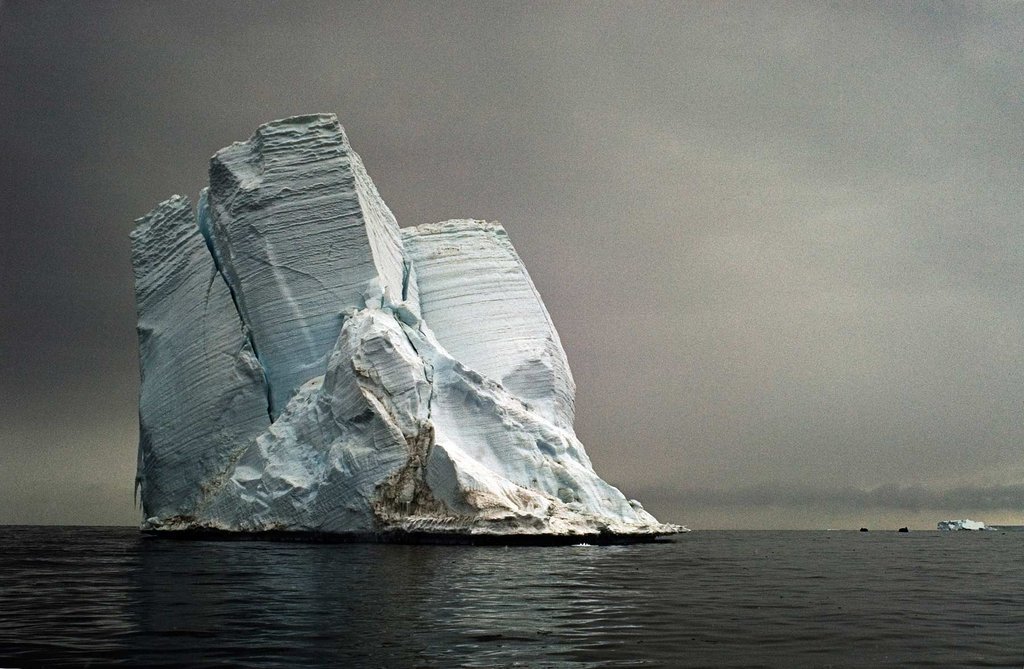
The Last Iceberg

A haunting image from photographer Camille Seaman. It’s from one of her powerful galleries depicting ice, the oceans, and polar life.

Screen Shot 2013-03-22 at 10.04.59 AM

As regular readers know, I believe Seeing Is Important. So I find this kind of photojournalism invaluable in terms of documenting change as well as eliciting emotion–which is a prelude to action.

Here, Seaman talks about her work:

Film Fest: Wild Things

Nope, not more news about Blackfish.

But I wanted to take note of this documentary about the obscure Wildlife Service department of USDA, which every year kills 100,000 coyotes, bobcats, foxes, wolves, bears, and mountain lions. Two of the methods favored: baits traps containing spring-loaded poison cartridges, which shoot sodium cyanide into an animal’s mouth, and shooting animals from aircraft.

It’s not exactly what you would call living in harmony with the natural world.

OnEarth explains:

“It’s blatant killing,” former Wildlife Services employee Gary Strader says in the film, explaining the mindset of the agency where he used to work. “It’s just flying around — there’s a coyote, let’s kill it. There’s a coyote, let’s kill it. Let’s kill it, let’s kill it. You know, it’s just every coyote they see, they’re gonna kill it.”

And that’s just what the agency does on purpose. A Sacramento Beeinvestigation last year found that Wildlife Services has also accidentally killed more than 50,000 animals since 2000, including bald eagles, endangered wolverines, family dogs, and several species considered threatened or imperiled by wildlife biologists. And 10 plane crew members have died in crashes since 1989 during aerial gunning operations, including two in 2007, the Bee reports.

What’s the point of all this death and destruction? The Department of Agriculture says it’s spending about $30 million a year to protect commercial livestock from coyotes, wolves, and other predators. (It’s harder to argue with some of Wildlife Services’ other roles, like controlling rabies and removing geese from airport runways — although some people object to lethal measures there, as well.) The economic case for killing predators to protect livestock is pretty shaky, though. A 2001 Governmental Accountability Office report could find no independent studies of the costs and benefits associated with Wildlife Services, and it urged the agency to develop more nonlethal means of protecting livestock, including wildlife contraceptives and scare devices triggered by motion sensors.

The scientific argument for lethal control is even worse. As the Bee reports, a growing body of scientific research has found that by killing predators in such large numbers, Wildlife Services is “altering ecosystems in ways that diminish biodiversity, degrade habitat, and invite disease.”

More info here.

Man and Manatee

Paul Nicklen really is the most extraordinary photographer. This new photoset perfectly captures the conservation dilemmas created by human intrusion on the manatee habitat and the human desire to get close to manatees. Stunning work:

The Florida manatee is thriving in Kings Bay, and so is tourism.
Kayaks crowd Three Sisters Springs, where people and manatees maintain a controversial coexistence. To reach the warm water they need to survive winter, manatees often must run a gantlet of kayakers
and snorkelers eager to interact with the marine mammals.
Expanding residential, commercial, and agricultural development in Florida often requires increased pumping of groundwater. The resulting loss of flow from natural springs reduces wintering habitat for manatees.
Scientists and volunteers capture manatees to gather statistics on their age, size, and physical condition.

The thing that Nicklen conveys so well is that even when humans have benign or even positive intentions the degree of interference and impact on the environment and lives of non-human species is deeply disruptive.

The full photoset is here, and each photo is as powerful as the next. You can look at more of Nicklen’s work here.

The Elephant Slaughter Rolls On

Ugh:

Poachers in south-west Chad have killed at least 86 elephants including 33 pregnant females in less than a week, in a potentially devastating blow to one of central Africa‘s last remaining elephant populations.

Groups of elephants follow traditional migration routes during the dry season from Central African Republic, through Chad to Cameroon. Thirty years ago there were estimates of 150,000 animals across the region, but today that figure could be as low as 2,000.

According to the International Fund for Animal Welfare (IFAW), the elephants were killed near Fianga, close to the border between Chad and Cameroon, and their tusks were hacked off. Fianga is near a cross-border national park area – Sene Oura in Chad and Bouba N’Djida in Cameroon, where many elephants spend the dry season before the rains start in April. It is thought the animals were killed by Chadian and Sudanese poachers travelling on horseback carrying AK47s and hacksaws to remove the tusks.

“The poachers killed pregnant females and all the calves,” said Celine Sissler-Bienvenu from IFAW. “Even if the conditions were right, which they are not, it would take more than 20 years for this population to recover”.

This isn’t working for the elephants. Is it working for you? Didn’t think so.

I think I have a good idea for a more justifiable and effective use for drones.