Warmer And Warmer

To complete today’s infographic trifecta, below is a graphic representation of land and ocean temperatures for Sept. 2012. All that red is enough to make tie it for the warmest September ever, according to NOAA.

Here’s the backstory, courtesy of Weather Underground’s Dr. Jeff Masters:

September 2012 was tied with 2005 as the globe’s warmest September on record, according to the National Oceanic and Atmospheric Administration’s National Climatic Data Center (NCDC). Global temperature records begin in 1880. NASA rated September 2012 the 4th warmest September on record. September 2012 global land temperatures were the 3rd warmest on record, and global ocean temperatures were the 2nd warmest on record. September 2012 was the 331st consecutive month with global temperatures warmer than the 20th century average. The last time Earth had a below-average September global temperature was in 1976, and the last below-average month of any kind was February 1985. Global satellite-measured temperatures in September 2012 for the lowest 8 km of the atmosphere were 5th or 3rd warmest in the 34-year record, according to Remote Sensing Systems and the University of Alabama Huntsville (UAH). Wunderground’s weather historian, Christopher C. Burt, has a comprehensive post on the notable weather events of September 2012 in his September 2012 Global Weather Extremes Summary.

It seems that government agencies can’t agree on everything. But I think it is safe to conclude they are all saying September was pretty darn warm. And what really jumps out at me are the two sentences I boldfaced.

It’s insane that we are having a debate about whether warming is really occurring instead of what we should be doing about it (ahem–carbon tax). That is an epic failure of leadership, and the triumph of self-interested denialism. History will not be kind to this willful ignorance.

(Click image for full size).

How Much Naval Power Do We Really Need?

I guess it’s infographic day down here in the bunker.

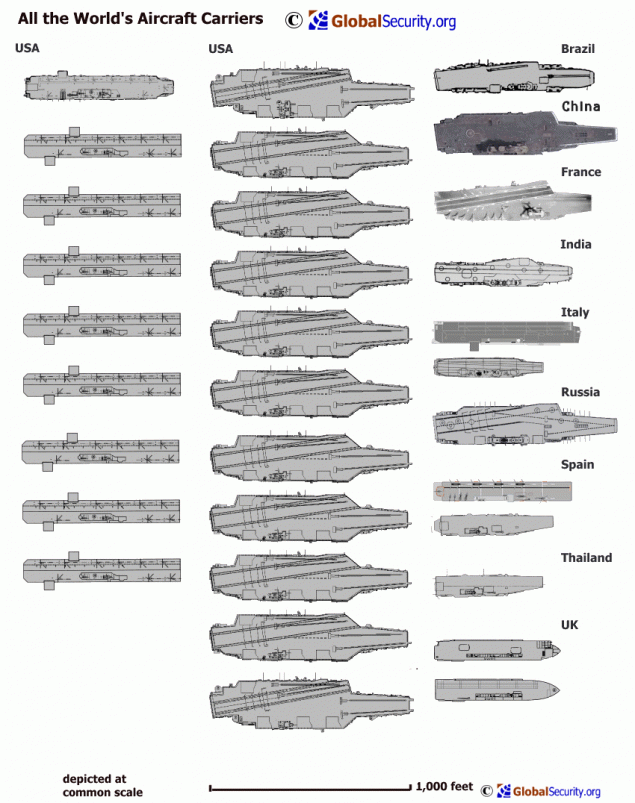
This one gets at the question raised by the U.S. Navy’s proposal to “take” 33 million marine mammals over the next five years. And if that’s the savage price the Navy thinks the world’s oceans should pay in exchange for sonar and weapons training, it’s worth looking at what sort of military competition our Navy is facing. Must be fierce.

Oh, wait (click image for full size).

Sorta feels like we are in pretty good shape, and that doing a lot less live sonar and weapons training, or doing it ALL in simulators, would not really jeopardize US naval power.

(via)

The Oceans’ Most Destructive Predators

Sadly true. Nicely done, Avaaz (click image for full size).

Ocean Pollution

Inadvertent Whaling

An interesting study recently confirmed something sad that I have suspected for years: that despite the fact that humans are actively trying to protect whales in the North Atlantic, human culture and human lifestyles are so intrusive and damaging that we still end up killing whales.

This comes from a story in Nature:

Human activity is still killing right whales, one of the most endangered animals in the ocean. An analysis of four decades of whale deaths shows that attempts to prevent them have not had a demonstrable impact.

Only around 460 North Atlantic right whales (Eubalaena glacialis) are thought to be swimming the waters off the eastern seaboard of Canada and the United States. The governments of both countries have implemented several measures to protect whales from becoming entangled in fishing gear or being hit by ships, such as the US ‘ship strike rule’ that limits vessel speeds in certain areas. That rule came into force in 2008 and is due to expire next year.

Marine-mammal researchers Julie van der Hoop and Michael Moore, both at the Woods Hole Oceanographic Institution in Woods Hole, Massachusetts, and their colleagues, analysed all known deaths of eight species of large whale in the northwest Atlantic between 1970 and 2009. During that time 122 right whales died, along with 473 humpbacks (Megaptera novaeangliae), 257 fin whales (Balaenoptera physalus) and scores of whales of other species. When the authors were able to assign a cause of death, ‘human interactions’ was the most common, appearing in 67% of cases. Entanglement in fishing gear was the main cause of death in this category.

The protection measures seem to have had no impact on whale deaths, according to the study published online in Conservation Biology1. Although several of the rules were implemented only towards the end of the study period, Moore still admits that the finding is “hugely disappointing”.

We can decry the age of whaling, in which humans were wiping whales out one after the other. But that was an age when the killing was both intentional and highly technological. It’s almost scarier to think that the way humans live today means that whales die, even though we (mostly) don’t want them to. In other words, there is something deeply wrong about the way in which we live today.

The main culprit appears to be our fishing practices, which are egregious enough in terms of what they do to fish stocks, quite apart from how they affect whales (and all the other species which also become collateral damage).

I feel the same way about industrial fishing as I do about industrial farming, though industrial fishing does not seem to attract the same intense opposition–perhaps because fish are not considered as intelligent and sentient as farm animals. But that certainly doesn’t mean that industrial fishing isn’t as environmentally shortsighted, and criminally wasteful (and in many instances it is cruel, as well).

But whatever you think about the emotional lives of ocean fish, and the moral issues around killing them, it’s hard not to sympathize with whales that get entangled or killed by fishing equipment. And judging from the reaction of this humpback, anything we can do to further limit the damage to whales from fishing would be much appreciated.

U.S. Navy Proposes “Taking” 33 Million Marine Mammals

This is stunning, and a perfect example of how the inertia of stale priorities–especially Cold War-era national security priorities–can take us down some disastrous roads.

From a New York Times editorial:

Between 2014 and 2019, the United States Navy hopes to conduct testing and training exercises in the Atlantic and the Pacific that will involve sonars and explosives of many different kinds.

Over the years, the Navy has been forced to acknowledge what science has clearly demonstrated: noise generated by sonar and underwater detonations can kill marine mammals, like whales and porpoises, and disturb their normal feeding, breeding and migration. In preparing for its upcoming exercises, the Navy has asked the National Marine Fisheries Service for approval to “take” a number of marine mammals — “take” being the broad term for everything from killing these creatures to disturbing their habits.

This all sounds as it should be, with the Navy requesting permission from the agency, as required by various laws protecting marine mammals and endangered species. But the numbers say something else. In its testing areas in the Atlantic, the Gulf of Mexico and the Pacific, the Navy estimates that between 2014 and 2019 it will “take” nearly 33 million marine mammals — everything from blue whales to elephant seals.

Most of these creatures will be disturbed in some way but not injured or killed. But the damage could still be considerable. Sound travels much faster through water than it does through air, magnifying its impact, and many of the sounds the Navy plans to generate fall in the frequencies most damaging to marine mammals. More than five million of them may suffer ruptured eardrums and temporary hearing loss, in turn disrupting normal behavioral patterns. As many as 1,800 may be killed outright, either by testing or by ship strikes.

So we’ve got whales versus sonar and naval training. That’s a trade-off that needs a much closer look, as the New York Times urges.

BP Macondo Well Leaking Again?

Man Of War In Oil Slick
Carol Guzy/THE WASHINGTON POST – Oil surrounds a surfacing Portuguese man-of-war in the waters near South Pass, La. The Deepwater Horizon spill has taken an emotional toll on many people, with some describing the damage in the Gulf of Mexico as a “sacred loss” of fragile environments and endangered species.

Uh-oh. This isn’t good. From the Washington Post:

The oil in a slick detected in the Gulf of Mexico last month matched oil from the Deepwater Horizon spill two years ago, the Coast Guard said Wednesday night, ending one mystery and creating another.

“The exact source of the oil is unclear at this time but could be residual oil associated with the wreckage or debris left on the seabed from the Deepwater Horizon incident,” the Coast Guard said.

The Coast Guard added that “the sheen is not feasible to recover and does not pose a risk to the shoreline.” One government expert said the thin sheen, just microns thick, was 3 miles by 300 yards on Wednesday.

Some oil drilling experts said it was unlikely that BP’s Macondo well, which suffered a blowout on April 20, 2010, was leaking again given the extra precautions taken when it was finally sealed after spilling nearly 5 million barrels of crude into the gulf.

BP declined to comment. But a BP internal slide presentation said the new oil sheen probably came from the riser, a long piece of pipe that had connected the drilling rig to the well a mile below the sea surface.

The presentation said that “the size and persistence of this slick, the persistent location of the oil slick origin point, the chemistry of the samples taken from the slick … suggest that the likely source of the slick is a leak of Macondo … oil mixed with drilling mud that had been trapped in the riser of the Deepwater Horizon rig.”

It’s hard to feel confident that we will ever really understand the true impact of the Deepwater Horizon blowout.

Deep Dive Into Belugas

Felicity Barringer, who wrote yesterday’s New York Times article about the controversy over whether the Georgia Aquarium should be allowed to import wild belugas from Russia, takes to the NYT’s Green blog to go much deeper into the ethical, moral and scientific arguments over the question of beluga captivity.

Partly because, apparently, this song was in her head the entire time she was reporting the story:

Anyhow, her post is a great example of how online space can add insight to a story in the printed newspaper and it’s worth reading the whole thing. But here are the questions she is trying to get at:

Therein lies the conundrum built into the decision facing the National Oceanic and Atmospheric Association in coming months. Is the goal of inspiring visitors — and doing research that may help conserve these animals in the wild — worth the price of taking extremely social animals with deep bonds of kinship out of the ocean, teaching them crowd-pleasing tricks and putting them on display in an aquarium?

Should animals that migrate hundreds of miles between their ice-clogged Arctic habitats and the estuaries at the mouths of rivers like Russia’s Amur or Canada’s St. Lawrence, that dive hundreds of yards deep to forage on the ocean floor, be confined to a tank with no more than a handful of other belugas for company?

Should belugas whose range of calls represents one of the most extensive vocabularies in the animal kingdom have to listen to their whistles bouncing off walls?

Unfortunately, these are not the issues NOAA is considering when it weighs the beluga import permit application. Which is why the Marine Mammal Protection Act is outdated and needs to be revisited.

Ocean Park, Hong Kong: A Different Approach To Belugas

BelugaThe New York Times weighs in with a well-reported story about the controversy over the Georgia Aquarium’s plan to import 18 wild belugas from Russia.

The story contains an absolutely classic example of the bogus beluga rationale I wrote about the other day, again courtesy of Georgia Aquarium’s William Hurley:

But beyond those legal considerations, said William Hurley, a senior vice president of the Georgia Aquarium, marine institutions need a strong captive population for research that could help safeguard the beluga as its Arctic habitat is transformed by a changing climate.

“If you don’t have enough of these animals in our care and don’t have enough to extend that for more decades,” Mr. Hurley said, the aquarium will be unable to unlock “the secrets these animals hold.”

What the story doesn’t mention is that not all the marine parks that originally set out to research this Russian beluga population, as a step toward importing wild belugas from Russia, are in agreement about displaying belugas.

Ocean Park in Hong Kong was part of the marine park consortium that helped fund the research, and was planning to import some of the belugas for its new Polar Adventure exhibit. But along the way, Ocean Park decided that it would not include belugas in the exhibit, and would not be importing any of the 18 belugas captured in Russia for the consortium.

Beluga SantaOver the summer, I called Allan Zeman, the chairman of Ocean Park’s Board Of Directors to ask why. He was refreshingly forthright and candid about Ocean Park’s decision. And his thinking is an example of how at least one marine park looked at the ethics of displaying belugas and–despite the fact that belugas are popular with the public and generate lots of revenue–decided to go another direction.

Here is what Zeman told me, lightly edited for clarity:

What happened with the belugas is that we originally six years ago talked about doing belugas and other animals. Ocean Park is really about animals. It’s similar to SeaWorld.

Nobody 6 or 7 years ago came out against the idea. Everyone was excited about plan, which even had polar bears. But after we started designing the park–the CEO and myself–we started traveling around to familiarize ourselves with the animals in different parks. Nobody said anything. Most people didn’t know what a beluga was, except for the animal rights people. Continue reading “Ocean Park, Hong Kong: A Different Approach To Belugas”

Another Ode To Earth

Ok, just one more. 13 minutes of amazing footage from the BBC series, Planet Earth.

Seems worth taking care of, no? This should be required viewing for anyone who wants to argue about climate change.

A Bogus Beluga Rationale

Nicely detailed piece on Wired.com about Georgia Aquarium’s application (on its own behalf, but also fronting for SeaWorld, Shedd, Mystic) to import 18 wild-caught beluga whales from Russia.

Here’s the set-up:

Controversy is brewing over the Georgia Aquarium’s plan to import 18 beluga whales captured off the coast of Russia. If the U.S. government approves the plan, it will mark the first time in nearly two decades that wild-caught cetaceans have been imported into an aquarium in the United States.

According to the aquarium, the whales are needed for research and education. According to animal welfare advocates, that doesn’t justify the trauma inflicted on intelligent, emotional creatures that suffer in captivity.

“If we let them in, it means we’re going to have this issue all the time. It will open up the floodgates,” said Lori Marino, a neurobiologist at Emory University and prominent cetacean rights activist.

Georgia Aquarium trots out the shopworn argument that the belugas will be ambassadors for their species, which is the core rationale marine parks use to justify keeping marine mammals in captivity.

But it’s an analogy that has some problems, I think. Most important, ambassadors are not normally forced into service. My father was an ambassador and he was sent abroad because the United States wanted a representative in the countries he served. In contrast, ambassador to the human world is not a choice any belugas are making. It is a choice humans (profit-seeking humans, I might add) are making FOR the belugas.

Russian Belugas

The Russian Belugas in Ambassador School

Now, you could say belugas need ambassadors because humans are trashing the oceans, and putting the future of wild beluga populations at risk. I think that Continue reading “A Bogus Beluga Rationale”