And If You Don’t Believe Me…

…you should definitely listen to Jane Goodall, who argues that if we want to reduce the threat of pandemics we also need to change our relationship with wildlife:

We are now feeling the true cost of wildlife trafficking and the destruction of the natural world that brings us into closer contact with wildlife. My own work has shown me how thousands of great apes are stolen from the wild every year. They are hunted for bush meat and for their body parts, and infants are captured alive to be sold overseas illegally as pets, or for zoos, entertainment, and tourist attractions. This market is distressing for any lover of these wonderful creatures, but it also threatens their very existence. Many other species are in danger too, including elephants, rhinos, the big cats, giraffes, reptiles, and more. Pangolins are the most trafficked animals on Earth. As we mourn the affect this trade has on the individuals that suffer it, we must also see that this global demand and tragedy created the circumstances that have likely resulted in the current pandemic. The risk it poses to humans is certainly another reason to stand up against this behavior.

In the current COVID pandemic there are an increasing number of bans on wildlife trade, and “wet” markets. The real question, though, is whether those bans will remain in place. I hope so, but in the past bans have eventually been lifted. Until the next pandemic.
 

If COVID-19 Doesn’t Force Us To Re-think Meat…

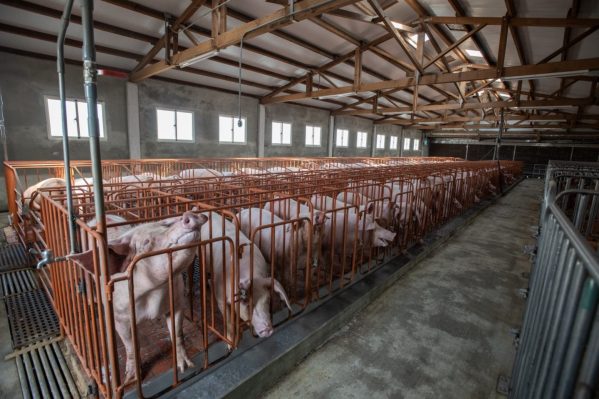
Pig Farm
(Jo-Anne McArthur/We Animals)

Then every future pandemic is on us. Sorry, but it is true. Because the way we farm, hunt, sell and eat animals is a massive underlying vector.

Zoonotic viruses almost always leap to humans directly from our livestock or from wildlife, the slaughter and hunting of which bring susceptible human hosts in particularly close contact with live animals and their infected tissues and fluids.

Both farmed and caged wild animals create the perfect breeding ground for zoonotic diseases. Extraordinarily high population densities, prolonged heightened stress levels, poor sanitation, and unnatural diets create a veritable speed-dating event for viruses to rendezvous with a weakened human host and transcend the species barrier. In fact, we know that this happens routinely—it’s a simple throw of the dice for one of these leaps to coincide with subtle adaptations that allow the virus to transmit more efficiently from human to human. Swapping host species often allows pathogens to take a more sinister turn, causing severe illness or death in their new host despite only triggering mild symptoms in their animal reservoir.

Time and again, zoonotic viruses emerge from these contexts: wave after wave of avian flu, swine fluNipah virus … the list goes on.

Of course, this is reason #363 why humanity needs to shift to a plant-based diet. But it is a major, and at the moment, highly relevant one. After this is all over, will anyone pay attention?

You know who is enjoying the COVID-shutdown?

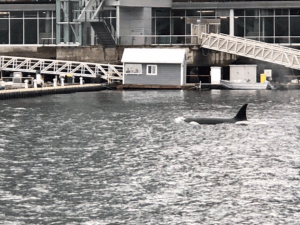
British Columbia’s resident killer whales, who are exploring areas of Vancouver harbor that are usually too loud and too busy.

As painful and tragic as this pandemic is, it is so helpful to see the many ways in which human presence (or absence of human presence) affects wildlife. It should help us better acknowledge our outsize impact on the planet, and motivate us to do whatever we can to consider the needs and interests of other species as we make choices in our own lives. .


Nature Can Make You Smile

And the Guardian’s 2017 Comedy Wildlife Photography Awards prove it.

Example:

See the rest here….

The Stunningly Cruel Details Of The Shark Dragging Case

Portraits Of Cruelty (and Stupidity)

Sometimes it is hard to believe how cruel, and lacking in humanity, people can be (though sometimes I worry that it is all too easy to believe). The shark-dragging case is one of those times:

While fishing in state waters near Egmont Key in Hillsborough County, Benac shot a blacknose shark with a speargun at about 3 p.m. Heintz took a photo of Benac holding the speargun and Wenzel holding a gaffed blacknose shark with a spear through it.

Twenty minutes later, Wenzel shot a video as Benac, Easterling and Heintz danced on the bow of the boat. Benac was holding the speargun.

Less than two hours later, Benac caught a six-foot blacktip shark on a hook and line in state waters near Egmont Key, the reports said.

At 5:08 p.m., Heintz recorded Benac retrieving the shark. In the 10-second video, as the shark is pulled near the right side of the boat by Benac, Wenzel shoots the shark one time with a .38 revolver in the left side of the head, near the gills, the report said.

“All occupants can be heard celebrating by laughing,” according to the report.

At 5:10 p.m., Heintz recorded Benac continuing to fight with the shark. The eight-second video shows Wenzel shoot at the shark three times with the same revolver as it is pulled close to the left side of the boat, the report said.

After the shooting, all occupants cheered and erupted into laughter, the report said.

The report said it was unknown whether any of the bullets hit the shark. However, after being shot at, the shark tried again to flee.

At 5:14 p.m., the shark was landed and Wenzel recorded it lying on its back and tail roped. During the video, the occupants are heard laughing while Easterling holds the rope.

The next 10-second video shows Wenzel driving the boat while Benac records the shark as it’s dragged at high speed. The shark can be seen bouncing and skipping across the surface of the water.

As the camera pans to the port side, Heintz is seen recording the same incident. In both videos, all of the men are seen and heard laughing while the shark is dragged.

These guys are beyond redemption (and beyond stupid for posting their cruelty on social media). But what gives me hope is the strong reaction to their cruelty. Maybe this incident, like the starving polar bear I posted earlier, can help people break through their disconnectedness to the natural world, and inspire them to do more to protect the interests of nonhuman animals and the environments they live in.

What Are We Willing To Do For A Starving Polar Bear?

Watching this video will make you very sad (backstory here). It should. It is heartbreaking.

But the real question is: what are we collectively willing to do about it, if anything? Is it enough to inspire changes in the choices we make and the way we live. Because how humanity lives (what it values and what it doesn’t) is what is starving this polar bear.

Here is just a partial list of all the things we can do that relate to this polar bear and his fate: have fewer children, eat less or no meat, drive less (and walk, bike, or use public transportation more), stop flying so much, reduce electricity consumption, shower a few times a week instead of every day, stop buying so much stuff, and stop wasting so much food. Vote for politicians who believe climate change is happening and are willing to ask for sacrifices to deal with it. Support leaders who are fighting global inequality. Support the global education of women, and family planning. Put the lives and needs of ALL species, and stewardship and conservation of the natural world, above your personal convenience. In short, simplify your life and radically reduce its environmental footprint. What else?

Yes, it involves doing less of a lot of things marketers and our culture want us to do a lot of. Doing fewer things that we associate with comfort and convenience. To live in a way that is radically different from the way we have been raised and acculturated to live. But it really isn’t that hard. And it feels good, because it feels right, to DO something.

So let’s work our way through the list, and then we can honestly lament the condition of this polar bear. Because our tears won’t do him any good. Only actions.

Quote Of The Day: Henry Beston On Human Perception Of Animals

This is so beautiful, and so incisive:

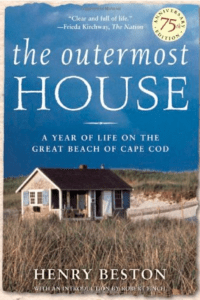
“We need another and a wiser and perhaps a more mystical concept of animals. Remote from universal nature, and living by complicated artifice, man in civilization surveys the creature through the glass of his knowledge and sees thereby a feather magnified and the whole image in distortion. We patronize them for their incompleteness, for their tragic fate of having taken form so far below ourselves. And therein we err, and greatly err. For the animal shall not be measured by man. In a world older and more complete than ours they move finished and complete, gifted with extensions of the senses we have lost or never attained, living by voices we shall never hear. They are not brethren, they are not underlings; they are other nations, caught with ourselves in the net of life and time, fellow prisoners of the splendour and travail of the earth.”

From “The Outermost House,” a brilliant book that is a must-read in my universe.

A Novel Christmas Gift: Going Vegan

Tis the season. So this is a good time to revisit this story:

It started with Christmas.

And what happened was what always happens: I did no shopping.

I have on one or two occasions experienced the slightly awkward moment on Christmas morning when the gifts are finally all opened and it becomes apparent that none of them are from me. This general awareness is something I try to avoid, and sometimes, if I have the sense that the need for some kind of public admission is approaching, I have to think quickly. That’s what happened with the vegan thing. It just came to me — in the nick of time. The oranges were barely out of the stockings when I blurted out my entirely spontaneous idea. I told my 30-year-old daughter, who is a committed vegan, that her gift was six months of my being vegan. I said I’d give it a try.

Read on

Shark Dragging Is Cruel (And A Crime)

What should the penalty be for wantonly abusing a shark for ego and social media giggles? We’re about to find out:

Nearly five months after video surfaced on social media of a shark being dragged by a speeding boat, three men are facing animal abuse charges as a result of the investigation sparked by public outrage.

Robert Lee “Bo” Benac, 28, Michael Wenzel, 21, and Spencer Heintz, 23, have each been charged with two counts of aggravated animal cruelty, a third-degree felony, according to a press release from the Florida Fish and Wildlife Conservation Commission on Tuesday. Benac and Wenzel also face one count of illegal method of take of a shark, a second-degree misdemeanor.

If ever there was a moment to draw a clear, bright line regarding animal cruelty, and to set an example that says abusing sharks will come with (severe) consequences, this is it. Hope they throw the book at them and win convictions that count.

Arctic Ice Melt Is Off The Charts (Almost Literally)

There’s nothing like a good graphic to help emphasize that we live in abnormal times. Sure, this is still more disaster porn. But it is justified. The key point in this latest NOAA report (apart from the mounting evidence that climate change is happening fast, and that entire eco-systems will have trouble adapting) is that Arctic ice melt presages Greenland ice melt. And it is the Greenland ice that, if and when melted, will raise sea levels by about, um….25 feet.