Google’s Self-Driving Car

In my Washingtonian piece about traffic gridlock, I mentioned that automatic cars that do the driving instead of easily-distracted humans could reduce congestion, and that Google is developing one.

Well, Sebastian Thrun is working on that Google car, and here he explains what it is all about:

At Google, I am working with a world-class team of engineers to turn science fiction into reality.

Google’s vast computing resources are crucial to our technology. Our cars memorize the road infrastructure in minute detail. They use computerized maps to determine where to drive, and to anticipate road signs, traffic lights and roadblocks long before they are visible to the human eye.

Our cars use specialized lasers, radar and cameras to analyze traffic at a speed faster than the human brain can process. And they leverage the cloud to share information at blazing speed.

Our self-driving cars have now traveled nearly 200,000 miles on public highways in California and Nevada, 100 percent safely. They have driven from San Francisco to Los Angeles and around Lake Tahoe, and have even descended crooked Lombard Street in San Francisco. They drive anywhere a car can legally drive.

Toyota Prius modified to operate as a Google driverless car.

I’d love to take a ride in one. And know more about how many glitches, incidents, and outright crashes the prototypes have experienced. But Thrun is right about the promise such cars offer, and lays out a few I hadn’t thought of:

Take today’s cities. They are full of parked cars. I estimate that the average car is immobile 96 percent of its lifetime. This situation leads to a world full of underused cars and occupied parking spaces.

Self-driving cars will enable car sharing even in spread-out suburbs. A car will come to you just when you need it. And when you are done with it, the car will just drive away, so you won’t even have to look for parking.

Self-driving cars can also change the way we use our highways. The European Union has recently started a program to develop technologies for vehicle platoons on public highways. “Platooning” is technical lingo for self-driving cars that drive so closely together that they behave more like trains than individual cars. Research at the University of California, Berkeley, has shown that the fuel consumption of trucks can be reduced by up to 21 percent simply by drafting behind other trucks. And it is easy to imagine that our highways can bear more cars, if cars drive closer together.

Last but not least, self-driving cars will be good news for the millions of Americans who are blind or have brain injury, Alzheimer’s or Parkinson’s disease. Tens of millions of Americans are denied the privilege of operating motor vehicles today because of issues related to health or age.

I like the idea of a car just showing up when you need it, and leaving when you hop out. And reducing traffic and parking congestion would be nice. But I also think it’s critical that we do more to get out of cars, and learn to walk and bike more, as well as use mass transit.

If a Google car simply extends the Era Of The Automobile rather than serving as one key piece in the radical transformation of our transportation culture, then I don’t think Google is doing us that big a favor. But it is an excellent example of how technology, if developed and applied with wisdom, holds out hope that we can at least ameliorate some of the worst problems that humanity has managed to inflict on itself and the planet.

Here’s the car in action:

And here’s Thrun giving a TED Talk about it:

Have We Reached “Peak Stuff”?

Journalist Fred Pearce thinks maybe:

Take Britain. A new study finds that the country that invented the industrial revolution two centuries ago reached “peak stuff” between 2001 and 2003. In the past decade, Britain has been consuming less water, building materials, paper, food (especially meat), cars, textiles, fertilizers and much else. Travel is down; so is energy production. The country produces less waste, too.

That’s the good news. The bad news is that Brits still consume about 30 tons of stuff every year, which only takes them back to the consumption levels of 1989. And the US, well the US is still consuming away. The point here is that even if advanced industrial societies, particularly those in Europe (kudos), are starting to streamline consumption through less waste and greater efficiency, it’s still nowhere near enough to alter the trajectory of depletion and degradation human culture is inflicting on the planet. So we need to think about consumption in much more radical terms.

I say that having just read this excerpt from Carl Safina’s “The View From Lazy Point.” Talk about a hard slap to the face. Thank-you, sir, can we have another?

The first century of the Industrial Revolution, the 1800s, was powered by coal, whale oil, and slaves. The 20th was the century of petroleum (though 40 percent of U.S. train freight is still coal). World electricity generation is still two-thirds combustion (40 percent coal, 20 percent natural gas, six percent oil); plus 15 percent nuclear, 16 percent hydropower, and 2 percent other renewables. That’s how we get energy.

Here’s a taste of how we waste it: In the U.S., where tap water is safe, bottled water costs about 1,000 times as much as tap water and consumes tens of millions of barrels of oil a year (I’ve seen estimates from about 17 to 50 million barrels); it’s been likened to having each bottle of water one-quarter full of oil. It takes three times as much water to make the plastic bottle as the bottle contains. America’s refrigerators use twice the electricity of the European average, and four times as much as the most efficient refrigerators already available. Using the most efficient appliances, worldwide, would eliminate the need to build the 1,400 coal-fired power-plants that are projected to be needed by 2020.

Cars. With nearly the least-miles-per-gallon and nearly the most-miles-driven-per-vehicle, U.S. drivers—with more than a quarter of the world’s cars—burn more gasoline than the next twenty countries combined, including Japan, Germany, China, Russia, plus Brazil—. If average fuel efficiency merely equaled some of the better cars now on the market (40 miles per gallon–5.9 l/100 km), Americans would halve their gasoline use. Just like that. Going to plug-in hybrids would drop driving costs to the equivalent of one dollar per gallon (from the current $3.70/gallon average); gasoline use would drop by 80 percent—without reducing the number of cars or miles driven. This isn’t sacrifice; we’re already sacrificing efficiency. Eventually, the electricity powering plug-in cars could come from wind or solar. Those are some opportunities we’re missing.

Henry Ford reputedly said that if he’d asked people what they wanted, they’d have said ‘a faster horse.’ What else might we be missing? Every hour, enough sunlight strikes Earth to power our world economy for a year. The upper six miles (10 km) of Earth’s crust (people have drilled 7 miles–11 km) holds something like 50,000 times as much energy (in the form of geothermal) as all the oil and gas. With an investment equaling the cost of one coal plant (about a billion dollars) the U.S. could by 2050 generate geothermal energy equal to 250 coal-burning plants. North Dakota, Kansas, and Texas have enough wind to supply not just all the U.S.’s electricity, but all its energy. (Denmark and parts of Germany already get 20 to 30 percent of their electricity from mere moving air.) On one windy quarter-acre, a farmer can grow $300 worth of corn, or allow a company to put up a wind turbine capable of generating $300,000 worth of electricity a year. If the company pays only one percent in royalties, the farmer still makes ten times as much by farming wind.

When ethanol made from corn puts people who need to eat in a bidding war with people who want to drive, drivers win. But some non-edible plants also produce oil. The seeds of Jatropha curcas are about one-third oil. Some algae yields up to 30 times more fuel than other energy crops. Airlines are already testing algae-based jet fuels. “The airplane performed perfectly,” one test-pilot said. “It was textbook.”

These aren’t even all the options. Compared to the possible oceans of improvements, humanity is still dog-paddling in the shallow end of the kiddie pool. Sometimes we seem determined to drown there just because we won’t stand up.

A Voice In The Wilderness

A new campaign is making the moral argument for combatting climate change:

“We believe it’s time to talk about our moral obligation to prevent the human suffering ­created by climate change, to safeguard the poor and most vulnerable communities from harm they did not create, and to protect the natural environment that is the source of all life,” said campaign coordinator Bob Doppelt, executive director of the Resource Innovation Group, a nonprofit association affiliated with Willam­ette University.

My reaction is: Well, or course, and thanks for putting it so succinctly.” And: “Wasn’t it time to start talking about this about, um, 30 years ago.”

Anyhow, remember the sentiment, because it is the right one. But also remember that it comes way too late.

That’s not to say we shouldn’t address climate change. We should, because limiting it matters. But we are also in an era where we, and the biosphere, will be forced to try and adapt to enormous environmental change. And there is no knowing how that story will play out.

Lunch Hour Reading

1) WashPo’s Steven Pearlstein makes the tax fairness case for my favorite tax revolution: the progressive consumption tax. And he does it well, without even adding that it would also address, um, excess consumption.

To my mind, however, the better way to reform the tax code, and make it a bit more progressive, is to go back to an old idea — a progressive consumption tax — first proposed by Sens. Sam Nunn and Pete Domenici two decades ago and recently revived by Cornell University economist Robert Frank in his new book, “The Darwin Economy.”

A progressive consumption tax would work like the current income tax, with one big exception: Any income earned from investments would be taxed only if and when it is used to buy goods and services; investment income that is reinvested would not be taxed at all. Under such a tax regime, it would be as if all your savings were put into one big tax-free investment account, with taxes paid only when money is withdrawn. Money borrowed for purposes of consumption would also be taxed.

A progressive consumption tax would be a big step forward for a country where household savings has been woefully inadequate and borrowing for current consumption has risen to dangerous levels. And as Frank likes to point out, such a tax would also discourage the unproductive “arms races” in which the wealthy now use their money to bid up the price of scarce “positional” goods such as houses in the Hamptons, luxury cars and tuitions at elite private schools and colleges.

Of course, it’s perfectly possible under a progressive consumption tax that Warren Buffett could pay less in taxes than his secretary — but only if he were willing to live a lifestyle as modest as hers.

2) Doug Rushkoff explains how corporations came to run the world–and your life.

Peggy Nelson: The corporation is not a recent phenomenon; it goes back hundreds of years. What is the origin story of the corporation? Where did it come from, and what is it, exactly?

Douglas Rushkoff: The corporation is the result of two innovations: the creation of centralized currency, and the creation of the chartered monopoly. In the late 1300s the upper classes — the aristocrats, the people who had been feudal lords — were becoming less wealthy relative to real people. As the merchant class and people in towns were producing and doing, the relative wealth of the aristocracy was going down, and this was a problem; the aristocrats wanted to continue the system that had been working for them for the last 500 years wherein they didn’t have to “do” anything to be rich. So they hit upon the idea of passively investing in other people’s industries.

Suppose I am the monarch. I want to make money through your shipping company; how do I get you to let me invest? Well, I use what power I have as a monarch to write up a charter, which means I give you a monopoly in a certain area, and you give me 30% of the shares in the company. The chosen merchant avoids competition and gains protection from bankruptcy, while the king receives loyalty, because the merchants’ monopolies are based on keeping him in power. He doesn’t mind if a few of the merchant class are as rich as he is, as long as he is able to get still richer as a result.

But this was not the promotion of free-market capitalism. It was the promotion of monopoly, non-market capitalism. It was locking into place a set of players and a set of systems that had nothing to do with the free market. And it changed the bias of these merchants away from innovation; in other words, from “how do I innovate and maintain my competitive edge” to “how do I extract wealth from the realm that I now control?”

Bonus: It includes this Monty Python clip.

Buddy Roemer For President (of Occupy Wall Street)

You’ve probably never heard of him. But he is the one candidate talking about the single most important issue: the corruption and rot at the core of our politics. Until that is addressed, nothing else really matters.

Roemer finally got some air time on Morning Joe. Take a listen and see if you disagree with anything he has to say. It’s a shame the Republicans won’t let him on a debate stage. That would be something worth watching.

The Presidential Candidate Who Has It Nailed

Unfortunately, you’ve probably never heard of him. But Buddy Roemer sees things as they are. Tell me you wouldn’t love to see this guy in a presidential debate:

http://www.msnbc.msn.com/id/32545640

Visit msnbc.com for breaking news, world news, and news about the economy

Annals Of Congressional Corruption: Insider Trading

Would you be surprised to know that Congress trades on inside info? Probably not.

But Peter Schweizer wants you to know the details, and they are stunning. Here’s a primer on Schweizer and his work. Key paragraph:

It was in his Tallahassee office that Schweizer began what he thought was a promising research project: combing through congressional financial-disclosure records dating back to 2000 to see what kinds of investments legislators were making. He quickly learned that Capitol Hill has quite a few market players. He narrowed his search to a dozen or so members—the leaders of both houses, as well as members of key committees—and focused on trades that coincided with big policy initiatives of the sort that could move markets.

While examining trades made around the time of the 2003 Medicare overhaul, Schweizer experienced what he calls his “Holy crap!” moment. The legislation, which created a new prescription-drug entitlement, promised to be a huge boon to the pharmaceutical industry—and to savvy investors in the Capitol. Among those with special insight on the issue was Massachusetts Sen. John Kerry, chairman of the health subcommittee of the Senate’s powerful Finance Committee. Kerry is one of the wealthiest members of the Senate and heavily invested in the stock market. As the final version of the drug program neared approval—one that didn’t include limits on the price of drugs—brokers for Kerry and his wife were busy trading in Big Pharma. Schweizer found that they completed 111 stock transactions of pharmaceutical companies in 2003, 103 of which were buys.

“They were all great picks,” Schweizer notes. The Kerrys’ capital gains on the transactions were at least $500,000, and as high as $2 million (such information is necessarily imprecise, as the disclosure rules allow members to report their gains in wide ranges). It was instructive to Schweizer that Kerry didn’t try to shape legislation to benefit his portfolio; the apparent key to success was the shaping of trades that anticipated the effect of government policy.

It’s all part of a reality in which Congress is a path to wealth, or increasing wealth, which is one reason legislators so often fail to put the national interest first, and are willing to do whatever it takes to stay in their jobs.

Grand Canyon (Garbage)–Sponsored By Coca Cola

Item #462 in the Corporatization of EVERYTHING Watch: Coca Cola steps in to derail a plan to ban plastic water bottles–which comprise 30% of the garbage left in the Grand Canyon National Park. Because why would you think that keeping a national treasure pristine is more important than selling Dasani water?

"Damn, my empty plastic bottle is sorta heavy."

Here’s the story:

Weary of plastic litter, Grand Canyon National Park officials were in the final stages of imposing a ban on the sale of disposable water bottles in the Grand Canyon late last year when the nation’s parks chief abruptly blocked the plan after conversations with Coca-Cola, a major donor to the National Park Foundation.

Stephen P. Martin, the architect of the plan and the top parks official at the Grand Canyon, said his superiors told him two weeks before its Jan. 1 start date that Coca-Cola, which distributes water under the Dasani brand and has donated more than $13 million to the parks, had registered its concerns about the bottle ban through the foundation, and that the project was being tabled. His account was confirmed by park, foundation and company officials.

A spokesman for the National Park Service, David Barna, said it was Jon Jarvis, the top federal parks official, who made the “decision to put it on hold until we can get more information.” He added that “reducing and eliminating disposable plastic bottles is one element of our green plan. This is a process, and we are at the beginning of it.”

Two other telling items in this story: That visitors feel fine just tossing away so many bottles. And the ban would only have applied to smaller water bottles, and not big old soda and juice bottles. Really?

Divining The Future: Apocalypse, Retreat, Or Revolution

It’s hard to know how to respond to the overwhelming sense that the priorities and inertia of human culture are trashing the planet. But I just came across a thought-provoking review of a fascinating book. Revolutions That Made The Earth, which helps frame the choices.

First off, the book is about how life on earth has previously adapted to dramatic change, and it argues something critical: that the forces humanity has set in motion, particularly with regard to climate, are going to cause major transformations to earth no matter what we do now. In other words, an Apocalyptic change is coming. Here is how the book explains it:

Even the normally cheerful and creative Jim Lovelock argues that we are already doomed, and nothing we can do now will stop the Earth system being carried by its own internal dynamics into a different and inhospitable state for us. If so, all we can do is try to adapt. We disagree—in our view the game is not yet up. As far as we can see no one has yet made a convincing scientific case that we are close to a global tipping point for ‘runaway’ climate change.

[…]

Yet even without truly ‘runaway’ change, the combination of unmitigated fossil fuel burning and positive feedbacks from within the Earth system could still produce an apocalyptic climate for humanity. We could raise global temperature by up to 6 °C this century, with more to come next century. On the way there, many parts of the Earth system could pas their own thresholds and undergo profound changes in state. These are what Tim [Lenton] and colleagues have called ‘tipping elements’in the climate system.

They warrant a book by themselves, so we will just touch on them briefly here. The tipping elements include the great ice sheets covering Greenland and West Antarctica that are already losing mass and adding to sea level rise. In the tropics, there are already changes in atmospheric circulation, and in the pattern of El Niño events. The Amazon rainforest suffered severe drought in 2005 and might in the future face a climate drying-triggered dieback, destroying biodiversity and adding carbon to the atmosphere. Over India, an atmospheric brown cloud of pollution is already disrupting the summer monsoon, threatening food security. The monsoon in West Africa could be seriously disrupted as the neighboring ocean warms up. The boreal forests that cloak the northern high latitudes are threatened by warming, forest fires and insect infestation. The list goes on. The key point is that the Earth’s climate, being a complex feedback system, is unlikely to respond in an entirely smooth and proportional way to significant changes in energy balance caused by human activities.

Okay, let that sink in for a bit.

Then, as mathematical physicist John Baez on his Azimuth blog notes, they suggest two responses to this Apocalyptic scenario, which Baez quotes:

RETREAT:

A popular answer to apocalyptic visions of the future is retreat, into a lower energy, lower material consumption, and ultimately lower population world. In this future world the objective is to minimize human effects on the Earth system and allow Gaia to reassert herself, with more room for natural ecosystems and minimal intervention in global cycles. The noble aim is long-term sustainability for for people as well as the planet.

There are some good and useful things we can take from such visions of the future, especially in helping to wean ourselves off fossil fuels, achieve greater energy efficiency, promote recycling and redefine what we mean by quality of life. However, we think that visions of retreat are hopelessly at odds with current trends, and with the very nature of what drives revolutionary changes of the Earth. They lack pragmatism and ultimately they lack ambition. Moreover, a retreat sufficient to forestall the problems outlined above might be just as bad as the problems it sought to avoid.

REVOLUTION:

Our alternative vision of the future is of revolution, into a high energy, high recycling world that can support billions of people as part of a thriving and sustainable biosphere. The key to reaching this vision of the future is to learn from past revolutions: future civilizations must be fueled from sustainable energy sources, and they must undertake a greatly enhanced recycling of resources.

Baez writes that he thinks that we could have a combination of Apocalypse and Revolution:

For now, I would just like to suggest that ‘apocalypse’ and ‘revolution’ are not really diametrically opposed alternatives. All three previous revolutions destroyed the world as it had been!

For example, when the Great Oxidation occurred, this was an ‘apocalypse’ for anaerobic life forms, who now struggle to survive in specialized niches here and there. It only seems like a triumphant ‘revolution’ in retrospect, to the new life forms that comfortably survive in the new world.

So, I think we’re headed for a combination of apocalypse and revolution: the death of many old things, and the birth of new ones. At best we have a bit of influence in nudging things in a direction we like. I don’t think ‘retreat’ is a real option: nostalgic though I am about many old things, time always pushes us relentlessly into new and strange worlds.

And I would say I agree. Except I want to add that this does not seem like a very appealing future to me. Both Baez and Revolutions That Made The Earth more or less dismiss Retreat as unrealistic (though Baez does indicate he would find it appealing). They could be right. They probably are right. But Retreat–with its emphasis on conservation, anti-consumerism, and balance with the natural world–has to be the central theme of the Revolution (though I wouldn’t call it Retreat, I would call it something more positive). In fact, it is the key to real revolution. And while technology, which seems to be at the core of the Revolution scenario, might give us a world in which we can survive, it doesn’t really promise a world in which we can LIVE.

Jack Abramoff’s Playbook On How To Buy Congress

When you want to know how to rob a bank, it’s good to listen to a bank robber. When you want to know how to buy votes in Congress, it’s good to listen to Jack Abramoff, who just published an autobiography and appeared on 60 Minutes.
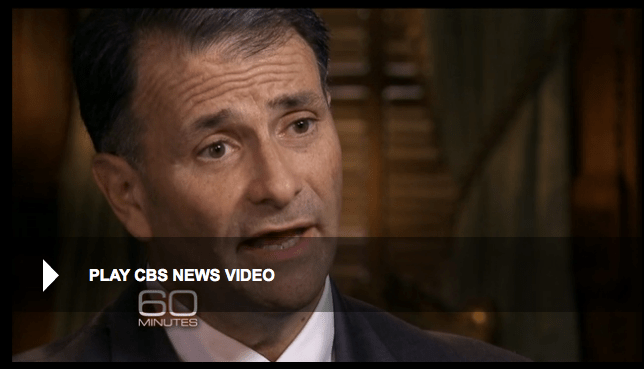
Abramoff was convicted for buying influence in Congress, but his playbook on how he operated tells you all you need to know about how corrupt our system is, and why Congress consistently puts special interests above the public interest.

One of his most effective tactics, Abramoff says, was to promise Congressional staffers high paying jobs:

The movement of congressional figures to lobbying is pervasive in Washington. The Internet site LegiStorm tracks those who move from the Hill to K Street, where many lobbying firms have offices, and says there have been 493 already this year.

Abramoff said he would often get access inside congressional offices by suggesting to key staffers that they come work for him when they were finished with their congressional careers.

“Assuming the staffer had any interest in leaving Capitol Hill for K Street — and almost 90 percent of them do — I would own him and, consequentially, the entire office,” Abramoff writes. “No rules had been broken, at least not yet. No one even knew what was happening, but suddenly, every move that staffer made, he made with his future at my firm in mind. His paycheck may have been signed by the Congress, but he was already working for me.”

The Congress to K St and back connection is one of the reasons Congress has become just one more way for people to get rich. And the reason lobbying shops can pay high salaries is that they can charge high fees to corporate clients for special legislative provisions that are worth billions. Stop the money that the lobbying shops spread around Congress, which buys those legislative give-aways, and you can make K St a lot less profitable, and limit the allure of K St. and the corrupting influence the promise of a job on K St. has for the thousands who are supposed to be representing your interests in Congress.

But how to do that? Water flows downhill, and money flows into Congress, one way or another, despite every effort to write rules to regulate or limit it. That’s why the only solution–if you want a Congress that isn’t corrupted by money–is to take this simple step: do not vote for any candidate who takes lobbying and PAC money, no matter how much you might agree with their views.

It’s a demand side solution, in contrast to the failed supply side solution of trying to craft laws and regulations which in the end always have loopholes or run into constitutional problems. And if enough voters draw this line, you might get some candidates who you believe in and who are not beholden to special interest money. What would that be like?

It might seem like a radical ask. But watch this 60 Minutes segment and then see how you feel about it.