Animal Care Angst

AC HortonNursing

Over the past month I’ve been digging into the lives of former SeaWorld Animal Care workers, and publishing their stories (here, here, and here). Many of their experiences seem shocking to people unfamiliar with animal care work, and how difficult it can be. And it is easy to see how the stories can fuel an anti-SeaWorld sentiment.

Jim Horton, one of the three former Animal Care workers I interviewed, was troubled by the vehemence and hardcore anti-SeaWorld nature of some of the comments he saw posted to social media in the aftermath of the stories (big mistake, to read comments, I explained). And also by the fact that many of the stories published in the Animal Care series focus on the negative aspects of the lives of the workers and the nature of managing animals in captivity.

Animal Care obviously includes a lot of positive experiences, where animals are nurtured, rescued, or saved. And the thing I admire most about the Animal Care workers I spoke with and wrote about is that they did the work–with all the good, the bad and the ugly–because they cared first and foremost about the animals. They weren’t there to become Shamu Stadium stars. They were there because they loved animals and wanted to care for them. Eventually, especially for Krissy Dodge and Cynthia Payne, the nature of the work, and the way in which captivity compromised the lives of the animals, forced them to step away and pursue other careers. But the point is that Animal Care work, and the emotions and realities involved, is not at all simple. How Animal Care workers feel about the work they do, especially post-Blackfish, is an intensely complex subject, and that didn’t always come across in the articles I published.

So in order to dig deeper into what Jim Horton felt and feels about the work he did, and how Blackfish opened up many difficult questions, I am posting (with Jim’s permission) a letter that he wrote to a friend. In it, Jim explores and articulates the powerful and conflicting emotions he feels about the work. And if you want to judge him or Animal Care workers harshly, as so many were quick to do, I only ask that you make sure you read this letter first:

Dear ……,

I feel your pain. I think the movie Blackfish and it’s flock of anti captivity followers has made us all take a deep look inside at what we have done over the years and where we are now emotionally in our careers as animal care takers. Torn between our love of the animals we have come to know and the public outcry from those that have never experienced what we have, with the exception of a few. I find it very ironic that the world of those we entertained and taught priceless educational values to are now claiming injustices and untruths that rock the very core of our souls, creating gaps and even bitterness between our friends, co workers and family.

I’m sure you can recall as I can the hundreds of times we were told by the public, family and friends that we must have the greatest job in the world. I recall, later on in my career, often scoffing at that comment and explaining to those that would listen, that this career is a labor of love and full of extreme highs and extreme lows and at times can very well be the worst job in the world. Those people, the ones looking from the outside in, so-called experts by the very knowledge that we as teachers have taught them, through the media and personal interactions, have no idea what it was like and also what it is like now.

What they don’t know and what the media never found newsworthy is the extreme duress we’ve gone through. The news only covers the animal’s story, not ours. The nights on end of watching, medicating, note-taking of sick animals. Every 3 hour tube feedings, injections and enemas, standing alone in poop-filled pools in freezing temperatures to bottle feed baby manatees or baby dolphins, while those around us celebrate Thanksgiving and Christmas, forgetting their anti-captivity rhetoric, while we shiver through the night, tired and hungry in the middle of a 24-hour shift doing everything you can to save a creature who has put all of it’s trust into us. Knowing fare well that if you screw up, fall asleep standing up, or miss a subtle cue of distress that this beautiful creature may die. They have not experienced the pain of watching and the feeling of the last heartbeat and breath of a dolphin, sea lion, or manatee dying in your arms, looking you straight in the eye as if to say help me or thank you, and in those final moments only you can decipher the final thoughts before death. You begin to cry if you’re alone there in the dark and cowboy up if you’re surrounded by peers, only to let it out in the seat of your car in your employers parking lot at the end of a very long day. You sit and ponder in anguish at what you could have done differently to save this one and what you can do the next time. You celebrate their life by helping the next one of their species.

Unless you’ve done it, one could never understand what it’s like to cut open and remove the brains and eyes of an animal you’ve cared for all it’s life. Sure, you put on your scientist mask, bundle up all of your emotions and swallow them like a big nasty pill and commence to do your job in the efforts of science and discovery and the personal need to know why. Your internal emotions and feelings of sadness, images of the happier times with this animal run through your veins in the form of liquid courage and it takes all of your might to carry on stoically. Hoping to find that smoking gun, that reason for not surviving your treatment. You hope to see the worst, a cancer, an infected kidney, inoperable stomach blockage or a brain abnormality. Often we find nothing and spend the rest of the evening wondering what went wrong and what could you have done differently. The thoughts haunt you through the night as your friends and family wonder why you’re so despondent and can’t sleep or why you aren’t in the mood to eat that piece of steak. Our reward is to move on to the next case unless you are one of the unfortunate ones that has to make that trip the following day to the rendering factory to dispose of the carcass and once again, feel those emotions as you toss a head that you’ve hugged a thousand times into a vat of guts while dodging the spray of nastiness.

They will never know the pain of the animal bites, the broken bones, contusions, sprains, cortisone injections, IV fluids, stitches, ear infections and the unfortunate times you had vomit, the diarrhea and the long dead animal guts and maggots fly into your eyes and mouth.

They will never know the disappointment and the emptiness you cast upon your families with missed vacations and birthdays and the wonderment by those you love that can’t understand why you lack emotion at the death of a family pet or when you make an early decision to put the animal to sleep, knowing early on the inevitable suffering that prolonging death can create.

They will never know what that final rub down, that saying of I’m sorry, what that pat on the back of an animal feels like when you are getting ready to inject a life ending medication in an upwelling of humbleness and hopelessness, a surrender of effort of all your skills to prevent suffering.

They will never know the terror and horror, the sounds and images of being in a rescue van or cage or pool when an animal goes through its death throes. Flailing about in a final fit of uncontrollable rage, sending humans, skin and blood flying through the air, destroying everything in it’s path and then the sudden unexpected feeling of what was once hope comes crashing to the ground in a matter of seconds.

They will never know the many times we came very closed to being killed, mauled, drowned, or losing a limb, toe or finger or co worker in the efforts of just doing our job, you know, the one that is the greatest one in the world?

And so now were are forced to believe by many that this isn’t the greatest job in the world, that all that we’ve done, all of the pain and effort, tireless nights and trips to the hospital is a bad thing. They say our animals are treated poorly, our facilities are substandard, and we should be ashamed. Ironically, in a much misinformed manner, these foul cries of care seemed limited to the United States, where the best care in the world is provided. Having transported animals all over the world, I have truly seen the atrocities of animal care in third world countries. But that’s ok I guess, because we only believe what we see and fail to listen to the real experts. Untouchable they are the third world facilities, look at Taji. Those animals are captured and slaughtered every year, yet there are more outcries regarding a little blonde haired girl blowing a whistle–feeding and rubbing down an animal that she truly loves and will give her all with great sacrifice to her life and those around her in an effort to give that animal a good life- than the cries of slaughter. The paths we chose in the animal industry we didn’t always chase. We started as education staff, operations staff, cigarette butt picker up’ers, scuba divers and bucket washers. Suddenly, we were given the opportunity to be closer than most to these wonderful creatures. I’m sure there isn’t a soul in the business who hasn’t stated that “I can’t believe I’m getting paid for this”. So innocent and inexperienced, having no idea that this journey will take you through a river of emotions, good and bad and that those children that you teach and share the joy of making a connection to animals, those children will grow up to say what you are doing, the efforts that you made, were not in the animals’ best interest.

I can truly say that I am against captivity and I am for captivity. I think perhaps, maybe it’s time to end Killer Whales in Captivity, but why not the elephants? I don’t really see the need anymore, we’ve learned about all we can. On the other hand, if it were not for having killer whales in captivity, who would have freed Willy? Who would have rescued, rehabilitated and released Springer? Who would have flown to Turkey for 2 years of their life to train captive dolphins to be wild again and set them free? Who of you out there are planning and watching every day the case of Morgan the Killer whale in Spain. Who of you is experienced and ready to leave your family for years to train and release this little whale back to her family? Who is prepared to make real sacrifices other than spouting verbal diarrhea from your warm cozy couch with an I Pad……..We are!

We are the ones who still love our job, we love animals in our care more than our friends and our future. We are proud of our accomplishments, we do make a difference in the lives of others, we are tough as nails, we are not afraid, we can control our emotions, we can laugh in the face of adversity and we can succeed where others have never tried. We teach and train the animal caretakers of the future, there will always be a need for us. Who is going to save the beached animals of the future? Movie directors?

I am proud of who I am and those that I have helped have a better life. I am not part of the problem, I am the solution. I am an animal husbandry specialist and I will never stop caring.

There you have the conflicts, the pathos, and the doubts (and certainty) of animal care, all wrapped up into one deeply felt letter. I don’t criticize Animal Care workers. In my view they are doing their best, for the right reasons, in a captive entertainment model that is flawed and that I think needs to be reinvented. I reserve my skepticism and criticism for that model, not for the people who do their best to ease the lives of the animals trapped in that model. It is easy to say they shouldn’t do that work. But if they didn’t do you think the lives of the animals would be better or worse? I thought so.

UK’s Guardian Looks At The Future Of Marine Parks

Seems like everyone is trying to peer into SeaWorld’s future these days (and they should be!). But Will Coldwell of the Guardian does a really nice job of picking up all the trends in play right now:

While SeaWorld continues to dig its heels in – pointing out that tens of thousands of visitors are in its parks right now – others are responding more progressively. In 2012 the National Aquarium in Baltimore, a highly regarded institution synonymous with its dolphin show, cancelled its performances. Since then visitors have been able to sit and watch the dolphins as they are simply taken care of by staff. Now, the aquarium is considering retiring their eight bottlenose dolphins altogether and is in talks to create the first ocean-side dolphin sanctuary in the US. Its decision was based on regular polling of visitors; it learned that people no longer felt comfortable with the show.

“Our audience has evolved,” Aquarium CEO John Racanelli told Baltimore Magazine. “Baby boomers grew up on Flipper, but millennials grew up on Free Willy and The Cove. They are interested in these animals being treated more humanely.”

Others are following suit. This September, the Clearwater Aquarium in Florida announced it would also end animal shows, choosing to focus on rehabilitation and marine resources instead. When asked by the Guardian if SeaWorld would ever consider a similar move, the company said the terms “retire” and “sanctuary” are misplaced in the context of animal care. But added: “The short answer is no.”

I think it’s very telling that Baltimore’s National Aquarium based its evolutionary leap toward the future on polling its own visitors. Presumably SeaWorld is regularly polling its audience as well, and I wonder what those surveys are saying (maybe that info will turn up in one of the imminent shareholder lawsuits).

Read the whole thing. You’ll finish with a good understanding of all the forces in play right now.

NPR Takes A Look At SeaWorld’s Post-Blackfish Troubles

Screen Shot 2014-09-11 at 9.03.25 PM

Greg Allen, NPR’s Miami reporter got in touch earlier this week while reporting a story on SeaWorld’s efforts to rebound from its post-Blackfish malaise. Here’s the story Allen aired on All Things Considered this evening.

It’s interesting to note that SeaWorld seems to have decided that its head vet, Chris Dold, is SeaWorld’s most effective spokesperson (when I did my Shamu Stadium tour, in 2010, head trainer Kelley Flaherty-Clark was my guide.

Dold is definitely smooth, but he constructs a popular SeaWorld straw man when he says that Blackfish attacks SeaWorld’s staff as uncaring or abusive with SeaWorld’s killer whales. Quite the contrary. SeaWorld’s killer whales are worth millions and are the core of SeaWorld’s business, and therefore SeaWorld has every incentive to do everything it can to keep them healthy (and breeding). And I’ve always felt SeaWorld’s personnel, especially the trainers and Animal Care staff, are sincere in their efforts to care for the whales.

But when SeaWorld’s business interests conflict with the killer whales’ interests (such as the age or frequency with which females are bred; of mother-calf separations, for example) it is usually the business interests which prevail. And, more broadly, there is a limit to what can be achieved even with sincere efforts to care for the killer whales if the environment itself is inherently unsuitable. So I wouldn’t say SeaWorld’s people are abusive. I would say the killer whale entertainment business is abusive.

Animal Care Chronicles Wrap-Up

King Ralph

The final installment of my conversations with former Animal Care workers Jim Horton, Cynthia Payne, and Krissy Dodge is now up on The Dodo. (Previous conversations are here and here).

In this round, Jim and Cynthia talk about what it was like to try and dive the dolphin feeding pools to keep them clear of objects that either fell in or were thrown in by guests. And Jim explains the impossible situation he faced with an irate male dolphin called Ralph:

The young calves would maybe grab your flippers and drag you back. That was kind of fun, though the number one rule was never to react. You didn’t want to reinforce it so we would never react to any behavior. We’d just ignore the animals totally. But Ralph would really mess with you. He’d get in your face and be jaw popping really hard. He’d be 6 inches from your face slamming his mouth shut with 200 pounds of force. It would sound like firecrackers going off underwater. You could tell [he was coming]. He’d start vocalizing really loud, and you’d go ‘Oh lord, Ralph is getting worked up.’ He’d get right in your face and scream and vocalize, really, really loud. Or he’d grab you by the head and pull you around. He’d lay on top of you.

Krissy concludes with the traumatic death of a sea lion named Eric, which prompted her to quit SeaWorld. It is a story she has never before told publicly:

We went to give him fluids and Eric began to go into convulsions. His head was shaking involuntarily. All of a sudden he arched his back into what they call the ‘death arch’ and he laid down and stopped breathing. He had no pulse. We thought he had died. Several people left to get ready for the necropsy. I stayed with him. He then started breathing again and I felt a pulse in his neck. The decision was made to euthanize him. But Eric’s body was not taking the poison. Even though it was injected into his heart, he didn’t die. Eric was taken to necropsy anyway. He was hoisted onto the truck, taken to the necropsy room and laid on the floor. He was still breathing. I figured we’d just wait for him to die, but I was wrong. What happened next I will never forget.

Read the whole thing here.

Since this is the last in the series I want to emphasize that it took courage for Jim, Cynthia, and Krissy to tell their stories, especially because they knew that doing so would provoke criticism and personal attacks from all sides of the spectrum. And, already, I have seen many unthinking and knee-jerk comments on social media that add nothing to the debate our our thinking about animal care, marine mammal captivity and marine parks.

We all expected that. But the reason to put these stories on the record is to add to the growing wealth of information and experience that comes from people who have worked in the industry. So anyone who really wants to learn and think about marine mammal captivity, and what it is like for both animals and those who work and care for them, can now read what Jim, Cynthia and Krissy had to say. And hopefully that will help deepen, inform, and expand the post-Blackfish debate about marine mammal captivity.

So I greatly appreciate the spirit Jim, Cynthia and Krissy have shown in sharing their experiences. And I hope you do too, no matter how you react to the information.

More Animal Care Chronicles: Into The Dolphin Feeding Pools

Krissy Dodge feeding the dolphins at SeaWorld San Antonio.

Over the past year I’ve had some fascinating and revealing conversations with three dedicated former SeaWorld Animal Care workers: Jim Horton, Cynthia Payne and Krissy Dodge. Their experiences have given me a much deeper understanding of the lives of the animals at marine parks (and the lives of the employees!), and last month I published some of what they had to say over on Outside Online.

Today, The Dodo is publishing another installment of my conversations with Jim, Cynthia and Krissy. It focuses on the dolphin feeding pools, a steady and important source of revenue at SeaWorld. This installment will be followed by another either later this week, or early next week.

Here’s a sample of the conversations that are up today (Jim Horton talking about doing medical check-ups on the dolphins):

Occasionally we’d have to get a young calf whose Mom was still in the pool. Mom would do anything trying to get the calf away from us. I broke my nose once on [the vet’s] head. I had the calf. He was trying to stop the female from getting to me, and she whacked him. And he went flying and his head went right into my face and knocked me practically unconscious.

We did not mess with calves until they were one year old. But when we did at that age of one year and up, the little ones really put up a good fight as this was something new. So that generally took two to three guys. But then the mothers would come after us in attempts to dislodge the calf. A coordinated effort was required to grab both mother and calf at the same time and hold them very close together, face to face. We would handle only one animal at a time, unless it was a mom and calf. So it was always a battle in that pool and those animals weren’t really trained to do much.

Read the whole thing here. You will learn lots of new things about dolphin feeding pools. I promise.


Kahana And Kenau: Two Orca Deaths Deconstructed

Kahana Rising

The analysis of how and why orcas die in captivity provides interesting and often surprising insights into how they lived. So orca necropsies (which are the equivalent of human autopsies) can make for interesting reading. However, you need a specialist to interpret their meaning. So when I saw that the FOIA document dump from NMFS that Russ Rector secured contained two full orca necropsies, I sent them on to veterinarian Jon Zern for comment.

Zern is a straight shooter, and always has something interesting to say when asked about marine mammal health issues. Here is a brief summary of his background:

 I have been a small animal veterinarian for 20+ years with 14 years of critical care experience and perform a variety of soft tissue and orthopedic surgeries.  I have a keen interest in evolutionary and marine biology.  Years of scuba diving have provided me with a great appreciation for the marine environment.  I am not a marine mammal specialist, whatever that means, but am very knowledgeable with disease and disease processes.

The two orca necropsies were contained in NMFS’ files on the Tilikum purchase and import from Sealand, because SeaWorld updated NMFS on the deaths of Kahana (5/14/1991 at SeaWorld Texas, six months after a miscarriage) and Kenau (8/6/1991 at SeaWorld Florida and 12 months pregnant) as part of the permit application process.

 Kahana’s death is the more mystifying, as she was found with skull trauma that SeaWorld posited had resulted from a collision with the pool wall that occurred as a consequence of Kahana thrashing around in agony from an intestinal tumor. But Kenau’s death is also revealing, in that it is an example of the sorts of infections that can threaten the health of captive orcas.

Here are the necropsies, and the analysis SeaWorld provided NMFS regarding the orca deaths:

Read on to see Jon Zern’s analysis of each death.

Continue reading “Kahana And Kenau: Two Orca Deaths Deconstructed”

The Full Tilileak Document Dump

Screen Shot 2014-08-26 at 2.48.03 PM

Earlier this summer, dolphin advocate Russ Rector managed to use FOIA to secure the release from the National Marine Fisheries Service of all documents in their files related to the purchase and import of Tilikum, Haida (and her calf), and Nootka from Sealand of the Pacific to SeaWorld.

I’ve previously posted some of the documents, and analyzed them over on The Dodo (here, here, and here).

Today, with Russ’ permission, I have uploaded the rest to Scribd, so the full set is available for anyone to read and analyze (interesting tidbit: the cost to SeaWorld for all the permit work was $200).

I am sure there is plenty of additional info in the documents that is worth noting, so please feel free to comment and share your thoughts on anything that catches your attention. Of note, there are full necropsies and related analysis of the deaths of two SeaWorld killer whales, Kahana and Kenau, as well as SeaWorld’s full Marine Mammal Inventory Report from 1991. (I have had the necropsies analyzed by Dr. Jon Zern, a veterinarian, and will post his analysis in a separate post tomorrow morning).

Since these documents are all finally available thanks to Russ and his persistence, I have asked him for his thoughts on their significance. Here’s what he has to say:

The documents I obtained from National Marine Fisheries  Service (NMFS) after many years of requests and searching are going to be made public here for the first time. These documents are a wealth of information concerning marine mammals in captivity. The one thing that stands out to me is how Sealand, Sea World and the Canadian government all seemed to work together to mislead the National Marine Fisheries Service concerning a medical emergency at Sealand and the orca Tillicum, that did not exist. Yes, the animals were in a very bad situation created by a bunch of dumb people more interested in money than how the animals were treated and cared for. But there was no true medical emergency.

Before Tillicum killed the female trainer (Keltie Byrne) at Sealand there was no medical emergency, and suddenly after he killed her there was this medical emergency that everybody in the captive industry suddenly became aware of. My question is: why did this medical emergency only surface after he killed her, not before?

That in itself is very suspicious and proves to me that this was all about getting Tillicum–a sorely needed breeder–to Sea World no matter what they had to do or say.  Veterinarians of captive facilities and those beholden to the dolphin captivity industry wrote letters saying if he wasn’t moved to Sea World immediately he was going to die. This was a set up. SeaWorld, Sealand and the Canadian government said exactly what they needed to say to mislead NMFS into issuing the permit for the emergency transport. This shows me the permitting process at NMFS is broken and archaic and does not truly protect marine mammals as the Marine Mammal Protection Act mandates. This shows me the Marine Mammal Protection Act at this point in time is the Marine Mammal Facility Protection Act. In the coming days I will be asking NMFS and The Marine Mammal Commission to ask Congress for a full program review of the permitting process for the import and export of marine mammals to and from the United States.

These documents were kept secret for too long. That’s a problem. When we get so far downstream from any incident it becomes old news and seems to be ignored. That seems to be why the captivity industry lobbies government agencies and other captive facilities to make sure this sort of information doesn’t come to light at the appropriate time. These documents have spent 22 years waiting to be discovered by the public. It’s a lot of reading so go through them and see what you can find. Please contact me if you need any assistance please contact me at captivitykills@Comcast.net.

Russ Rector

Tilikum At Sealand, Uncut

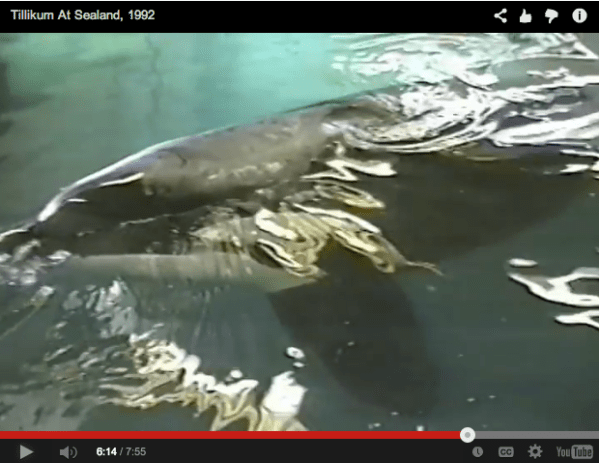
I’ve got a post over at The Dodo, featuring the newly released 8-minute video SeaWorld made at the end of 1991, showing Sealand and Tilikum’s circumstances there. The video was submitted to the National Marine Fisheries Service in support of SeaWorld’s application for an emergency permit to transport Tilikum to SeaWorld Florida. Boy, do I wish we had had this video when we were putting Blackfish together.

Screen Shot 2014-08-22 at 1.35.54 PM


This video, along with lots of other documents related to Tilikum’s purchase and transfer to SeaWorld, was prised loose from NMFS archives by dolphin advocate Russ Rector. I’ve looked at some of the interesting aspects of the documents here and here. But I haven’t begun to dig through every page of the FOIA dump Russ scored. So next week, with Russ’ permission, I’ll post the whole cache on Scribd so anyone can review them.

Animal Care KNOWS


seaworld-animal-care-employees

Over the past few years, the more I heard about the Animal Care staff at SeaWorld, the more I wanted to be able to hear their stories. They seemed to be involved in everything: births, deaths, rescues, illnesses, transports. If anyone could add texture to what we know about the lives of the animals at marine parks it was Animal Care workers.

Over the past ten months I have been speaking with three SeaWorld Animal Care veterans, who worked at SeaWorld Florida and SeaWorld Texas (I also spoke with a fourth, but for reasons never explained, he/she just dropped off the radar after telling me some amazing stories; sadly I couldn’t use them). Their tenures spanned a period from the late 1980s through 2006, and they had plenty of interesting and revealing tales to tell.

You can read them all here.

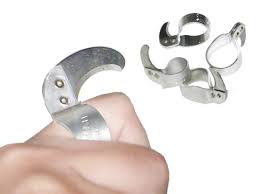
One of the most surprising and intriguing new revelations was supplied by Jim Horton, the most experienced of the trio. He told me about the existence of a ring knife, a small blade which slips over a finger and can be used to cut open and eviscerate a stillborn calf that is stuck in the mother’s birth canal. It is a procedure with a noble aim–to save the life of the mother. But if you imagine the experience of the mother–suspended in a sling or otherwise immobilized as a person inserts a hand up inside her vagina, eviscerates her dead calf, and starts pulling its internal organs out–it is at the same time grotesque.

Horton sent me a picture of what the ring knife he was describing looked like:

knife

SeaWorld’s Fred Jacobs confirmed the existence of this knife, and explained that the procedure in which it is used is called a “fetotomy.”

“Our veterinary medical care program is identical to that found in referral hospitals and veterinary medical teaching hospitals around the United States. We practice comprehensive medical and surgical care. That includes obstetrical care and, rarely, surgery to reduce fetal dystocia. The tools used for veterinary obstetrics are similar to those used in human medicine. The instrument you’re referring to is used in a procedure known as fetotomy.”

Horton told me he was pretty sure that a fetotomy was performed on the stuck, stillborn calf that killed Gudrun in 1996 (the calf was forcibly removed with the help of a winch, tearing Gudrun up, which led to her death days later). But he couldn’t 100% remember, in the chaos and stress of trying to save Gudrun’s life, actually seeing the calf being eviscerated.

Asked about Gudrun, SeaWorld’s Fred Jacobs would not confirm that the calf was eviscerated, but did note that instruments and procedures were used to try and help Gudrun pass the fetus:

“On rare occasions veterinarians have to help an animal pass a fetus. With very large animals like whales, elephants, rhinos, horses and cows, there are specifically designed veterinary obstetric instruments. The goal of any such procedure is to save the life of the mother and quickly ease any discomfort she would have as a result of the stillbirth. The tools used by SeaWorld are identical to those used by large animal veterinarians.”

Even more intriguing to me about the existence of this sort of knife was that it offers a potential explanation for something that has puzzled me for years: rumors and tips that the 2010 death of Gudrun’s daughter, Taima, also from a stuck stillborn, was especially bloody, and involved some sort of operation to try and remove the calf.

Some speculated that some form of modified Cesarean had been attempted. But that didn’t really make sense since it seems almost impossible that an orca mother could survive an intrusive operation so there would be little to gain.

However, an attempted fetotomy, especially if that is a procedure that SeaWorld uses to try and deal with fetal dystocia (as Jacobs acknowledges), could well explain what happened with Taima and her calf. We’ll have to wait for an eyewitness account, or a miraculous release of SeaWorld records, to know for sure. But it is an intriguing potential explanation to questions about Taima’s death have been a bit of a mystery.

Interesting Notes From The Virgin Captivity Summit

In February 2014, Sir Richard Branson, in response to criticism of Virgin Air’s involvement with tourism to marine parks, pledged that Virgin would no longer partner with organizations that take marine mammals from the wild. To develop that pledge, and Virgin’s business strategy going forward in a time of increased debate about the ethics of marine mammal captivity, Virgin convened a two-day summit in Miami, in June, so it could sit down with marine park industry representatives and animal welfare advocates to explore all the issues around marine mammal captivity.

It is rare for advocates on both sides of this issue to sit down face-to-face, and it is a reflection of Virgin’s weight and importance that it happened at all. It must have been been a very, shall we say, interesting discussion. And Virgin has just released a fascinating summary of the discussion.

How Virgin proceeds from the summit in refining and implementing Sir Richard Branson’s pledge will help set a standard for other businesses that are connected to the marine mammal captivity industry.

For now, and for the record, here are some of the key points and discussions from the Summit (highlights are mine):

John Racanelli (Balitmore’s National Aquarium): In an effort to understand the future “customer,” the National Aquarium was part of a larger consortium of U.S. Universities, zoological institutions, and government agencies that commissioned a nationwide study to understand public attitudes, perceptions and beliefs in the U.S.A. regarding aquariums. The ongoing survey has collected data over
eight years with annual sample sizes of up to 32,000 and asks respondents nationwide to rank levels of agreement with
a range of statements. The data are not publicly available, but John Racanelli did share some of the findings. The data
indicate a shift in attitudes, perceptions and beliefs regarding the value and appropriateness of holding cetaceans in
captivity and it becomes particularly pronounced for the Millennial generation, where the survey observed a material decline in the desire to see cetaceans in any kind of captive setting. 

Continue reading “Interesting Notes From The Virgin Captivity Summit”