SeaWorld Spare Air Update

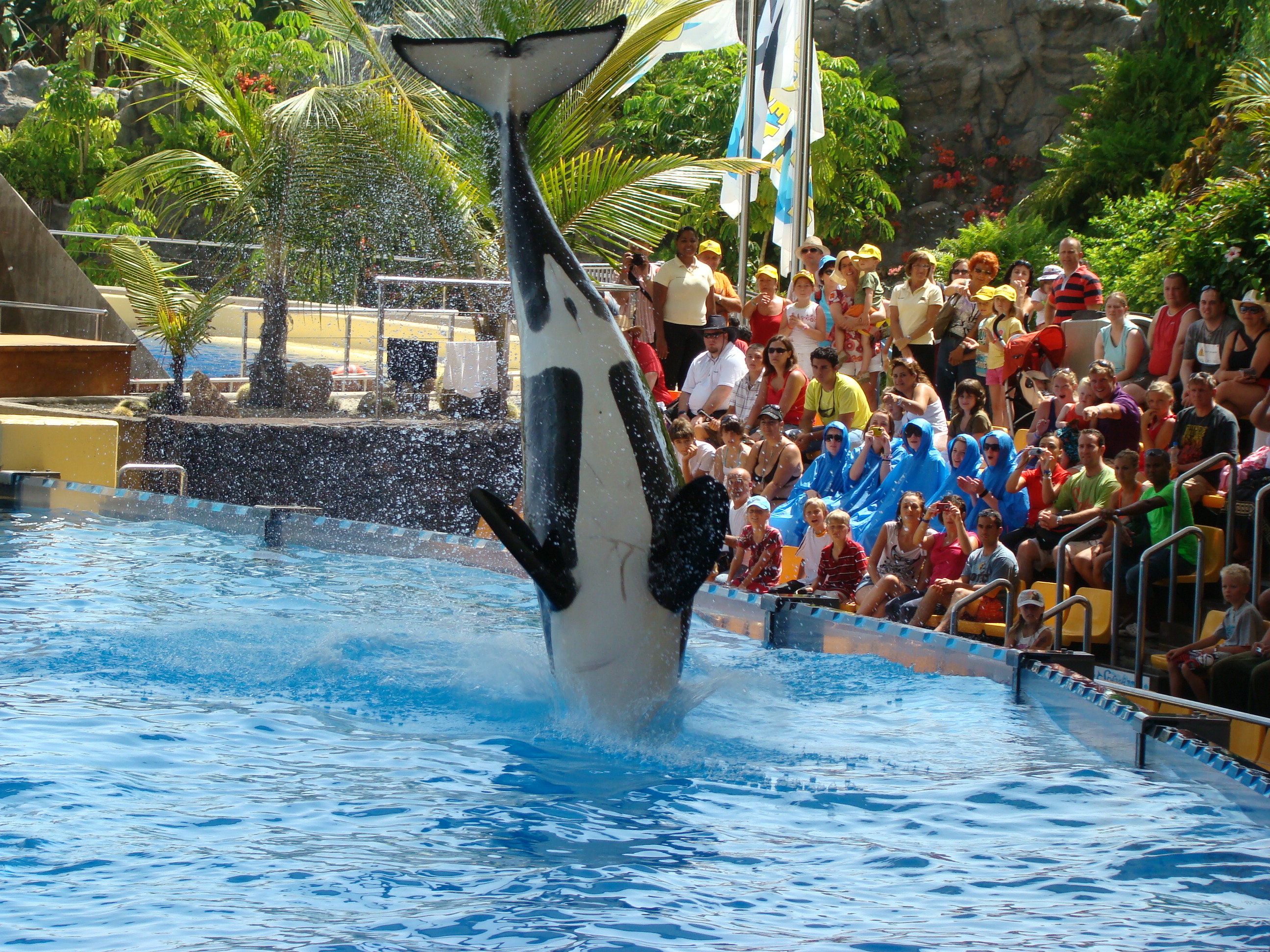
Shamu at SeaWorld Orlando lifting a trainer ou...
Image via Wikipedia

Earlier this month I wrote about two safety upgrades SeaWorld is working on to try and reduce the risks of working in the water with killer whales: a fast-rising pool floor, and a small, emergency air supply for trainers to wear in their work.

Since then I’ve picked up a few more details on the emergency air supply. One of the concerns some trainers have with it is that the killer whales might grab the equipment, so the equipment itself could become a source of risk. SeaWorld is hoping to minimize this risk by sewing the rescue scuba tank Buoyancy Compensator (BC) as tightly as possible onto the wetsuit, so there is nothing left hanging for killer whales to latch onto. And, as mentioned before, the plan is to then wear the tight overlays the trainers don for show branding purposes on top of the rig (though some trainers are worried that putting the overlay on top will be dangerous because they won’t be able to dump the scuba gear if a killer whale does latch onto it).

SeaWorld has experimented with personal air systems before, and  some trainers feel that this new rig–which is based on a military design–is much easier to use. However, the previous system SeaWorld experimented with–which was based on something like this NOAH design, and consisted of a canteen-sized air bottle located at the small of the back, with a hose running up inside the wetsuit, where it could be accessed via a velcro opening at the chest–was much less bulky. The new emergency air supply is more like a full-up scuba rig (with tank, BC, regulator and hose), and so wearing it many hours over the course of a day isn’t as comfortable or easy.

One of the purposes of a more full-up scuba rig, presumably, is to provide more air capacity, which is important. Trainer Ken Peters, for example, who was dragged underwater multiple times by Kasatka in 2006 (a video that was shown at the Seaworld/OSHA appeal), spent a minute or more at a time underwater. (Though I doubt that spare air would have been much help to Dawn Brancheau or Alexis Martinez, given the severity of their internal injuries).

Alexis Martinez and Dawn Brancheau

SeaWorld management believes that the new scuba design should give trainers about five minutes of air capacity, which certainly could have helped Peters (who survived even without the air). But in practice sessions trainers are finding it only delivers a couple of minutes of air (which would not be a huge jump over the old NOAH system).

Another feature of the new design–which also helps account for the increased bulk–is a separate air cannister that is reserved exclusively for emergency inflation of the BC, for rapid ascent in a dire situation. As any scuba diver knows, rapid ascent is always a risky proposition because rapidly expanding air in the lungs can force dangerous, or even deadly, air embolisms through the lining of the lungs and into the bloodstream. For this reason, scuba divers ascend slowly and make sure that they exhale air from their lungs as they rise through the water column. The emergency inflation of the trainer BC, however, will cause a trainer on the bottom of the pool to ascend to the surface (some 40 feet) in about 3 seconds. Any compressed air in the trainer’s lungs from the spare air system  (and remember, this step will only be taken in a chaotic, stressful situation), would likely result in severe embolism injury (former trainers tagged this danger when the idea of “spare air” first came up after Dawn Brancheau’s death).

This video of trainers swimming and diving in the SeaWorld Florida “Dine With Shamu” pool gives you a sense of the depth and scale of a SeaWorld pool.

This danger of embolism is serious enough that SeaWorld management has been nervous about having trainers practice emergency ascents with the equipment.

The final issue I have been hearing about with regard to the new emergency air equipment is a more mundane problem: the placement of the air cannisters. The location of the breathing bottle and the emergency ascent air supply on the rig place both bottles against the trainer’s lower spine. Trainers do a lot of running around the wet pool decks during training and shows. Sometimes they slip and fall on their backs, and some trainers are concerned that a similar fall with the new gear could result in serous lower spine injury.

So there are real dilemmas and trade-offs on implementing the new gear, which is not surprising. Killer whale training and interactions are intensely complex. Any new piece of equipment, and any change in practices, will always raise any number of issues that could impact both the trainers and the killer whales. SeaWorld had been hard at work getting the new air system ready for prime time: trainers were wearing and experimenting with the gear (behind the scenes, out of sight of the public), and the killer whales were being desensitized to it (though the trainers stayed out of the water, as they have been since Dawn Brancheau was killed). That work stopped with the onset of the OSHA hearings, which have now been extended to a second session that will start in November. But SeaWorld seems poised to deploy the equipment–with all its trade-offs–if and when they ever send trainers back into the water.

Enhanced by Zemanta

The Trials Of Tekoa

While “Blood In The Water” focused most on the killer whale Keto, it also detailed a serious incident in which Tekoa, a young male, went after a trainer called Claudia Volhardt, and put her in the hospital.

During my reporting, I was told that Tekoa has a tough time at Loro Parque, and is frequently harassed by the other killer whales there. Now I want to dig a bit deeper into Tekoa’s experience at Loro Parque, because recently some pictures of him have surfaced which show very serious scars and rake marks, underscoring the difficult social order among the killer whales at Loro Parque, and Tekoa’s plight.

When SeaWorld first sent four killer whales to Loro Parque, some SeaWorld trainers, as well as other experts, worried that the group did not include a mature, dominant female to establish a clear and stable social order (the two females were Kohana, 3 at the time, and Skyla, 2).  And those concerns seem valid, given that the Loro Parque’s killer whales, according to many people I spoke with, were often more interested in chasing after each other than performing in shows. And, of course, there were two serious attacks at Loro Parque, one resulting in the death of a trainer. But now we can also see visual evidence of how the unstable situation is affecting Tekoa.

Here is a close-up of Tekoa taken in April 2011 (click the image for full-size, to see full detail):

(Credit: MonchoParis)

This is a second photo MonchoParis sent me, after I asked if I could use his photos (click for full size):

I also have more recent pictures of Tekoa, taken in September and sent to me, which I’ve put into a slideshow:

A number of experts have told me that these rake marks are about as bad as any they have ever seen on a marine park killer whale, and people are taking notice. Even fervent fans of marine parks have been visiting Loro Parque and, after seeing Tekoa’s condition, have been posting critical reports about Loro Parque and the troubled social dynamic among the killer whales online. They have posted accounts of seeing Skyla and Kohana, in particular, abuse Tekoa for hours without any intervention from the Loro Parque training staff. Many express the belief that Tekoa should be moved back to a SeaWorld park.

This echoed something I had been told while reporting “Blood In The Water.” One source told me that in 2009, Brian Rokeach, then SeaWorld’s supervising trainer on site at Loro Parque, had become concerned enough about Tekoa that he urged SeaWorld management to consider bringing Tekoa back to the United States. I asked Loro Parque about it, and they responded: “We do not have any information about the request of Brian Rokeach to return Tekoa to a SeaWorld facility. If it happened SeaWorld Zoological Department should know.” SeaWorld has denied that any of their employees have ever recommended moving any of the Loro Parque Killer whales. So I left it out of the article.

Since then, however, I have heard more about Tekoa’s experience at Loro Parque. And regardless of whether there was ever any formal discussion of moving him, it seems clear that there were issues that might justify concern about his well-being. What I have been told is that in late summer 2009 Tekoa injured his belly by trying to slide over a safety bar placed between the pools to prevent the orcas from freely going up and over the slideover from one pool to another.

Here is a picture, taken in August 2008, of what the safety bar looked like before 2009 (provided by a friend, who follows marine parks very closely, and is an expert at finding photos! More photos here and here):

You can see that the safety bar discouraging the killer whales from going between the pools via the slideover is smooth. You can also see some chains (they are easier to see in the other photos I linked to above), which are in place, I am told, to discourage the orcas from bellying up to the bars and testing them.

At some point in 2009 the safety bars for the slideover were modified, and hexagonal nuts were welded on to them, to deter the orcas from sliding over them. This slideshow shows in close-up detail what the modifications look like:

So I went back to my source with this picture and was told that these hexagonal nuts were what injured Tekoa. The source said that the Loro Parque orcas spent a lot of time spy-hopping and leaning on the safety bars, and that the spikes were added to the bars to discourage the orcas from sliding from one pool into the other (the bars at SeaWorld California have also been retrofitted; apparently Orkid was one orca known to slide over the bars before the retrofit). Part of the backstory, I was told, is that the Loro Parque trainers used to remove the safety bars as part of playtime with the orcas, so they could slide back and forth between the pools. The injury to Tekoa, I was told, occurred when the safety bars were replaced one day, but the chains used to help keep the orcas way from the bars, were forgotten. And Tekoa tried to go over the bar, which now had the nuts on them. Another source told me that he was trying to escape aggression when he went over the bar.

These sorts of accounts are always complex, and difficult to completely nail down. But here is what the source says: “Definite facts are that those projections were first put on in late summer/early fall 2009, the trainers forgot to replace the chains, and Tekoa injured himself trying to slideover.”

Without knowing exactly when Tekoa was injured it is hard to know for sure whether photos of him show the injury to his belly. But this photo of Tekoa, taken in late July, appears to show at least some sort of scarring on his underside (click image for full size):

I don’t know whether SeaWorld ever seriously considered moving Tekoa or not, though I do know trainers back at SeaWorld were aware of his injuries and his troubled life there. But I am digging into this to illustrate how complex the interactions between marine park killer whales are, and how there are sometimes situations which are very difficult for an individual whale (like a kid at school who, for many subtle reasons, ends up being the kid the bullies always pick on).

That was part of Tilikum’s story, in fact. And it is worth considering how being the killer whale that gets picked on in a social group might affect that killer whale’s mentality. Some trainers did not believe Tekoa would ever be a reliable waterwork killer whale because of his tendency to get picked on in any social grouping he was placed in. There was always a concern, when getting in the water with him, that some fight or social issue with the other killer whales might have been missed, and Tekoa might take his frustrations out on a trainer.

So experience in whatever group a killer whale happens to be in is a serious issue. Most people go to a marine park show and see killer whales who all look the same to the casual eye. It is not easy for most members of the audience to pick up on all the details, interactions, and body language which help reveal what sort of experience a particular whale is having in the marine park environment. But in Tekoa’s case, the signs of his troubles are all over his body.

Enhanced by Zemanta

The Tragedy Of Loro Parque

Dawn Brancheau was the first SeaWorld trainer killed by a killer whale. But she wasn’t the first trainer killed by a SeaWorld killer whale.

Exactly two months before she died, on February 24, 2010, a SeaWorld killer whale on loan to Loro Parque in the Canary Islands killed trainer Alexis Martinez. I explored Dawn Brancheau’s death in an Outside story called The Killer In The Pool. And now, in a story at Outside Online, I dig deep into the death of Martinez, using extensive interviews with his fiance and family, and information from confidential documents, to explore the tragedy.

Alexis Martinez and Keto, the SeaWorld whale that would eventually kill him.

I came away understanding much better the inherent dangers of being in the water with killer whales at marine parks, how hard it is to expect that trainers will always make the correct decision given the myriad subjective decisions they must make when they are working with highly intelligent, and highly variable, marine mammals, and how dire the consequences are once a killer whale decides it has had enough.

I also came away thinking that the death of Alexis Martinez is directly relevant to the current dispute between SeaWorld and OSHA regarding the safety of killer whale entertainment.

I look forward to hearing your comments and feedback on the story, and to following up on some of the issues raised in the story here on my blog.

Here’s the intro:

AT 11:25 A.M. ON DECEMBER 24, 2009, Estefanía Luis Rodriguez’s cell phone rang. Rodriguez, 25, is an earnest, friendly young woman who works as a pharmacy technician near the coastal town of Puerto de la Cruz, on the north coast of Tenerife in Spain’s Canary Islands. She glanced at the caller ID and saw that it was her fiancé, Alexis Martínez, a killer whale trainer at a nearby zoological park called Loro Parque, one of the largest tourist attractions in the islands. Loro Parque displays everything from birds and dolphins to sea lions and, as of 2006, four orcas it had been loaned by SeaWorld.

Rodriguez and Martínez, 29, had been together seven years, after meeting at a friend’s party, and had moved into an apartment together three months earlier. She adored Martínez, who was handsome, generous, funny, and, in his spare time, played guitar in a band, Inerte. He’d been working nonstop with the killer whales at Loro Parque’s Orca Ocean to prepare for a special Christmas show. 

When Rodriguez answered, however, it wasn’t Martínez on the phone. The caller was Orca Ocean supervisor Miguel Diaz, using Martínez’s phone. He told Rodriguez that Martínez had been involved in an incident with a killer whale but that he would be fine, that he was being taken to the University Hospital in San Cristóbal de La Laguna, about 20 miles away. Rodriguez immediately called Martínez’s family and then joined his mother, Mercedes, to rush to the hospital. 

In the car, Rodriguez was deeply apprehensive. For months, Martínez had been telling her that all was not well at Orca Ocean, that there was a lot of aggression between the killer whales and that they sometimes refused to obey commands, disrupting training and the shows. After starting in Loro Parque’s penguin and dolphin displays, Martínez had begun as a killer whale trainer in 2006. As he gained experience, according to Rodriguez, he began to fret about safety, and he twice contemplated leaving the job. Preparing for the Christmas show only added to the stress. “I’m so tired,” Rodriguez recalls Martínez telling her. “That’s OK, everyone is tired from work,” she’d responded. He shook his head. “My job is especially risky, and I really need to be well rested and ready. With everything that is going on, something could happen at any time.”

You can read the whole story, and watch some exclusive behind-the-scenes video from Loro Parque, here.

Enhanced by Zemanta

Two Former Orca Trainers Document The Deadly Stresses Of Captivity

Since the death of SeaWorld trainer Dawn Brancheau almost one year ago, the world has been learning a lot about more about the reality of life in marine parks for killer whales.

Now two former trainers have just released a powerful report that captures the full range of stresses suffered by orcas in captivity, stresses that likely contributed to the death of Dawn Brancheau (as well as a trainer named Alexis Martinez as a marine park in the Canary Island two months earlier).

2011-01-20-AlexisDawn.png
(Note: Images are from the report)

The former trainers, Jeff Ventre and John Jett (now a doctor and a professor, respectively), worked as trainers at SeaWorld Orlando (including with Tilikum) for a combined total of 12 years, and both knew Dawn Brancheau. The stresses they catalog include: aggression between whales, medical issues, captive breeding practices, and the total disconnect between marine park life and the natural world and social structures killer whales are used to in the wild.

2011-01-20-Kandu5Caption.png

In particular, Jett and Ventre break new ground by explaining how life at marine parks leads killer whales to damage their teeth:

Social strife and boredom accompanying orca captivity also contribute to broken teeth. Steel gates are the primary method of separating orcas prior to training sessions, shows, or when aggressive tensions exist between animals (e.g. Kayla and Kalina). It is common for separated whales to bite down on the horizontal metal bars, or to “jaw-pop” through the gates as they display aggression at each other. In addition, under-stimulated and bored animals also “chew” metal bars and mouth concrete pool corners, like the main stage at SWF. As a consequence, tooth fragments can sometimes be found on the pool bottoms following these displays. This breakage leaves the pulp of some teeth exposed.

This behavior, and the resulting broken teeth and exposed pulp, prompts SeaWorld to drill out broken or worn-down teeth to prevent abscess and infection. The resulting bore holes require trainers to irrigate the teeth multiple times each day (the authors note that SeaWorld trainers tell visitors this is evidence of the superior dental care the whales receive), and might be a vector for some of the mysterious infections which often seem to be the cause of death in marine park killer whales.

2011-01-20-KalinaTeeth.png

Continue reading “Two Former Orca Trainers Document The Deadly Stresses Of Captivity”

Killer Whale Breeding: Artificial Insemination From The Female Perspective


Tommy Lee
Cover of Tommy Lee

Thanks to Tommy Lee and PETA, the methods used to extract sperm from killer whales for the purpose of artificial insemination are getting plenty of attention. Now the world probably knows a lot more about the mechanics involved in working with male killer whales than it probably ever wanted.

Well, for those of you who can handle it, and who want to know even more, here is what goes on from the female side of the equation. The pics in the slideshow below show Orkid, a 22 year-old female at SeaWorld San Diego undergoing recent training for the procedure, and an up-close of the actual procedure being performed (this picture was taken in 2005).

As background, Orkid is the only mature female at SeaWorld’s parks who has never given birth to a calf. She has been inseminated many, many times without success, and these training pictures–taken in August–seem to indicate that she is being prepared for insemination yet again, or perhaps has already been inseminated.

I was also tipped to a YouTube video clip from Animal Planet that also gives a very up close view of what is involved in inseminating a female killer whale. In this case the killer whale is SeaWorld’s Kasatka, who was SeaWorld’s first female to be artificially inseminated with success (using Tilikum’s semen), in 2000.

Here’s a description of what the video shows, from a friend who follows the AI program closely, and sent me the link to the video:

Basically, they push that tube down into the vagina, through the cervix, and a camera is threaded down it to see what they are doing. They actually inject semen directly into the womb, using the camera to help get it into the uterine horn that they detect is ovulating.

The video embedding has been disabled, which seems increasingly common with videos which show the husbandry practices behind killer whale shows. But click on the video image to be taken to the video.

Enhanced by Zemanta

Tommy Lee Started With Cow Vagina–But He Raises Serious Questions

At first it was a classic PETA/Celeb/SeaWorld dust-up that allowed a rock star to get some (non-tattoo) ink, PETA to stir the pot, and writers at TMZ to have a laugh by writing headlines like: Tommy Lee Explodes Over Whale Sperm (get it?) and SeaWorld–We DON’T Use Cow Vaginas! (I guess it was the marine park equivalent of the old political trap: “When did you stop beating your wife?”).

Now, before I get flip myself  I want to emphasize that SeaWorld’s breeding program is a critical issue which does deserve attention, since SeaWorld relies on captive breeding to keep its marine parks stocked with the performing Shamus that are so highly effective at parting tourists from lots of dollars. Breeding, in short, is what keeps the show going year after year, decade after decade.

But it’s not really news, or even surprising, that in addition to breeding orcas by shipping the males around for stud duty, SeaWorld has devoted time and research to developing techniques for artificial insemination (or AI). And when I wrote about SeaWorld’s biggest, and most prolific breeder, Tilikum, in The Killer In The Pool, I touched on AI briefly and in somewhat graphic terms. John Hall, a former scientist at SeaWorld San Diego recalled the early years of SeaWorld’s AI efforts by telling me:

Early in the morning, the animal-care crew would take hot-water-filled cow vaginas and masturbate the males in the back tanks,” says John Hall, a former scientist at SeaWorld. “It was pretty interesting to walk by.

That’s where Tommy Lee, as he notes in this letter to SeaWorld, started getting cow vagina on the brain, and decided that the man-orca-cow part combo was too much for his refined sensibilities. Now, SeaWorld long ago gave up using cow vaginas to assist their bull orcas to a happy ending, and it could be that they were in fact using artificial vaginas (which really do exist–“Can be held with one hand!”), as if that really makes a difference.

Instead, the methods evolved so that the trainers, using highly unsophisticated equipment (rubber gloves, KY jelly, and a Nalgene bottle) could get the job done. I’m sure SeaWorld doesn’t put that duty in the job description, but you can read more about AI at SeaWorld at The Orca Project.

Now Tommy Lee has smartly upped the ante (and kept the story rolling), by demanding that he be allowed to make a “sex tape” of the whole process. Of course, the last time he had such a good publicity run another sex tape was involved, and he clearly hopes an orca sex tape might be similarly shocking, writing: “[The public] has undoubtedly never seen a sex tape like this.”

Continue reading “Tommy Lee Started With Cow Vagina–But He Raises Serious Questions”

Did Dawn Brancheau Make A Mistake, Or Was SeaWorld Taking Risks With Tilikum?

One of the key questions that I wasn’t able to resolve in Killer In The Pool was: given the fact that Tilikum had been involved in two previous deaths, and had been deemed unsuitable for waterwork and desensitization training, why was Dawn Brancheau lying down so close to him on a slideout following the Dine With Shamu show?

Dawn Lies Down With Tili Moment Before He Grabs Her

This is clearly a vulnerable position, and she was a very experienced trainer who presumably knew how to take care around Tilikum. So it seems puzzling.

SeaWorld repeatedly said that it had very specific protocols when it came to working with Tilikum, but declined to detail what the exact protocols were (beyond that fact that no one was allowed to get in the water with him; being on a slideout apparently was not defined as in the water). SeaWorld also declined to say whether Dawn Brancheau had violated any of those protocols by lying down with Tilikum in that manner.

Without knowing the details it was not possible to determine whether Dawn Brancheau was violating SeaWorld’s protocols for working with Tilikum and had made a mistake, or whether she WAS NOT violating protocols and in fact was in fact doing something which she and other trainers had done before with Tilikum.

My gut leaned toward the latter: that the position Dawn took with Tilikum on the day he killed her was similar to positions she (and maybe other trainers) had taken with him before, for two reasons: 1) Everyone who knew Dawn that I spoke with, said she was very committed to her job and known for following the rules; and 2) SeaWorld runs a pretty tight ship, and it seemed unlikely to me that Dawn would suddenly be doing something that she and others had never done before (and if she had, how come the other trainers acting as her spotters didn’t flag it?).

Still, Thad Lacinak, who was part of the killer whale management team at SeaWorld Orlando until 2008 and often seems to act as a surrogate spokesperson for SeaWorld, told me (and other journalists) that Dawn had made a mistake and that she never should have put herself in such a vulnerable position with Tilikum. Here is how the AP reported his view right after Dawn died:

Thad Lacinak, who helped train Dawn Brancheau, said she was very good but made a mistake by lying down on a watery shelf next to the 12,000-pound animal and letting her long hair get in front of the 22-foot orca named Tilikum – the largest killer whale in captivity…

Lacinak said he’d been told how the attack happened by other trainers who were at the scene Wednesday, when Tilikum dragged Brancheau into the water as she gave him pats and other rewards after a midday show. Based on their description, he said the rules for handling the giant orca that were in place during his tenure had either been broken or changed.

He said the same thing to me, and added: “Staying on your feet and avoiding proximity around the mouth is better.”

SeaWorld–Dawn’s employer for 16 years–has said nothing to dispute his judgment. Thus, the prevailing outside view of what happened was that–experienced as she was—Dawn Brancheau made a mistake that got her killed.

Now, thanks to a remarkable set of Tilikum photos, taken by a photographer who is clearly dedicated to documenting SeaWorld’s killer whales, we can start to divine the real truth regarding whether Dawn Brancheau made a mistake, or whether she was simply doing something with Tilikum that she and other trainers had done before (something that SeaWorld management knew had been done before, and presumably authorized or tolerated).

The photos are in an album devoted to Tilikum, and were shot over the past few years. You can peruse the whole thing here. But I have selected a series of photos that appear to make clear that SeaWorld trainers had been getting very close to Tilikum on slideouts well before the day Tilikum grabbed Dawn, pulled her into the pool, and killed her (one caveat: I am trusting the photographer correctly identified Tilikum and placed only pictures of Tilikum in this album).

Here is one photo, which is a haunting reminder of the position Dawn was in when she was grabbed. It was taken in July 2008:

A trainer, with a ponytail, lies down with Tilikum

Continue reading “Did Dawn Brancheau Make A Mistake, Or Was SeaWorld Taking Risks With Tilikum?”

Do Orcas At Marine Parks Injure One Another?

Tilikum as
Image via Wikipedia

One of the allegations in Killer In The Pool that SeaWorld pushed back hard on, was the assertion that Tilikum was abused by other killer whales at SeaWorld Orlando, and that aggression between killer whales in SeaWorld’s pools sometimes leads to serious injuries. Responding to the allegation, VP Of Communications Fred Jacobs said: “Injuries as part of the expression of social dominance are rare and almost never serious.”

Jacobs doesn’t say that serious injuries NEVER occur. Which is smart, because there is a pretty well known 1987 incident at SeaWorld Orlando in which a whale named Kotar bit a whale he did not get along with, named Kanduke, in the penis.  The bloody result closed SeaWorld shows down for a period, and Kotar was eventually shipped off  to SeaWorld San Antonio. He died there in 1995, when a pool gate he was playing with closed on his head and fractured his skull.

At the same time, Jacobs carefully worded response could easily give the impression that this is not a very serious phenomenon. And it would probably shock many in the public to see what some of the injuries actually look like. The second most notorious incident between two SeaWorld killer whales occurred in 1989, between two orcas called Kandu and Corky. Here is one description of what happened:

Kandu was a good performer, but she was also a moody orca. Waterworks were done with her but she showed aggressions to her trainers more than once. In 1984 she got pregnant with her first offspring. Unfortunately she gave birth to a dead calf on January 31, 1986.

Almost one year after, SeaWorld got 2 new orcas; Kandu immediately got along with the male Orky II and soon became pregnant with her second calf. On September 23, 1988, she gave birth to a female named Orkid. Kandu was a good and protective mother, so she wasn’t enthused when Corky, one of the other females showed interest in the new calf.

On August 21, 1989, Kandu was swimming laps in the back pool, while Orkid and Corky performed during a show. Kandu suddenly rushed into the show pool and rammed into Corky with her mouth being open. Corky was fine after the attack, but Kandu broke her jaw and started bleeding soon after. She immediately swam back to the back pool, where she died from severe blood loss.  Orkid was by her side.

This incident is tragic because it led to the death of a killer whale. But someone recently sent me a photo of what the scene looked like after Kandu returned to the back pool, and it is pretty shocking. It tells a story about what can happen in the pools that is totally at odds with the impression that SeaWorld often conveys: that there is some social jostling, but it is “almost never serious.” This looks pretty serious:

Kandu, bleeding to death

I find this picture immensely powerful, because it conveys a mostly hidden reality. And while it is probably the most extreme event in SeaWorld’s history (that we know of), there are many injuries and incidents which never get seen or reported.

For example, this year at SeaWorld I have been told two killer whales named Kalina and Kayla have not been getting along. From what I have been told, it was these two killer whales, in fact, that shut down the Believe Show on February 24, just before Dawn Brancheau was killed. It is not necessarily surprising that SeaWorld has to cope with conflict between its killer whales, given that they are brought together in a pretty random way (aggression between members of a family pod in the wild is almost nonexistent). But, again, you get a critical level of understanding when you get an actual first-hand report, and some pictures.

Here is an account (with pics) of what happened between Kalina and Kayla at the Believe Show at SeaWorld Orlando in June this summer:

The show commenced as it usually does with the opening show. Then, Kalina came out for the first major breach, the start of the show.

Kalina breaching.

Moments later, Kayla raced into the pool. I could instantly sense this was not part of the show, as Kalina suddenly seemed very skittish. Moments later, Kayla collided with Kalina in the centre of the pool, causing a scuffle that went on for several seconds, water thrashing about and squeals from the orcas.
Straight after, Kayla left and raced into the back pool, leaving Kalina to swim laps about the pool on her own, disobeying and refusing to listen to trainers orders, as one of the trainers came out to talk to the crowd, the show halting at this point.

The trainers attempted to place Kalina into the back pool, the same as the others (at this point it housed Katina, Kayla, Trua, Nalani and Malia), which Kalina flatly refused, opting to swim laps about the pool instead. The show continued, ignoring Kalina who ignored all instructions and just swam laps.
Anytime Kayla entered the pool, Kalina would approach the gate to the opposite back pool and cower there, as if trying to get away. The gate was never opened, despite Kalina flatly refusing to co-operate throughout the show, despite several times approaching trainers.

Kalina, waiting at the gate.

In the finale of the show, Kalina finally decided to start obeying orders. This was fine, but what disturbed me at the end, was that Kalina was again, sent to the same back pool as Kayla.

My sense is that this sort of fracas is not that unusual. But it’s hard to know, because they only become public when they occur during shows and are documented. Anyhow, here is the result. When Kayla initially rammed Kalina, she put a gash right above her eye (luckily she did not take out the eye):

Kalina got the worst of it.

So how did SeaWorld address the incident, and the lack off cooperation from the whales that resulted? Happily, my source filmed that, so we can listen to the trainer trying to explain it to the audience.

“There are just days that they just want to play with one another and be extremely social,” he says. I think that qualifies as stretching the definition of “play” and “extremely social.” Anyhow, watch for yourself, and observe one of the talents required to be a SeaWorld trainer:

Enhanced by Zemanta

Talking Tilikum (And Killer Whales) On NPR This Wednesday

Just a heads up that NPR’s On Point will do a show this Wednesday on Tilikum, Dawn Brancheau, and killer whales. I’ll talk about Killer In The Pool from 11am-noon EST; check listing for local broadcast times). Ken Balcomb (Executive Director of the Center For Whale Research), and Thad Lacinak (a former VP of Animal Training at SeaWorld) will also appear on the show.

It should be a fascinating hour, and I hope you will tune in (and help spread the word). On Point will take calls toward the end of the show, so feel free to call in and be part of the conversation (details here).

Here’s what we’ll be talking about:

Enhanced by Zemanta

Diary Of A Killer Whale: You Will Not Be Seeing Dawn Brancheau Die

Media organizations have given up on their legal efforts to force videos and photos of Dawn Brancheau’s death into the public domain. Here is a report from the Orlando Sentinel, one of the media outlets seeking access to the material:

The Orlando Sentinel and other media outlets have abandoned an effort to ensure public access to video recordings and photographs documenting the killing of a SeaWorld Orlando trainer by one of the park’s killer whales.

The move is a victory for SeaWorld and the family of the late Dawn Brancheau. The two parties have been battling in court to block any release of the images capturing the Feb. 24 tragedy, in which a 6-ton killer whale named Tilikum pulled Brancheau into his tank by her hair and drowned her in a violent episode in front of some park guests.

The court dispute revolved primarily around images recorded by SeaWorld surveillance cameras — including one capturing an underwater view into Tilikum’s tank and another mounted atop the park’s 400-foot-tall Sky Tower — which SeaWorld turned over to the Orange County Sheriff’s Office as part of that agency’s investigation into Brancheau’s death.

A lawyer for the Sentinel’s parent company said Thursday that representatives for SeaWorld and the Brancheau family were unwilling to accept a settlement offer in which news organizations would have agreed not to publish any of the images or air the video in exchange for the right to have their reporters inspect the materials.

The only reason to ever make any of this sort of material publicly available is if it helps answer questions about what happened, and can help prevent a similar tragedy. Anything else is just prurience, and voyeurism of the sickest kind. I have watched a person die on video. In that case the video was the only way to understand why he died. It was still an intensely harrowing, and painful experience (which is why I haven’t supplied the link to the video).

I am not sure what photos are involved, but if they depict scenes from the aftermath, when efforts to resuscitate Dawn were being made, and when she was cut out of her wetsuit, then I don’t think they come close to meeting this standard.

Continue reading “Diary Of A Killer Whale: You Will Not Be Seeing Dawn Brancheau Die”