Moment Of Zen: Manta Fly-By

(via)

Climate Change Reality Check: The Gap Between Theory And Action

I’ve long been struck (dumb) by the enormity of the chasm between the policies and actions climate change demands, and the policies and actions humans and their governments are actually willing to take (no, buying a Prius isn’t enough).

Grist’s David Roberts digs into this problem, with a look at just one industry, the shipping industry. First, some general context:

There is a titanic gulf between what we say ought to be done about climate change and what we are doing. This ineluctable fact has loomed behind national and international policymaking for decades, but it is getting harder and harder to ignore…[snip]

Needless to say, we are not acting in a fashion that would put us on any of those emission curves. According to International Energy Agency chief economist Fatih Birol, our current trajectory is “perfectly in line with a temperature increase of 6°C, which would have devastating consequences for the planet.”

Here’s a quick graphic on what sort of reductions Annex 1 (developed countries) and non-Annex 1 (developing countries) would have to accomplish to achieve different probabilities of avoiding the 2 degree C increase in global temperatures that is the guesstimated dividing line between sorta bad consequences and really bad consequences (click image to enlarge).


Not looking very likely, is it? And here is why the shipping industry, and its stated plans to help reduce carbon, can help explain why this gulf exists:

In fact, note Anderson and Bows, “the shipping industry’s EEDI and SEEMP leave the sector on a trajectory for emissions to be approximately 2200% higher by 2050 than is their fair and proportionate contribution.”

Let that sink in for a moment: 2,200 percent. That’s the size of the gulf between the industry’s stated intentions and the industry’s real-world policies, between what it says it intends to do and what it’s doing. Anderson and Bows call this a “Machiavellian duality,” and it is by no means unique to shipping. It is true of most industries and most countries. We talk a good game about 2°C, but nobody, anywhere, is doing close to what would be necessary to make it real.

To add a kind of surreal twist to all this, the industry talks constantly about the emission “reductions” it plans. How can it do this when, as the graph makes clear, it plans enormous emission increases? What enables this kind of Orwellian doublespeak?

The answer is that the reductions are relative to a baseline projection of growth. They’re lower than they would be otherwise, without policy to reduce emissions. You hear this all the time, from companies, industries, agencies, and countries, about emission “reductions” that are, in fact, merely slightly-less-enormous emission increases. And so we lull ourselves with the thought that we’re doing something, making progress.

So there you have it. The reality of climate change is met by the fantasy that incremental change will get the job done. Unless that fantasy is made apparent and banished, and real changes on the scale reality requires are implemented, things are going to get mighty warm up in here.

What should we do if everyone wakes up and suddenly says, how do we achieve the change required? Repeat with me: price carbon. The change will follow.

Blackfish Screening Schedule Now Up

BlackfishPoster

Nice. I can finally answer questions about when and where Blackfish might be screening by pointing fans to the Screenings link on the Blackfish The Movie Facebook page.

Here’s what’s on tap so far:

April 17th Bermuda International Film Festival

April 25th-27th London Sundance Festival

April 27th and May 1st San Francisco International Film Festival

April 29th Boston Indepedent Film Festival

April 30th – May 3rd Hot Docs, Toronto

May 4th Montclair Film Festival, New Jersey

May 24th – 27th Mountainfilm Telluride

May 3rd -11th Docville, Belgium

May 9th – 16th Green Film Festival, Seoul

May 31st – June 5th Cinemambiente, Italy

June 5th -16th Sydney International Film Festival

Just The Facts: US Defense Spending v. Rest Of The World

If this isn’t an argument for revisiting our spending priorities (and taking a massive chunk out of defense and investing it elsewhere, like education, R&D (especially alternative energy), infrastructure, you name it) I don’t know what is.

Our bloated defense budget survives on inertia, scaremongering, and the power of the defense lobby. It has very little to do with the actual threats, or the militaries, the United States faces.

Anatomy Of A Minor Killer Whale Incident

“Woo-hoo, Jeff Ventre just dove into the pool!”

Alternate titles: “Taku’s Follies,” or “The Challenges of Killer Whale Calves.”

The more you dig, or get taken, into the art of killer whale training, the more you understand how variable and distinctive the killer whale personalities are, how context (what is going on in the back pool, what happened the night before, who has a calf, etc) is everything, and how killer whale trainers must constantly make subjective judgements about how to deal with the almost infinite challenges or wrinkles which can pop up at any time.

That’s why experience is so crucial. It’s also why the “risk” attached to killer whale training does not just involve the major incidents (which can mean severe injury or death) that are apparent to everyone, but runs through all the small decisions, or minor incidents as well. Because a small decision, or minor incident, if not handled with the right judgement can easily become a major incident, with major consequences.

Here’s a quiet case in point, from the film archives of former SeaWorld Florida trainer Jeff Ventre. It was filmed in November 1994 by the stadium producers, who have have watched enough whale behaviors to know something is not right, and shows a young Taku (just over a year old) coming up under Ventre and bumping him.

Here’s Ventre’s explanation of what you are seeing, and how he handled the situation:

From a safety/behavioral  standpoint I ignored Taku and elected to exit the scene by mounting Katina. I made a decision to get up on her and steer her away (you can see the touch steering stimulus and she makes a quick right turn). I felt that trying to exit the water right in front of Taku might become a game and he could pull me in.


Love the show director’s comment: “That’s gotta make you nervous, man.

So Ventre had to make a lightning quick judgement about how to exit the pool, and had the experience or presence of mind (or both) to Continue reading “Anatomy Of A Minor Killer Whale Incident”

Ag-Gag Update: The 48-Hour Twist

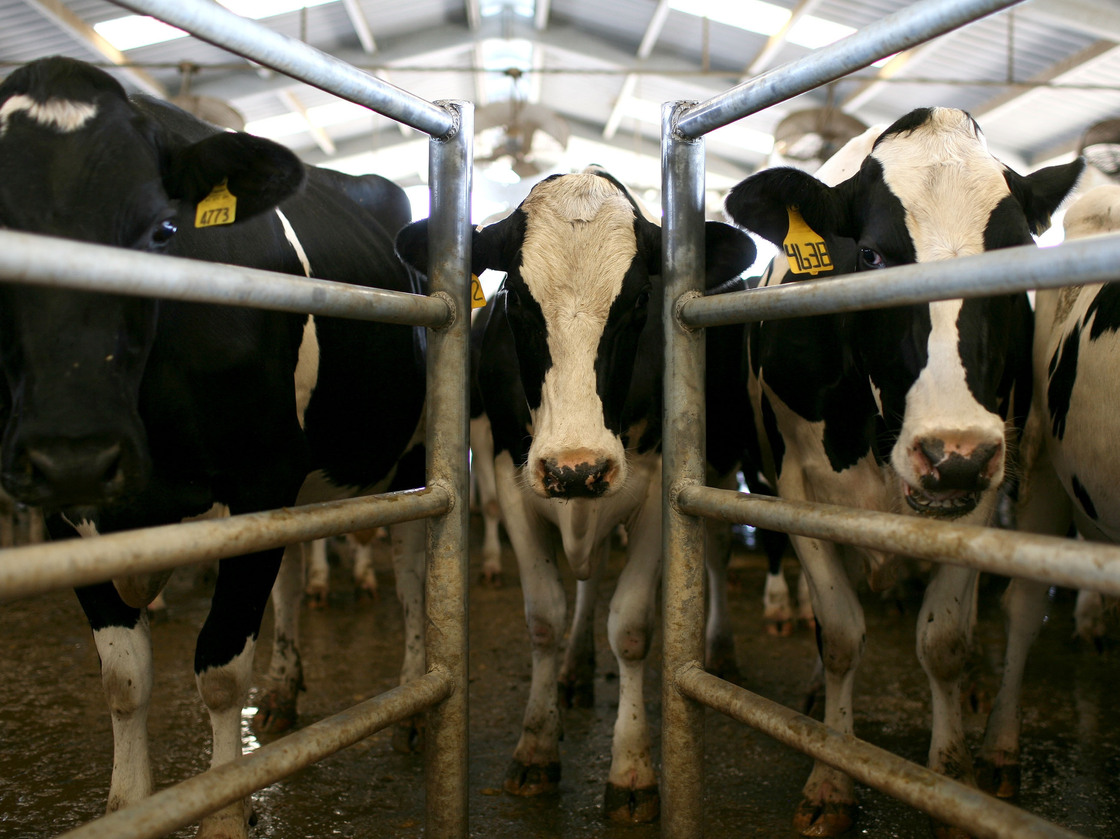
NPR has an excellent summary of the ag-gag campaign to shut down undercover filming at factory farms, and it includes a great analysis of the latest wrinkle in the industry campaign to stymie efforts to publicize and spark criminal prosecutions, the 48-hour rule:

But recently, the livestock industry seems to have taken a sharp turn in its legislative tactics.

Consider Assembly Bill 343 in California. Introduced in February, this bill would not prohibit a person from seeking employment at a slaughterhouse under false pretenses, which Iowa and several other states have outlawed. Nor would it forbid anyone from using a hidden camera while on the job, which Utah recently made illegal. All that AB 343 would do, in fact, is require that anyone who videotapes or records animal abuse turn over a copy of the evidence to police within 48 hours.

It sounds like the type of bill that animal welfare groups would welcome — but it isn’t. Rather, these groups have branded AB 343 as simply a new, and subtler, attempt to stifle undercover investigations of animal cruelty.

“The 48-hour time limit is a new twist to stop people from compiling information,” says Amanda Hitt of the Government Accountability Project, a Washington, D.C.-based group that helps investigate reports of animal abuses.

According to Hitt, in order to prove that a serious animal abuse problem is occurring, undercover investigators must gather lengthy documentation. “You can’t prove that animal abuse is systemic and recurring through one snapshot or video of an abused cow,” she says.

For this reason, says Matt Rice of the group Mercy for Animals, “the last thing we want to do is go to law enforcement at the first sign of animal abuses.”

It is a very shrewd legislative strategy because it sounds so reasonable:

But Justin Oldfield, of the California Cattlemen’s Association — AB 343’s sponsor — says the bill only intends to protect animals. Rather than allowing witnesses to keep quiet while they continue to film or photograph, Oldfield says, the bill mandates prompt reporting. He says that requirement will allow enforcement agencies to take swift action at the first indication of abused animals.

Putting aside any cynicism or belly laughs Oldfield’s statement may inspire, NPR turns to UCLA to ask: so who’s right?

Taimie Bryant, a professor at UCLA School of Law who focuses on animal law, tells The Salt that public prosecutors tend to prioritize types of crimes other than those involving animal cruelty….

…She says legal action usually only occurs if there is media coverage, public outrage and pressure to prosecute.

“Public response [to livestock abuse videos] and clamor are what usually moves these types of cases up the ladder of priorities and motivates prosecutors to take action,” she says.

Even in court, judges are often easy on defendants “if the evidence of animal abuse is thin,” Bryant says.

So that’s the analysis. NPR comes up with a good concrete example of how resistant prosecutors are to tough sanctions:

In 2009, Mercy for Animals publicly revealed seven weeks’ worth of footage recorded at the Willet Dairy in Locke, N.Y. The videos show employees cutting off cows’ horns and tails without using anesthesia. Bellowing calves are seen dragged by the legs away from their mothers. At least one worker was recorded digging his fingers into a struggling calf’s eye socket. Eventually, an employee named Phil Niles was fined several hundred dollars on a misdemeanor animal cruelty conviction.

The Cayuga County district attorney who handled the case, Jon Budelmann, tells The Salt that Niles’ conviction was based largely on footage that showed Niles hitting a cow on the head with a wrench. Other events and images recorded at the Willet Dairy might also appear cruel to some outsiders, he says. But those events did not provide grounds for criminal prosecution, because “they were considered normal within the industry,” Budelmann explains.

You can imagine whether Budelmann would have done anything at all without the publicity. And someone should probably tell him that the question of prosecution should turn on what the law says, not what is “normal” within the industry. The fact that the practices uncovered by Mercy For Animals are “normal” within the industry actually shows the degree to which prosecutors have totally failed to protect animals and hold the industry to even the minimal animal care standards required by the laws which are on the books.

Oh, here’s one more concrete example of how awareness by regulators and prosecutors doesn’t really do much for the animals, while public outrage can change the equation:

Take the case of USDA veterinarian and slaughterhouse inspector Dean Wyatt. In 2010, Wyatt testified before a House subcommittee that, on several occasions, he was either overruled or threatened with demotion or transfer after he told superiors about instances of extreme animal abuse he’d witnessed.

Wyatt said he’d seen employees butchering live animals at both Bushway Packing, a veal plant in Vermont, and at Seaboard Foods, a pig slaughterhouse in Oklahoma.

“He went up the chain of command reporting violations [at the Bushway veal slaughterhouse in Vermont], and they did nothing until the Humane Society [of the United States’] video came out,” says Hitt with the Government Accountability Project.

Because the laws and the prosecutors have failed to rein in serial abuse at factory farms, the single greatest protection animals at factory farms have left is public outrage. Public outrage gets fast food buyers to go elsewhere, and it gets people to stop eating meat, and that hits factory farms in the one place they care about: their wallets.  Which, of course, is why they are pursuing the ag-gag strategy. Apparently, that is easier and less costly than actually stopping the abuse.

Great article. Now you know how to respond to anyone who says that the 48-hour rule is a reasonable solution.

Earthist Music: “Hope You’re Not Angry If I Disagree”

Well, I was about to post something on the Marine Mammal Protection Act. And then I thought, what the hell, the weekend is almost here, what about some music.

So here’s Eddie Vedder singing “Society,” a song that I love because it goes right after and laments the materialism and contradictions of our short-sighted, destructive, culture. Crank it up. Think revolutionary thoughts. Revel in your disagreement. And I’ll see you next week.

[PS: Please send me music which reflects your values, and inspires and motivates you, and I’ll start posting it as a regular feature]

“Society”
(originally by Jerry Hannan)

It’s a mystery to me
We have a greed with which we have agreed
And you think you have to want more than you need
Until you have it all, you won’t be free

Society, you’re a crazy breed
I hope you’re not lonely without me

When you want more than you have, you think you need
And when you think more than you want, your thoughts begin to bleed
I think I need to find a bigger place
Cause when you have more than you think, you need more space

Society, you’re a crazy breed
I hope you’re not lonely without me
Society, crazy indeed
Hope you’re not lonely without me

There’s those thinking more or less, less is more
But if less is more, how you keepin score?
Means for every point you make your level drops
Kinda like you’re startin’ from the top
And you can’t do that

Society, you’re a crazy breed
I hope you’re not lonely without me
Society, crazy indeed
I hope you’re not lonely without me
Society, have mercy on me
I hope you’re not angry if I disagree
Society, you’re crazy indeed
I hope you’re not lonely without me

Undercover Factory Farm Investigations Have Impact

For anyone who thinks that taking hidden cameras into factory farms is all about fund-raising and publicity, instead of stopping cruelty, tell that to the nine workers at Wyoming Premium Farms who were fired, and the five who were just convicted of multiple accounts of animal cruelty.

Via Mercy For Animals, here’s the Wyoming Business Report:

April 11, 2013 —

WHEATLAND – Five employees from Wyoming Premium Farms have each been convicted on multiple counts of cruelty to animals after a Humane Society of the United States undercover investigation documented acts of animal abuse. The five convicted workers are: Patrick Ruckavina, Richard Pritekel, Edward Pritekel, Kali Oseland and David Bienz.

A total of nine employees were charged in late December. All were terminated from their jobs at the farm by the time charges were filed.
In addition to the five convictions, according to a deputy clerk at Platte County Circuit Court, three cases – against Kyla Adams, Jarrod Juarez and Steve Perry – are still pending.  Shawn Colson, the former assistant manager of the farm who faced seven counts of animal cruelty, is currently considering a deal offered by the court.

The abuse, which was captured on video and became a sensation on YouTube last May, led to food giant Tyson Foods severing its relationship with the farm.

The investigation documented Wyoming Premium workers kicking live piglets like soccer balls, swinging sick piglets in circles by their hind legs, striking mother pigs with their fists and repeatedly and forcefully kicking them as they resisted leaving their young, among other abuses.

Mercy For Animals notes Wyoming’s unfortunately typical response to the sort of abuse depicted:
Confining pigs in gestation crates so small they can’t even turn around is so patently cruel the practice has been banned in nine US states, and nearly 50 major food providers, including McDonald’s, Burger King, Wendy’s, Costco, Safeway, Kroger, Oscar Mayer, Jimmy Dean, and Bon Appetit, have committed to ending the use of these cruel crates in their pork supply chains.

Yet, rather than improve conditions for pigs and other farmed animals, pro-factory farm legislators in Wyoming and some other states are trying to outlaw investigations that uncover cruelty to animals and other criminal activities at factory farms and slaughterhouses. These legislators don’t want to stop animal abuse; they just want to stop consumers from finding out about it.

In January, the Wyoming House of Representatives introduced House Bill 126. If passed, this bill would make it a crime to “knowingly or intentionally” record images at a factory farm without the owner’s consent, effectively outlawing the type of undercover work that led to the criminal convictions of these five workers at Wyoming Premium Farms.

Here’s the Humane Society video that led to the convictions and to Tyson’s abandonment of Wyoming Premium Farms. Yes, it is very hard to watch, but that is the point. I’d say we need more videos like it, not criminalization of the folks who have the guts to show the world what is happening behind the walls.

Moment Of Zen: No Orca Trainers Here

A wide evening view to Måbødalen in Eidfjord municipality, Hordaland, Norway, in 2011 August. The view has been captured from the eastern end of the valley. Photograph by Simo Räsänen (User:Ximonic)

From the 2012 Wikimedia Commons Pictures Of The Year.

Awesome Commentary About Orca Training Dreams Abandoned

I often hear (or see) a lot of commentary from young aspiring orca trainers, whose passionate dream it is to work at SeaWorld. So it is very refreshing to be hearing from aspiring orca trainers who changed their minds.

Take, for example, Kelsey Prosser, who just posted this comment:

As a 3-yr old little girl, my parents took me to SeaWorld in SD, California. I fell in love with the orcas, and from then on, it was my lifelong dream to become a “marine biologist” and work with orcas. SeaWorld was my goal, and nothing was going to stop me from becoming an orca trainer. Until I went on a whale watch in the San Juan Islands and saw orcas in the wild for the first time: powerful, social, vocal, and free. They had the ocean to roam, and no concrete tank to stop them. I even had the great privilege of watching Residents hunt for salmon and Transients hunting harbor seals. I spoke with local orca biologists who work with these animals in the wild and read as much as I possibly could on orcas in captivity, and after 21 years as an aspiring orca trainer, I have changed my mind. These animals belong in the ocean. They are intelligent, social, incredible marine mammals and they deserve a life of freedom. In the wild, orcas can reach 90+ years! J-2, an orca known as “Granny,” is 102 years old! In captivity, a 30-yr old orca is considered lucky. To all of you want-to-be-trainers, I simply ask that you think about the animals you are so in love with. What’s best for them? To be locked in an acoustically-straining tank with no natural surroundings, no social structure, and no room to roam and hunt? Or to live free with their family pods for their entire lives, hunting and playing at will? If this is your passion, won’t you want what is best for them? Is it selfish to want to work with them in a tank, even though deep down you know it’s not the best living situation for an intelligent marine mammal? I, too, was once that young girl with a dream. Now, I finally see the reality of the situation and know that my dream is to ensure that these animals are protected and studied in our world’s oceans, so that they may live full, happy lives. Now a Master’s student in Biology, I am still aiming toward a career with orcas, but my dream has changed: instead of working as an orca trainer, I am striving to study orca in their natural environment as well as teach others about their beauty and their behavior in the wild and the importance of conservation.

Kelsey zeroes in on the number one contradiction of orca training: if it is about loving the animals how do trainers rationalize the aggression, rakes and injuries, and captivity-related stress that they see? This is the contradiction that every trainer I know who eventually turned against captivity struggled with. And to the oft-asked question of why they worked so long at SeaWorld if the were uncomfortable with what they saw and experienced, they almost always explain that they had a hard time stepping out of SeaWorld because they worried that no one would care for the whales as well as they did (though some just say it took a while for the reality to supplant the corporate and management BS).

Kelsey’s comment is especially on point, because it tracks the logic and questions that arise when an aspiring killer whale trainer focuses not on his or her own interests and dreams but on the interests of the whales. I have always felt that a dream to train killer whales is not about love for the whales. It is about love for the thrilling experience of working with whales. But that thrill is the trainer’s thrill. The whales did not choose to be at a marine park, or dream of working with humans (okay, I don’t know that for sure, but I think it’s a pretty reasonable assumption). So to me a dream of training killer whales is about the dreamer’s fantasy, and what the dreamer wants. It is not at all about what the whales might want or prefer, if they could have been given a choice to work at SeaWorld or live a normal killer whale life in the wild.

By the way, the photo above is from Kelsey, who has found a different and beautiful way to engage her love of working with whales.

Here’s another comment in a similar vein, from Jennifer Jackson:

I once wanted to be a trainer and was probably one of the happiest people when San Antonio got SW… I wanted to go everyday and eventually move there for work. Later I met a friend who trained dolphins in Hawaii and she showed me video of the dolphin she trained and told me the story about his death, its so sad to me so I began to do a little more research on captivity. I had heard tons of arguments from both and I just couldn’t make up my mind and eventually I kept researching but not the parks but the habitat of these sea animals and that was it I was convinced they did NOT belong in captivity!!
Now I just try and educate my friends on what I have learned and I am very proud to say I have convinced several people NOT to go to SW and it is one of the best feelings in the whole world :)

I just want to say Thank You to ALL who participate in helping educate others as to why these amazing creatures belong in the sea and only in the sea!! Love you all from the bottom of my heart ❤

I’d love to hear from more people who had a dream to work at SeaWorld and then changed their minds, including their reasons.

I’d also love to hear more from anyone who still aspires to be a trainer at SeaWorld, and would like to address Kelsey’s questions about whether love of killer whales can be consistent with wanting to work with them in captivity. I totally get why being a SeaWorld trainer would be thrilling and appealing from the human point of view. But I have a harder time understanding how aspiring trainers justify their dreams from the whales’ point of view. It’s an excellent conversation to have.