Tiger Shark Tale

Shark advocate and underwater explorer Scott Cassell gets a tiger shark to start eating a Go Pro camera. The result is an interesting view you personally never hope to experience yourself.

You can read more about Cassell and the underwater craziness he gets up to in this piece I wrote about him for Outside.

We’re Fracked (Again)!

Pennsylvania officials are caught omitting evidence of toxic substances in a report on well water near a natural gas site:

In a deposition, a scientist for the Pennsylvania Department of Environmental Protection testified that her laboratory tested for a range of metals but reported results for only some of them because the department’s oil and gas division had not requested results from the full range of tests.

The scientist, Taru Upadhyay, the technical director of the department’s Bureau of Laboratories, said the metals found in the water sample but not reported to either the oil and gas division or to the homeowner who requested the tests, included copper, nickel, zinc and titanium, all of which may damage the health of people exposed to them, according to the federal Agency for Toxic Substances and Disease Registry.

Ms. Upadhyay said that the bureau did not arbitrarily decide to withhold those results. “It was not requested by our client for that particular test, so we did — it is not on our final report,” she said in a deposition on Sept. 26.

Ah, that explains everything. Why would you include notification of dangerous metals if no one had asked you for it?

This is a perfect example of all the lying and obfuscation that goes on around fracking, as corporations and governments race to cash in on the natural gas boom. Never was an industrial process so perfectly named.


Fighting Back

Mercy For Animals is one of the best outfits fighting animal cruelty in factory farms, and opening consumers’ eyes. And apparently they make a great year-end video too.

At the end of this you can almost believe there will be a time when most people are vegetarian, and factory farms are a distant and ugly memory.

Disgusting Meat Datapoint Of The Day

KEITH MYERS | THE KANSAS CITY STAR

I don’t know if this is the start of a regular feature here, but it could be.

The Kansas City Star (in the heart of Big Beef-country) shows courage by digging deep into a processing technology, “mechanical tenderizing,” that is rarely labeled and makes it (even) more likely that you can get e-coli poisoning from industrial beef:

An estimate by the Center for Science in the Public Interest, an advocacy group, suggests that mechanically tenderized beef could have been the source of as many as 100 outbreaks of E. coli and other illnesses in the United States in recent years.

Those cases affected more than 3,100 people who ate contaminated meat at wedding receptions, churches, banquet facilities, restaurants, schools and in their own homes, the center said.

But that’s just one of the key findings from The Star’s investigation, which examined Big Beef’s processing methods and the hazards they can pose for human health.

The Star examined the largest beef packers including the big four— Tyson Foods of Arkansas, Cargill Meat Solutions of Wichita, National Beef of Kansas City and JBS USA Beef of Greeley, Colo. — as well as the network of feedlots, processing plants, animal drug companies and lobbyists who make up the behemoth known as Big Beef.

What The Star found is an increasingly concentrated industry that mass-produces beef at high speeds in mega-factories that dot the Midwest, where Kansas City serves as the “buckle” of the beef belt. It’s a factory food process churning out cheaper and some say tougher cuts of meat that can cause health problems. The Star’s other key findings:

•  Large beef plants, based on volume alone, contribute disproportionately to the incidence of meat-borne pathogens.

•  Big Beef and other processors are co-mingling ground beef from many different cattle, some from outside the United States, adding to the difficulty for health officials to track contaminated products to their source. The industry also has resisted labeling some products, including mechanically tenderized meat, to warn consumers and restaurants to cook it thoroughly.

•  Big Beef is injecting millions of dollars of growth hormones and antibiotics into cattle, partly to fatten them quickly for market. But many experts believe that years of overuse and misuse of such drugs contributes to antibiotic-resistant pathogens in humans, meaning illnesses once treated with a regimen of antibiotics are much harder to control.

•  Big Beef is using its political pull, public relations campaigns and the supportive science it sponsors to influence federal dietary guidelines and recast steaks and burgers as health foods people can eat every day. It even persuaded the American Heart Association to certify beef as “heart healthy.”

It’s a fascinating and devastating look into modern beef packing (I smell a Pulitzer), and opens with the painful story of Margaret Lamkin, an 87-year old woman who almost died, and lost her colon, after contracting a virulent pathogen from an Applebee’s steak (“Eating Good In the Neighborhood”!).
“You trust people, trust that nothing is going to happen,” Lamkin is quoted as saying. “But they (beef companies) are mass-producing this and shoveling it into us.”

I feel terrible for Lamkin and no one should have to endure what she did (and wouldn’t if the Congress and regulators did their jobs instead of buckraking from beef industry lobbyists). But if we have learned anything about Big Meat it is that you should not trust it, or trust that nothing bad is going to happen.

I would also note that it is not Big Meat that is shoveling their product  into Americans. Lamkin and others are doing that all by themselves.

The Morgan Decision

Apparently the judge bought the argument that Morgan is being used for research and education. Guess he or she has never been to a Loro Parque Orca Ocean show. I have, and what amazed me was that there was not a single fact about wild orcas in the show. Not one.

According to this story (and Google Translate):

Relocation orca Morgan not unlawfully

AMSTERDAM – The relocation of orca Morgan of the Dolphinarium in Harderwijk to Loro Parque, a park in Tenerife, was not unlawful.

Photo: Reuters

That the court in Amsterdam Thursday determined. The case was brought by the Orca Coalition, an alliance of animal activists, who wanted the animal in nature would be released.

Morgan was severely weakened in 2010 found in the Wadden Sea. The animal was brought to the Dolphinarium to recover. In 2011 it was announced that Morgan to Loro Parque in Tenerife should move, where all five other killer whales lived.

Then State Secretary Henk Bleacher gave a permit for the removal of Morgan to Tenerife. This was according to the Orca Coalition never happen.

The permit should only be issued if the goal was their research or teaching was that the protection or conservation of the species was intended. This is according to the court case. The park on Tenerife conducts research and performs an educational function, the judge said.

The Court sees no reason to believe that the welfare of Morgan danger in Tenerife. The Orca Coalition may, if they disagree, a case in Spain started.

PLUS: Comment from The Blackfish.

Levis To Detoxify

Maybe the system works (at least sometimes). And my ass is grateful.

As a follow-up to my lamentations about Greenpeace’s exposure of Levis for the release of hazardous chemicals in their supply chain, Myriam Fallon of Greenpeace just sent me the news release below.

Note: Levis agrees to eliminate the release of chemicals, as opposed to the use of hazardous chemicals, but you have to start somewhere. In the meantime, I am hoping to test drive some sample clothing made from recycled cotton and plastic soda bottles (seriously).

Another note: Not Gore-Tex too! Maybe Adam and Eve had it right that a few strategically placed leaves is the way to go.

Finally, Greenpeace’s news:

Levi’s bows to global people power: bans toxic fashion

World’s largest denim retailer commits to going toxic free and ensuring transparency in its supply chain

San Francisco, December 13th, 2012 – Levi’s, the world’s largest denim brand, has committed to eliminate all releases of hazardous chemicals throughout its entire supply chain and products by 2020, following public pressure in response to Greenpeace’s global Detox campaign.

“Now more than ever, we are seeing brands such as Levi’s listen to the groundswell of support for toxic-free fashion,” said Greenpeace Toxics Campaigner John Deans. “Now it’s  time for other brands such as Calvin Klein, Gap, and Victoria’s Secret to  follow Levi’s lead and end their toxic addiction. We’ll continue to expose brands until the use – and abuse – of hazardous substances is totally eliminated.”

As part of its commitment, Levi’s will begin requiring 15 of its largest suppliers (each with multiple facilities) in China, Mexico and elsewhere in the Global South to disclose pollution data as early as the end of June 2013. This will be followed up with a further 25 major suppliers by the end of 2013, meaning those living near all these facilities gain crucial access to information about discharges into their local environment.

Levi’s commitment comes just eight days after Greenpeace launched its report “Toxic Threads: Under Wraps” in Mexico City on December 5th. Since then, over 210,000 people joined the campaign calling on Levi’s to Detox, with tens of thousands taking action on Facebook and Twitter. Over 700 people have protested outside Levi’s shop fronts in over 80 cities worldwide, including a demonstration yesterday in front of the company’s headquarters in San Francisco.

“Levi’s has become a global Detox leader now that it has promised to use alternatives to hazardous chemicals and make its supply chain transparent. This is a milestone in the way clothes are manufactured and a victory for people in Mexico and elsewhere who are affected by toxic water pollution every day,” added Greenpeace Mexico Toxics campaigner, Pierre Terras.

Levi’s becomes the eleventh brand to make a credible commitment to eliminate releases of all hazardous chemicals throughout its supply chains and products since Greenpeace launched its Detox campaign in 2011. A key part of the commitment is Levi’s elimination of all PFCs by the end of 2015, and a promise to lead on the adoption of PFC-free alternatives and non-hazardous chemicals by 2015.

Greenpeace’s Detox campaign demands fashion brands commit to zero discharge of all hazardous chemicals by 2020 and requires their suppliers to disclose all releases of toxic chemicals from their facilities to communities at the site of the water pollution.

MEDIA CONTACT:

Myriam Fallon, Media Officer, mfallon@greenpeace.org, 708.546.9001

Notes:

1) Link to Levi’s Zero Discharge Commitment: http://levistrauss.com/sites/levistrauss.com/files/librarydocument/2012/12/levi-strauss-greenpeace-detox-solution-commitment-12-dec-2012.pdf

2) Released 5 December, Greenpeace International’s investigatory report, “Toxic Threads: Under Wraps” exposes dumping of industrial wastewater containing toxic and hazardous chemicals from two of Mexico’s biggest textile manufacturing facilities with links to brands including Levi’s. Little transparency and weak laws allow these facilities to avoid scrutiny of their manufacturing processes and documents some of the worst water pollution Greenpeace has investigated in Mexico. View report here: www.greenpeace.org/international/under-wraps

Photo and Video

Video from various Levi’s protests available here: http://comms.greenpeaceusa.org/20121206_Detox_Levis

Photos of Levi’s protests throughout the world available here:

Background on the campaign can be found here: http://www.greenpeace.org/international/en/campaigns/toxics/detox/

http://photo.greenpeace.org/C.aspx?VP3=ViewBox_VPage&ALID=27MZIFVO6AOI&CT=Album

 

Marineland In Eleven Minutes

Very nice mini-doc on Marineland, and the grassroots movement on behalf of its animals that was launched when Phil Demers and other trainers started speaking out about Kiska, and the conditions for the other animals there.

Marineland is taking to the courts to try to go on the offensive. I’m betting on the whistleblowers, and it will be interesting to see how far SeaWorld, and its files on killer whale care at Marineland (which needed a court to help it get its orca Ikaika out of Marineland), gets dragged into this fight.

Dairy Downer

It’s like they know what I want to know!

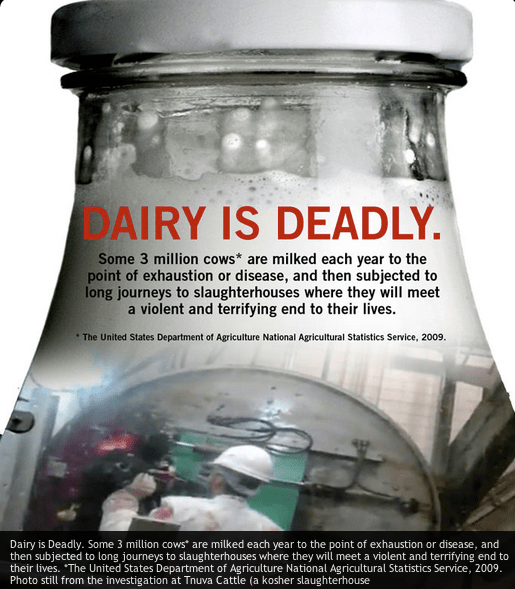
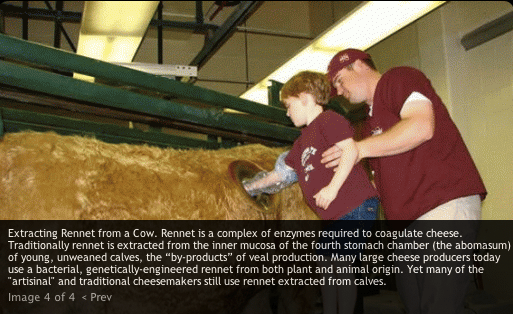
Following yesterday’s discussion of whether “humane” meat, dairy and eggs are possible, Free From Harm sent me (and everyone else on their mailing list) a slideshow on the dairy industry. Granted, this focuses on factory-farm dairies. But some things are inevitable in the dairy industry, whether the cows are factory-farmed or family-farmed in the most humane way possible (like the slaughter of male calves).

Anyhow, here is the slideshow, which only helps get me past my desire for Half And Half in my coffee.

Screen Shot 2012-12-12 at 5.39.17 PM


Screen Shot 2012-12-12 at 5.39.53 PM


Screen Shot 2012-12-12 at 5.40.14 PM


Screen Shot 2012-12-12 at 5.40.36 PM

Marineland? Keep Moving, Nothing To See Here

No, that’s not my opinion. That’s what the Canadian Association Of  Zoos And Aquariums concluded after inspecting Marineland following revelations from former trainers about poor water quality, suffering animals, and a bleeding killer whale:

A national agency that oversees the care of animals in captivity says Marineland’s lone killer whale is in good health.

The Canadian Association of Zoos and Aquariums (CAZA) conducted an unannounced inspection at the Niagara Falls theme park on Nov. 27 to assess several areas in the park, including the health of Kiska.

The female killer whale has been alone in a tank since November 2011 after Marineland was forced to return its male orca Ikaika to SeaWorld.

Former Marineland trainer Christine Santos told Toronto media in October that Kiska was bleeding sporadically from her tail and had been for some time.

In a CAZA accreditation report completed on Nov. 29 and obtained by The Review, the agency’s business manager Greg Tarry said he reviewed copies of Kiska’s medical records for November and was also given copies of the daily observation sheets completed by staff.

“This animal appears to be in good health and is eating a full ration,” Tarry wrote, adding he did not see any signs of bleeding or injury. “It is my opinion that there is no cause for concern on the part of the (CAZA) commission regarding the health of the animal at this time.”

According to the report, Marineland staff and management were “open and candid in their comments and provided any and all information and assistance requested” during the inspection.

“There were no concerns identified during the inspection that the commission need react to at this time,” Tarry wrote.

The inspection also included an assessment of the water quality.

“All of the water was clear and clean, there were no problems with color or odour of the water in any of the areas,” the report states.

“In addition, none of the animals in the water appeared to be experiencing any discomfort as a result of being in the pools. “

Hmm. That’s a pretty different story than that told by former trainers.  But who are you going to believe: the people who devoted their lives to caring for the animals or the industry group dedicated to promoting business and profits?

File it under another totally predictable outcome. I guess we’ll have to wait and see whether Ontario’s government decides to take any action, or not. You now what my prediction would be. Hope I’m wrong..

Our Food Supply Is Fracked

This was so frustratingly predictable. There is evidence that fracking contamination is starting to poison nearby farms and livestock:

Earlier this year, Michelle Bamberger, an Ithaca, New York, veterinarian, and Robert Oswald, a professor of molecular medicine at Cornell’s College of Veterinary Medicine, published the first and only peer-reviewed report to suggest a link between fracking and illness in food animals.

The authors compiled 24 case studies of farmers in six shale-gas states whose livestock experienced neurological, reproductive, and acute gastrointestinal problems after being exposed — either accidentally or incidentally — to fracking chemicals in the water or air. The article, published in New Solutions: A Journal of Environmental and Occupational Health Policy, describes how scores of animals died over the course of several years.

The death toll is insignificant when measured against the nation’s livestock population (some 97 million beef cattle go to market each year), but environmental advocates believe these animals constitute an early warning.

Exposed livestock “are making their way into the food system, and it’s very worrisome to us,” Bamberger says. “They live in areas that have tested positive for air, water, and soil contamination. Some of these chemicals could appear in milk and meat products made from these animals.”

In Louisiana, 17 cows died after an hour’s exposure to spilled fracking fluid, which is injected miles underground to crack open and release pockets of natural gas. The most likely cause of death: respiratory failure.

In New Mexico, hair testing of sick cattle that grazed near well pads found petroleum residues in 54 of 56 animals.

In northern central Pennsylvania, 140 cattle were exposed to fracking wastewater when an impoundment was breached. Approximately 70 cows died, and the remainder produced only 11 calves, of which three survived.

In western Pennsylvania, an overflowing wastewater pit sent fracking chemicals into a pond and a pasture where pregnant cows grazed: Half their calves were born dead. Dairy operators in shale-gas areas of Colorado, Pennsylvania, West Virginia, and Texas have also reported the death of goats.

Just one more reason to not eat animals. But more important, fracking, its lack of transparency, the way it is (not) being regulated, and the extraordinary rush to buy into the idea that natural gas will save the American economy, has the feel of a gold rush that fifty years from now will leave a poisonous, toxic legacy that will have everyone shaking their heads and wondering what we were thinking.