Levis To Detoxify

Maybe the system works (at least sometimes). And my ass is grateful.

As a follow-up to my lamentations about Greenpeace’s exposure of Levis for the release of hazardous chemicals in their supply chain, Myriam Fallon of Greenpeace just sent me the news release below.

Note: Levis agrees to eliminate the release of chemicals, as opposed to the use of hazardous chemicals, but you have to start somewhere. In the meantime, I am hoping to test drive some sample clothing made from recycled cotton and plastic soda bottles (seriously).

Another note: Not Gore-Tex too! Maybe Adam and Eve had it right that a few strategically placed leaves is the way to go.

Finally, Greenpeace’s news:

Levi’s bows to global people power: bans toxic fashion

World’s largest denim retailer commits to going toxic free and ensuring transparency in its supply chain

San Francisco, December 13th, 2012 – Levi’s, the world’s largest denim brand, has committed to eliminate all releases of hazardous chemicals throughout its entire supply chain and products by 2020, following public pressure in response to Greenpeace’s global Detox campaign.

“Now more than ever, we are seeing brands such as Levi’s listen to the groundswell of support for toxic-free fashion,” said Greenpeace Toxics Campaigner John Deans. “Now it’s  time for other brands such as Calvin Klein, Gap, and Victoria’s Secret to  follow Levi’s lead and end their toxic addiction. We’ll continue to expose brands until the use – and abuse – of hazardous substances is totally eliminated.”

As part of its commitment, Levi’s will begin requiring 15 of its largest suppliers (each with multiple facilities) in China, Mexico and elsewhere in the Global South to disclose pollution data as early as the end of June 2013. This will be followed up with a further 25 major suppliers by the end of 2013, meaning those living near all these facilities gain crucial access to information about discharges into their local environment.

Levi’s commitment comes just eight days after Greenpeace launched its report “Toxic Threads: Under Wraps” in Mexico City on December 5th. Since then, over 210,000 people joined the campaign calling on Levi’s to Detox, with tens of thousands taking action on Facebook and Twitter. Over 700 people have protested outside Levi’s shop fronts in over 80 cities worldwide, including a demonstration yesterday in front of the company’s headquarters in San Francisco.

“Levi’s has become a global Detox leader now that it has promised to use alternatives to hazardous chemicals and make its supply chain transparent. This is a milestone in the way clothes are manufactured and a victory for people in Mexico and elsewhere who are affected by toxic water pollution every day,” added Greenpeace Mexico Toxics campaigner, Pierre Terras.

Levi’s becomes the eleventh brand to make a credible commitment to eliminate releases of all hazardous chemicals throughout its supply chains and products since Greenpeace launched its Detox campaign in 2011. A key part of the commitment is Levi’s elimination of all PFCs by the end of 2015, and a promise to lead on the adoption of PFC-free alternatives and non-hazardous chemicals by 2015.

Greenpeace’s Detox campaign demands fashion brands commit to zero discharge of all hazardous chemicals by 2020 and requires their suppliers to disclose all releases of toxic chemicals from their facilities to communities at the site of the water pollution.

MEDIA CONTACT:

Myriam Fallon, Media Officer, mfallon@greenpeace.org, 708.546.9001

Notes:

1) Link to Levi’s Zero Discharge Commitment: http://levistrauss.com/sites/levistrauss.com/files/librarydocument/2012/12/levi-strauss-greenpeace-detox-solution-commitment-12-dec-2012.pdf

2) Released 5 December, Greenpeace International’s investigatory report, “Toxic Threads: Under Wraps” exposes dumping of industrial wastewater containing toxic and hazardous chemicals from two of Mexico’s biggest textile manufacturing facilities with links to brands including Levi’s. Little transparency and weak laws allow these facilities to avoid scrutiny of their manufacturing processes and documents some of the worst water pollution Greenpeace has investigated in Mexico. View report here: www.greenpeace.org/international/under-wraps

Photo and Video

Video from various Levi’s protests available here: http://comms.greenpeaceusa.org/20121206_Detox_Levis

Photos of Levi’s protests throughout the world available here:

Background on the campaign can be found here: http://www.greenpeace.org/international/en/campaigns/toxics/detox/

http://photo.greenpeace.org/C.aspx?VP3=ViewBox_VPage&ALID=27MZIFVO6AOI&CT=Album


Can Clothing Save, I Mean Repair, The World?

In response to my lament about Greenpeace’s charge that Levis jeans are not environmentally friendly, I received an e-mail from Lukas B. Snelling, who thought he might have a solution for me (and anyone who would like to find more environmentally friendly, sustainable clothing):

I thought you might be interested in our company, Repair the World® apparel. We produce feel good, do good apparel that is both eco-friendly, and people friendly. We make all of our apparel from a unique fabric that is 100% recycled. We estimate this saves over 160 gallons of water per-product from entering the waste stream.

Sounds promising. And any company that claims to make clothing from a combination of recycled cotton scraps combined with recycled plastic Coke and Pepsi bottles, is definitely worth checking out.

Here’s some press release info:

“What really makes Reparel™ fabric special is that we’ve created a 100% recycled fabric
that does not sacrifice comfort. This is quite possibly the softest, most comfortable fabric
available on the market today.” said Alan Brown, Repair the World® Co-Founder.

Brown continued, “Organic cotton is great for some applications, but it still involves a
massive amount of energy and water to grow, harvest, and process. With Reparel™, we have eliminated much of that energy and water from the process and are left with a fabric that stands above organics for its environmentally friendly qualities.”

Reparel™ fabric also contains no additional dyes, as the recycled color cotton scraps are used to generate color. All water used in the finishing process is also treated on-site to assure that no hazardous effluents are released into the environment.

Repair the World® developed Reparel™ fabrics because of the company’s commitment to doing business in a socially and environmentally friendly manner. In addition to utilizing Reparel™ fabric in all of their available products, Repair the World® apparel also donates a portion of their profits back to the communities that help produce their clothing to provide individuals with opportunities for growth and self-sufficiency.

So what doesn’t it do? I have to say, I love the ambition and the vision. But will I love the clothing (I am reminded of the time my friend Kelley bought his wife a handbag made from recycled tires–it didn’t end well)? I’ll let you know.

Revelation Of The Day: Leilani Munter

Wow. Race car driver, animal rights activist, warrior for a different world and culture. More here.

https://twimg0-a.akamaihd.net/profile_images/1814705445/Cove_Suit_square.jpg

Also, a producer of great video:

Earth 2.0

I’m not sure I understand quite what this is all about, but I couldn’t agree more with the sentiments expressed by Graham Hancock at the start of this extended teaser video:

Anyone know much about Earth 2.0?

The Human Paradox: “Beauty And The Beak”

An idiot with a gun shot her beak off. Humanitarians armed with technology restored it. An amazing story (and Emmy winner) from KING-TV:

Beauty and the Beak from Keith Bubach on Vimeo.

(Thanks to Rachel Clark for tipping me to this).

Red Meat Mortality

I know it must seem obvious already, but it’s hard to resist posting research that details the impact of red meat consumption on mortality. I always tell my kids that beef is killing the planet. But no one seems to care that much. What people do respond to is research which shows that beef is killing them, so here’s a study report that I’ve had sitting around since March:

Eating red meat is associated with a sharply increased risk of death from cancer and heart disease, according to a new study, and the more of it you eat, the greater the risk.

The analysis, published online Monday in Archives of Internal Medicine, used data from two studies that involved 121,342 men and women who filled out questionnaires about health and diet from 1980 through 2006. There were 23,926 deaths in the group, including 5,910 from cardiovascular disease and 9,464 from cancer.

People who ate more red meat were less physically active and more likely to smoke and had a higher body mass index, researchers found. Still, after controlling for those and other variables, they found that each daily increase of three ounces of red meat was associated with a 12 percent greater risk of dying over all, including a 16 percent greater risk of cardiovascular death and a 10 percent greater risk of cancer death.

The increased risks linked to processed meat, like bacon, were even greater: 20 percent over all, 21 percent for cardiovascular disease and 16 percent for cancer.

Of course, you can earn all about the ways in which red meat will shorten your life in the excellent documentary “Forks Over Knives.”

And you can watch CNN’s Sanjay Gupta (with an assist from Bill Clinton) make the case here.

The Story Of Bill And Lou, Meat Eating, And The Future Of Humanity

This is very well said. From Dr. Lori Marino, of the Kimmela Center For Animal Advocacy, in a compelling deconstruction (via the sad story of two oxen called Bill and Lou) of the belief that meat-eating is in any way sustainable:

The reason the planet and all of its inhabitants are in such a desperate state is because our species has continued to exploit everyone and everything without compassion. Killing other animals reinforces that insensitivity and the very attitudes that have led to global destruction. We are currently facing the sixth mass extinction event, human overpopulation and starvation, and devastating planetary destruction from rampant ecological exploitation and climate change. The same insensitivity that leads to lack of concern for Bill and Lou as individuals has led us to the brink of global devastation. They are intimately related and anyone who claims otherwise is being disingenuous. Every individual currently in factory farms is Bill and Lou and factory farms are not only engines of unspeakable suffering for the luxury wants of our species but are contributing substantially to global warming.

Check out the Kimmela Center’s Facebook page here. And blog here.

Rapper Vegetarians?

It’s sounds like something that should go on a list of George Carlin oxymorons, like “jumbo shrimp” and “military intelligence.”

So we must be approaching some sort of cultural paradigm shift when there are headlines like:

GZA convinces Method Man and Redman to go vegetarian

According to the story, here’s how GZA did it:

“I used to tease Meth all the time about him eating steaks, use to tell him he was ‘Eatin’ a pig p**sy T-bone’. He hated that s**t, but he just recently came up to me and said both he and Redman are vegetarians now.”

And they aren’t the only ones who have taken heed of GZA’s diet advice – his tourmate Killer Mike has also started consuming more greens instead of just gorging on meat.

Killer Mike says, “He convinced me to be eating some veggies (sic), so that’s cool.”

Yes, very cool. And apparently GZA is no one-time apostle of vegetarianism:

In a 2010 interview on Eater, GZA also revealed that he had shared videos about the health impacts of consuming a typical meat-heavy Western diet to band members and family to encourage them to make the switch to a plant-based diet.

Maybe we are in the cusp of some new genres of music, Vegan Rap and Vegan Rock. Oh wait….

And, of course, we gotta work some George Carlin in:

Talking Turkey

We’re not having a turkey (or any meat) at our Thanksgiving table this year. And that was a pretty non-controversial decision in my family.

But if you are trying to talk your family into a vegetarian Thanksgiving, or are taking heat for leaving the turkey out, then I’ve got some useful numbers for you about Thanksgiving turkey consumption:

Amidst groans about being more stuffed than the bird itself, Americans will toss a whopping $282 million worth of uneaten turkey into the trash this Thanksgiving, contributing to the $165 billion in uneaten food Americans waste every year. Along with trashing uneaten turkey, they’ll be wasting the resources necessary for its production — meaning 105 billion gallons of water (enough to supply New York City for over 100 days) and greenhouse gas emissions equivalent to 800,000 car trips from New York to San Francisco. That’s enough turkey to provide each American household that is food insecure with more than 11 additional servings (17.9 million American households suffer from food insecurity).

Nationwide, consumers will purchase around 736 million pounds of turkey this Thanksgiving, of which about 581 million pounds will be actual meat. The USDA reports that 35 percent of perfectly good turkey meat in the U.S. does not get eaten after it is purchased by consumers (and that’s not including bones). This compares with only 15 percent for chicken. Why the disparity? “Possibly because turkey is more often eaten during holidays when consumers may tend to discard relatively more uneaten food than on other days,” the USDA writes.

And unless we take action to prove the USDA wrong, we’ll be throwing away about 204 million pounds of that meat and about 1 million tons of CO2 with it. Per pound, the resources needed to produce that turkey are equivalent to driving your car 11 miles and taking a 130-minute shower (at four gallons/minute).* And that’s to say nothing of the vast amounts of antibiotics used to produce turkey meat, leading to antibiotic resistance, which you can read more about here.

And that doesn’t even take into account what the turkeys actually go through to get to a table.

So instead of eating a turkey, how about adopting one?

Devil Of A Dilemma: Nuclear Safety vs. Marine Mammal Safety

Sometimes decisions made years ago end up leading us into blind alleys that have no safe or easy way out. A perfect example is California’s Diablo Canyon nuclear power plant (whose idea was it to build a nuclear reactor in a place called Diablo Canyon?).

The nuclear power plant opened in 1985, and generates electricity for more than 2 million homes. Here’s the thing, though: it turns out that Diablo Canyon was built on not just one geological fault, but two (the second discovered in 2008). The risk of building a nuclear power plant anywhere in earthquake country has always been controversial, but in the wake of the Fukushima Disaster, fears about what might happen at Diablo Canyon are suddenly very acute. That has prompted licensing authorities to want to know a lot more about the earthquake risks attached to Diablo Canyon. Which in turn has led California’s PG&E utility, which owns and operates the plant to propose an intensive program of seismic airgun testing right off the coast of Diablo Canyon. And that, in turn, could be a disaster for the marine mammals who thrive in those waters.

Here’s what the testing could mean for marine mammal life, according to an editorial in the Los Angeles Times:

But what if the research itself causes terrible environmental harm? That’s what the staff of the California Coastal Commission says would happen if plant owner Pacific Gas & Electric Co. is allowed to proceed with its proposal to blast underwater air cannons every 15 seconds in Morro Bay, for about 12 days a year over four years, to produce three-dimensional images of geologic faults. PG&E needs the commission’s permission to carry out the sonic imaging, but the staff is recommending against it.

Thousands of marine mammals, with their sensitivity to underwater sounds, would be affected in unknown ways by the disturbance, a staff report says. Of special concern are Morro Bay’s 2,000 harbor porpoises, a distinct population that remains in that area and doesn’t interbreed with other harbor porpoises. If they were driven from the bay by the cannons, their ability to survive would be uncertain. In addition, the blasts would kill millions of fish and other forms of sea life.

The editorial hopes that PG&E will be able to do other testing and surveys that will minimize the need for seismic airgun work, but in the end argues that the risk of a nuclear disaster is so terrible that some seismic testing may have to go forward. Somehow, the question of shutting down a nuclear power plant that almost certainly should never have been built, doesn’t seem to come up. Which is odd, because the very fact that there is a felt need to survey two geological faults suggests that there is a non-trivial earthquake risk. So it is hard to imagine how anyone could ever feel reassured about the risks the plant poses, no matter what the testing shows.

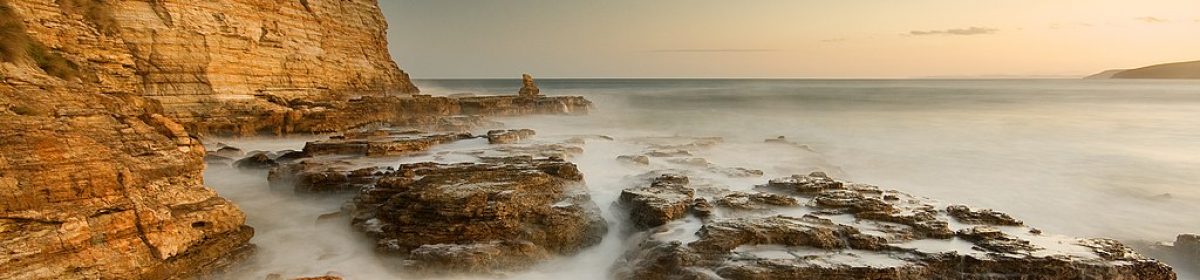
Point Buchon State Marine Reserve and Marine Conservation Area

Sea Shepherd has mobilized against the testing, and has a much more dire view of what it would mean:

According to a PG&E representative at an informational meeting, “the proposal calls for a 240-foot ship to tow a quarter-mile wide array of twenty 250 decibel “air cannons,” along a 90-mile stretch of California’s Central Coast. The cannons will shoot deafening underwater explosions once every twenty seconds, day and night, for 42 days and nights.  The region where this devastating assault on wildlife is expected to take place includes the “protected” Point Buchon State Marine Reserve.

The decision occurs at a time when humpback and blue whales have appeared in shockingly large numbers off the California coast to feed on krill. The seismic testing will kill great blue whales, gray whales and others, dolphins, porpoises, seals, sea lions, otters, and fishes. PG&E has offered to buy-off commercial fishermen in the area to compensate for anticipated losses if the plan is allowed to go forth.

PG&E plans to produce a 3-D map of the shoreline fault’s deeper regions. Hydrophones in the water and geophones on the seafloor would collect data on the sound as it resonates through sea and earth, and the resulting data is expected to help geologists map the fault. Nothing of this scope and power has ever been done in California waters before and according to the Environmental Impact Report, the toll on marine life from this kind of testing is staggering. In regions where this sort of testing has been done, countless dead marine animals wash ashore for weeks during and after testing, blood dripping from areas such as their eyes, nose, ears or mouth — a sign they have suffered catastrophic internal hemorrhaging.

This seismic testing is expected to yield only moderate mapping results and, according to Fish and Game Commissioner Richard Rogers, would “cleanse the Point Buchon State Marine Reserve of all living marine organisms” including Sperm, Pygmy Sperm, Humpback, California Gray and Great Blue Whales, and many other species of fish and marine mammals, right down to the plankton.

For anyone who lives near California’s Central Coast, there will be a public hearing tonight to discuss the dilemmas over Diablo Canyon.

Here’s what I would say, if I were there:

1)  Testing will, without question, harm or kill thousands of marine mammals. The only question is how many, and how many will die or be permanently disabled.

2) In the best case scenario, the testing might reveal a reduced risk of earthquake danger. But Diablo Canyon will still be located in a zone that carries earthquake risk.

3) In the worst case, testing might reveal a serious danger from earthquake.

4) Either way, decommissioning is really the only way to eliminate the risk of a serious nuclear tragedy.

5) Seismic testing won’t really change, or shouldn’t really change, the fact that decommissioning is the only way to make Diablo Canyon safe (and in fact it might simply emphasize that point if the testing reveals serious earthquake risk), so why kill and injure thousands of marine mammals when we already know this is the reality?

6) A Meta-Point: the decision to build Diablo Canyon despite the earthquake risk was a human decision. The electricity Diablo Canyon produces is consumed by humans. Why should marine mammals pay the price of human folly and consumption? (I know, that is a question that could be applied globally to almost any number of issues, but that only makes it THE critical question). In the end, the Diablo Canyon nuclear power plant is entirely a human construct. Whatever costs are attached to dealing with the risks and dangers it poses should be borne not by marine mammals that had nothing to do with it, but by humans. It’s called taking responsibility.

Picture via Lady Blue Productions