To everyone and anyone who thinks that “solving” climate change is difficult because we just don’t have the technology and solutions at hand, Project Drawdown once again reminds the oblivious that there are dozens of solutions that are feasible, affordable and can be enacted right now:
Five years ago Project Drawdown published a collection of “drawdown solutions,” technologies and practices that, if ambitiously implemented together, can achieve drawdown—the point in the future when levels of greenhouse gases in the atmosphere stop climbing and start to steadily decline, thereby stopping catastrophic climate change. A newly released update of this landmark analysis adds 11 new solutions and confirms with even more clarity and conviction that humanity has the solutions needed to reach drawdown quickly, safely, efficiently, and equitably.
The problem isn’t lack of solutions. The problem is a lack of focus, a lack of political will, and a lack of urgency. This matters because many or most of Project Drawdown’s solutions require major investment and policy reform at a government level.
Pause for upbeat, hopeful video that completely elides the power of the fossil fuel industry and the crisis of democracy.
Still, none of us is powerless, even if our elected leaders are failing. And for anyone who wants to get started right away, I note that plant-based diets and reducing food waste are the two solutions that have the biggest impact. And while you are at it, why not bicycle more, carpool more, and drive less? And buy less? And fly less? And, and…
Without question, this revolution will be from the bottom-up. Don’t wait around for the politicians…
The bad news is that scientists expect California wildfires–driven by climate change–to be more frequent and more intense over the coming decade. The seemingly good news that is actually also bad news is that fires are then predicted to abate.
Why? Because there will be so much less to burn after a decade of rampant burning (and also because climate-change driven drought will mean that there is less forest growth). Good summary here.
This is a perfect example of how the negative impacts of climate change are already here, and are also baked in (sorry) for the foreseeable future. The urgency of taking radical, global climate action now is not about reversing already predicted effects. It is about preventing predicted effects from getting much worse. Because on our current trajectory they will get much worse.
Mitigation, baby. That is what the game is all about now.
The report’s conclusions are, as it has become popular to say in the Era Of Trump, shocking but not surprising. In fact, given the consistency and accuracy with which IPCC scientists have been trying for decades now to warn humanity about climate change, in the hope that governments (and voters) will somehow, finally, take action that is proportional to the scale of the existential threat, you have to admire the fortitude and creativity it requires to keep coming up with appropriate alarums. “Code Red” is as good a summation as any, but it just as easily could have been used for the first IPCC report, in 1990.
There are tons of smart takes out there. Like this one. And this one. And the New York Times has a handy-dandy summary of the main takeaways. There’s even a smart take on how bad the media is at reporting on the IPCC report.
But the bottom line hasn’t really changed. Climate change is real, ongoing and threatens every corner of the planet. And we are way, way late in our efforts to mitigate it, locking in devastating loss even if we get serious now.
But we should still get serious, very serious in fact, because, as has been true all along, what we do now will determine how bad it is going to get in the future. So it is important to ask yourself: am I behaving as if there is a Code Red? Is my government? Is humanity?
So far all I have seen is incrementalism, despite the increasingly urgent and dire warnings of the IPCC. What we need is radicalism. A radicalism that reinvents how we live and consume, reinvents capitalism to include environmental cost and impact in everything we make and sell, and reinvents politics by transcending tribalism and uniting humanity behind the goal of better caring for each other, the planet and all its other species. As I say, radical. But humanity and the Earth at an evolutionary inflection point. That is no time for cowardice, self-interest, or inertia.
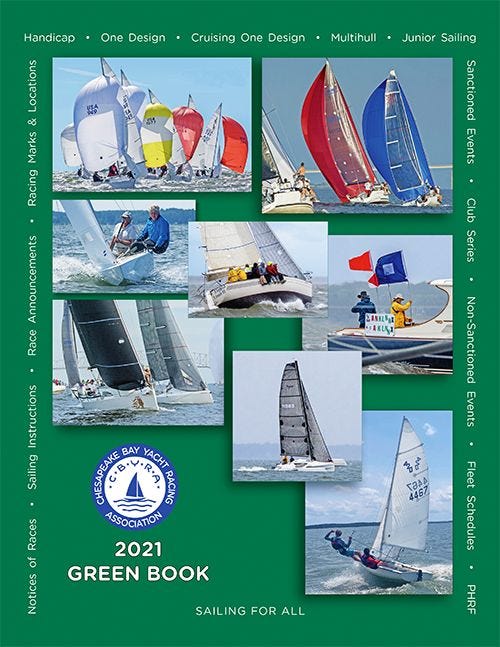
A promising moment has arrived: the Chesapeake Bay Yacht Racing Association Green Book is out. It is, in fact, green. It is also digital. Most important, it is the official catalog of all sailboat races scheduled on the Chesapeake Bay this year. It means that warmer weather and lots and lots of time on the water are in the offing. After a long, socially-distanced winter it could not be more welcome.
Time to get back to doing this…
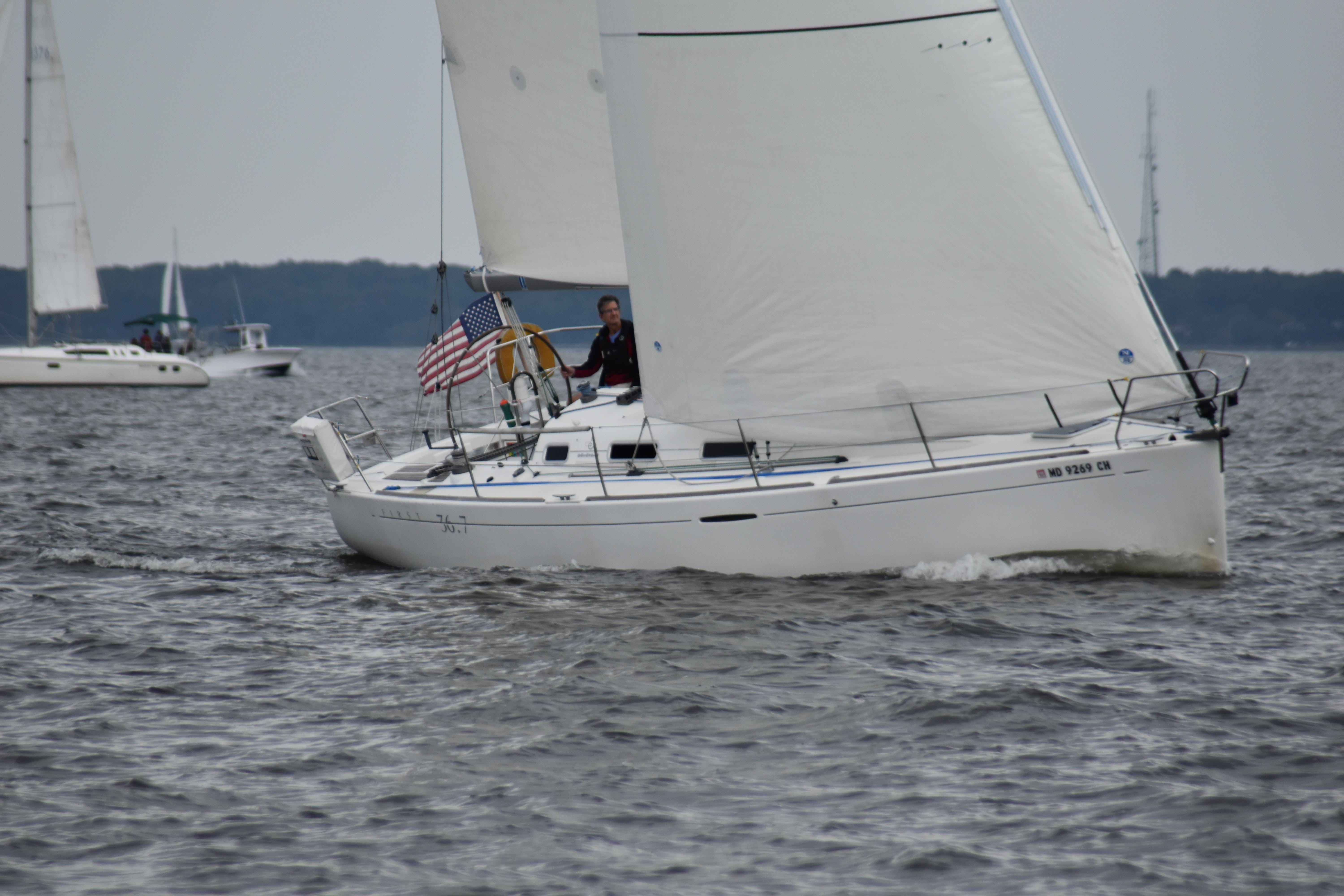
Last year was about setting up Moondust (the Beneteau 36.7 I co-own) for shorthanded racing and settling in at the bottom of the learning curve to sort things out. This year is about climbing the learning curve as fast as I can. I used to prefer small, one-design racing. A J-22. Then a Laser. I didn’t want to buy big-boat racing sails or organize big-boat crews. I didn’t want to fuss about ratings—if you beat a boat you beat a boat. Shorthanded racing on Moondust solves one of these objections (building a big crew). I still had to buy some sails, and I definitely get sucked into doing time-allowance math around the race course (on the plus side, perhaps that will help stave off cognitive decline).
Turns out I don’t mind, though. Because I love the challenge of shorthanded sailing. You alone, or you and just one crew, have to do everything—all the sail-handling, boat-handling, navigation and tactics. You are one-hundred percent engaged. You have no time or space to worry about anything other than getting a boat around the course as fast as you can. That is my idea of fun.
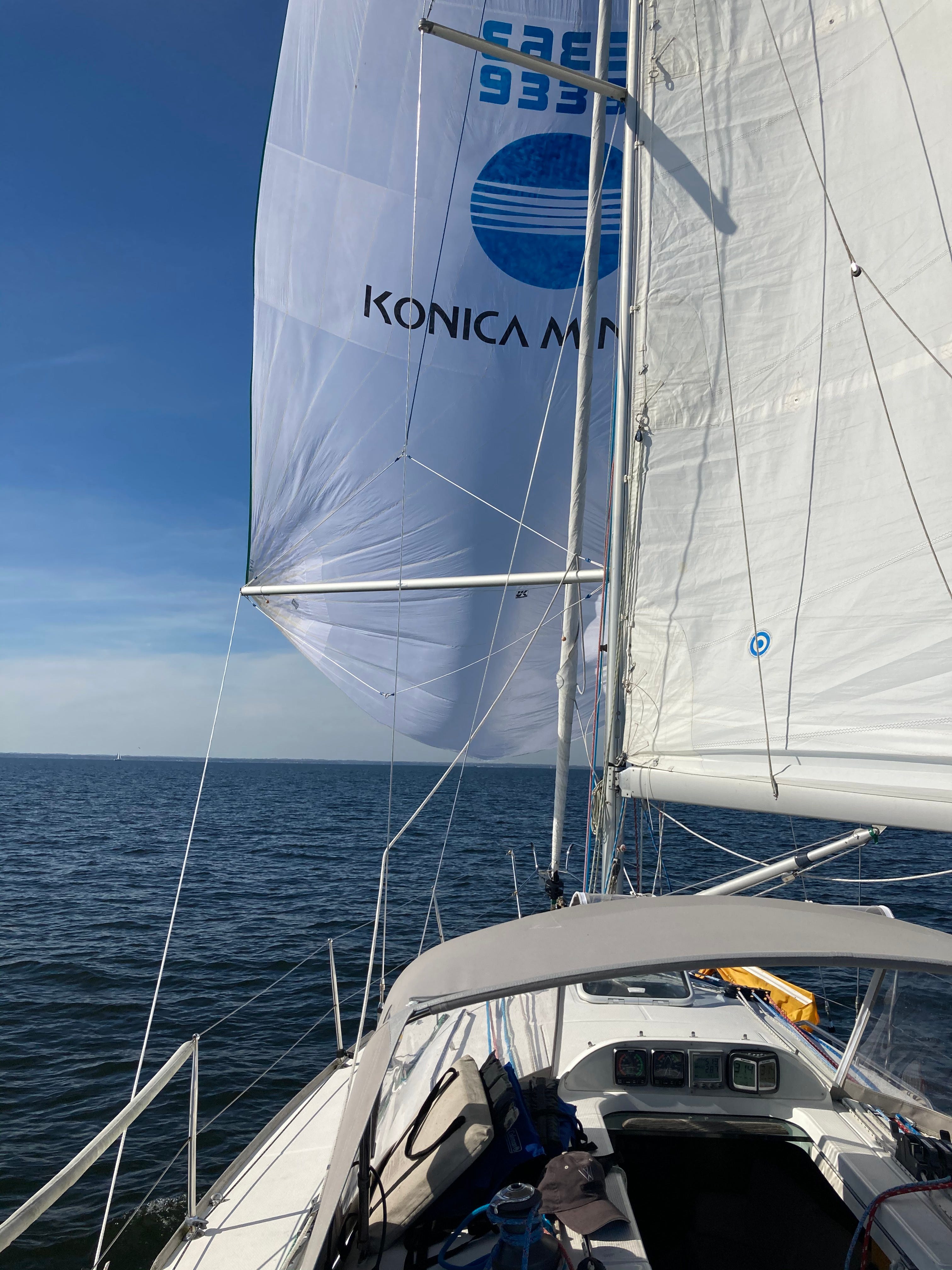
Flying the spinnaker solo for the first time…
To get faster this year, I made one offseason tweak. The 36.7 is designed as a symmetrical spinnaker boat, and in a moderate breeze will get downwind fastest (VMG—Velocity Made Good) by sailing deep with a symmetric kite. But last October, in the Annapolis Yacht Club’s Doublehanded Distance Race, Moondust got killed on long, very light wind, tight reaches. The genoa I have just isn’t big enough or light enough in those conditions. And the symmetrical spinnaker just wouldn’t let us sail the higher heading we needed keep aiming at the marks. So I bought a used 36.7 asymmetrical spinnaker from a 36.7 sailor in Chicago. I think it will be great for light air reaching, and maybe also for heavy air downwind. I can either fly it off the pole if I want to sail deeper (and don’t think I will have to gybe—which would be complicated for a shorthanded crew), or tacked down to the bow. Will this work well? I don’t know yet. It’s not going to be like The Whomper.
But it will be at least a Whimper. I’ll try different setups with different wind speeds and angles to find out how to best use it. That is also my idea of a good time.
The Green Book is chock full of races. Moan about or mock the brownish water and scorching mid-summer doldrums of the Chesapeake Bay, its long and packed racing calendar is a racing sailor’s nirvana. What is notable this year is the number of shorthanded races (which will make the young and growing Chesapeake Singlehanded Sailing Society happy). For example, the three-day Annapolis NOOD regatta (usually the first big regatta of the season) will feature a doublehanded long-distance race on Day 2. I’m already registered.
Without trying very hard I compiled a list of 15-plus weekend races that will include a shorthanded class. Throw in a COVID vaccine in the next month (I hope) and life is about to be pretty good.
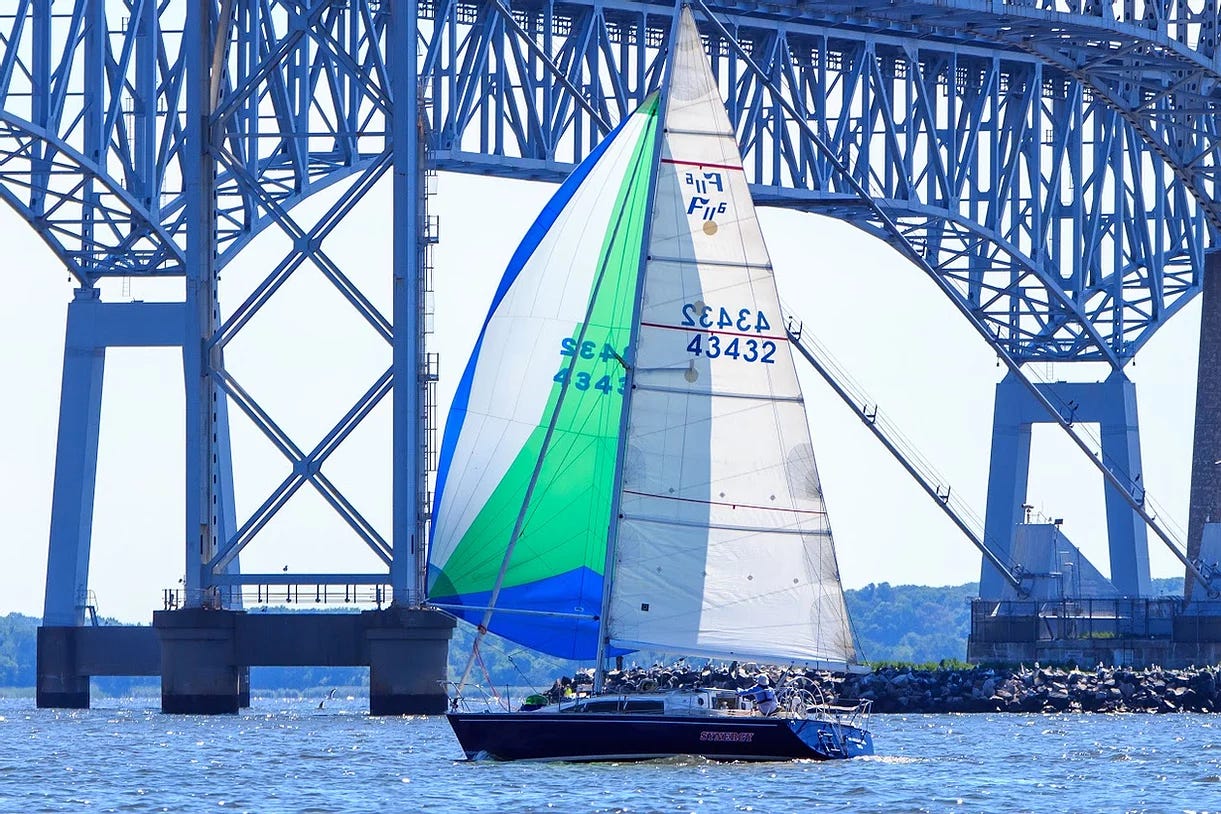
Synergy is one of the better-sailed shorthanded boats on the Bay. (Photo: Jim Little)
Plans for Wednesday Night Racing in Annapolis are also firming up. That will be full crew, and just another excuse to be out on the water and learn how to make Moondust go faster. WNR can be a pandemonium of 100 or more racing boats trying to survive each other within the confines of the Severn River, especially if it is windy. There will be plenty of tales to tell, and I haven’t raced on Wendesday nights in 20 years. But my recollection is that can feel sorta like this:
So stay tuned for lots of actual, on-the-water action, starting mid-April.
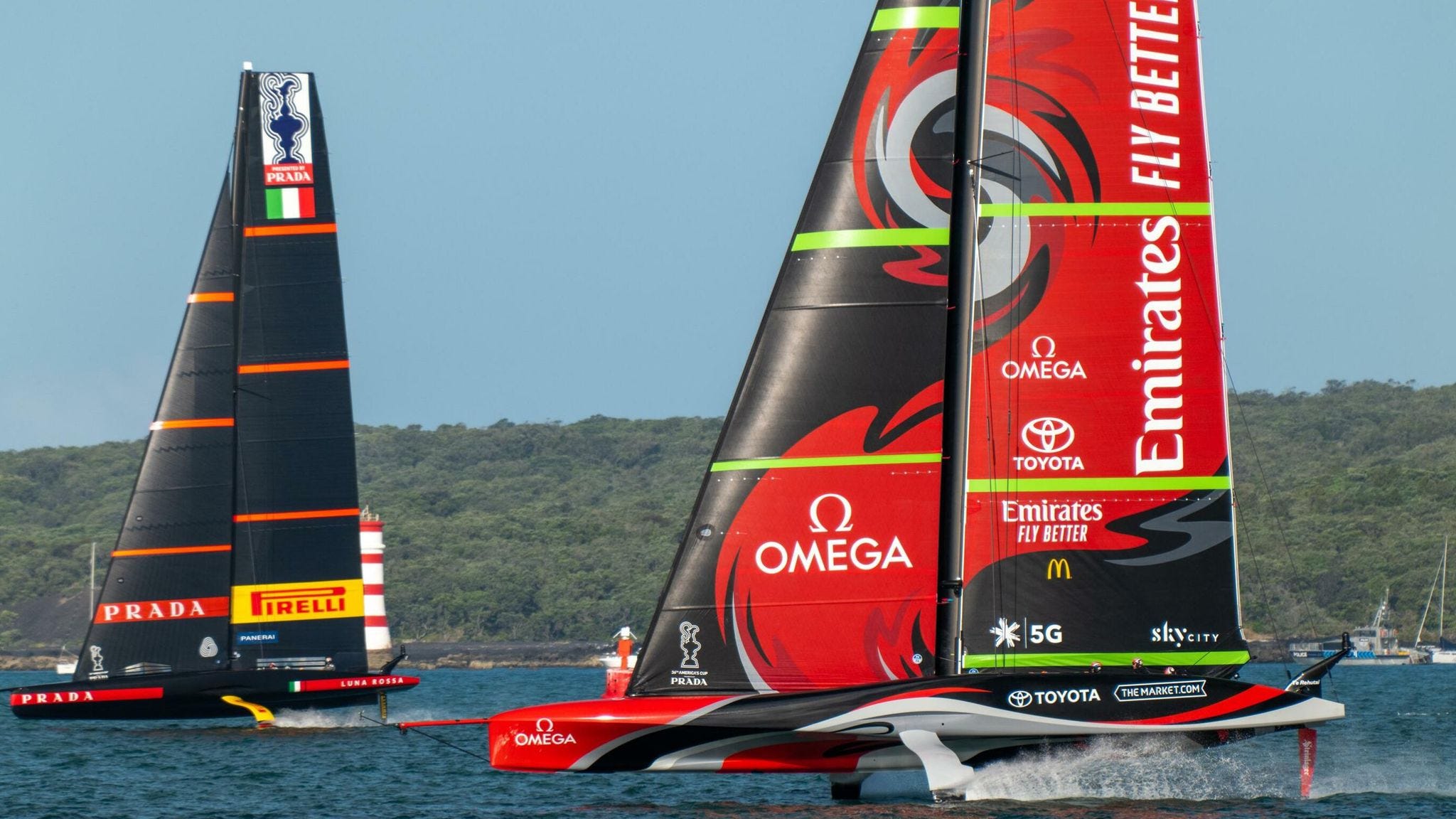
America’s Cup Aftermath: It’s over. The Kiwis won, as expected, by getting faster and better at racing their boat over the course of the series. The Italians did pretty well given a boatspeed disadvantage, and had the impossible task of needing to start and sail perfectly to win (which they sometimes managed). The boats were incredible, the tactical nuances were compelling, and the sailors showed personality and grit. Screw all the moaners who can’t adapt to flying boats. I thoroughly enjoyed it, and look forward to the next cycle in 3-4 years.
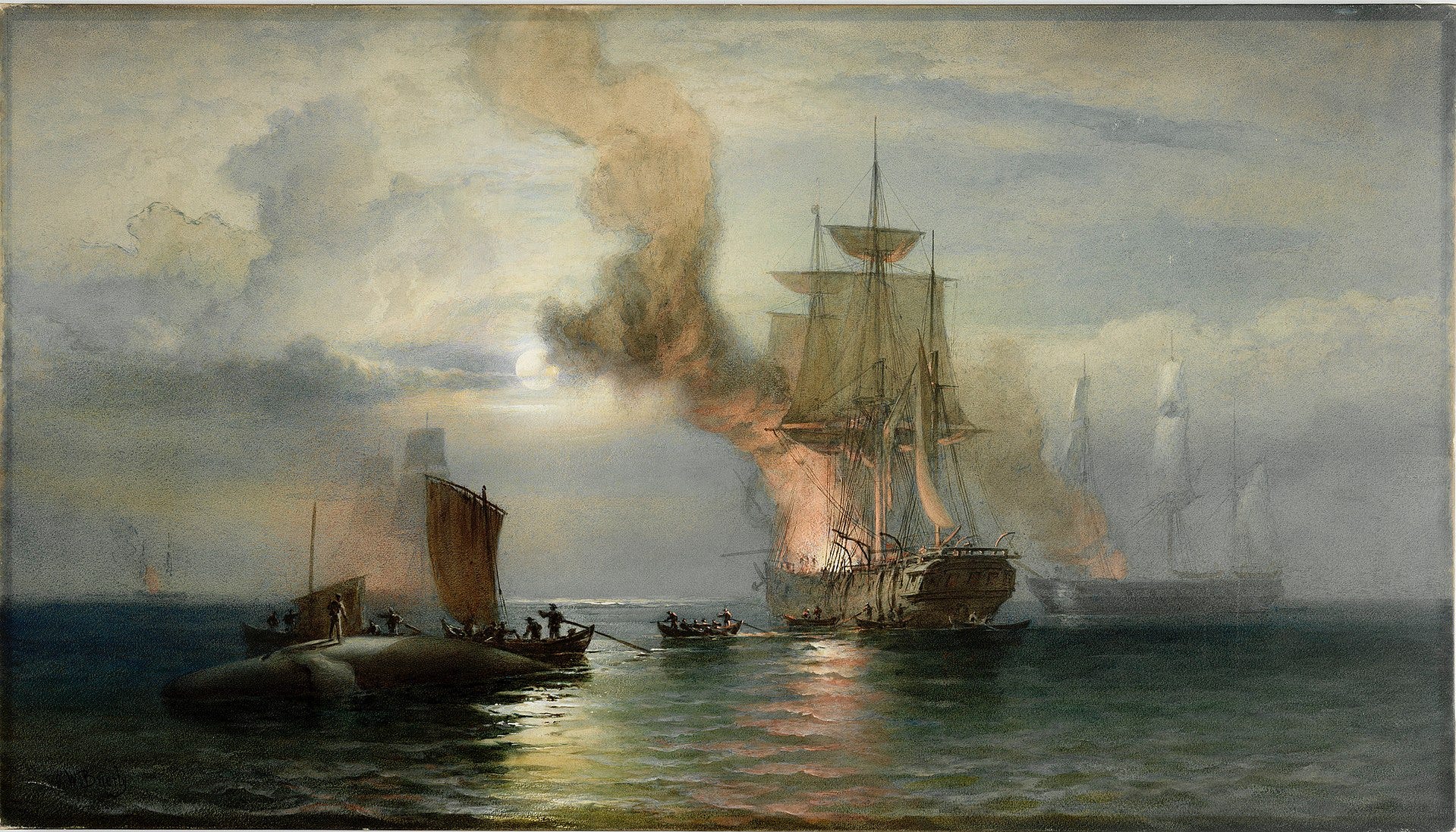
The Wisdom Of Whales: Humanity often sees itself as separate and apart from the planet’s other species, especially when it minimizes and misunderstands nonhuman intelligence. But every time research and experience reveals another species to be more intelligent than we assumed (and research almost always reveals more intelligence, not less), that gap between humanity and the natural world shrinks. Which is a good thing if we are to finally grasp the single most important point about life on Earth, which is: Everything Is Connected. So this story about how hunted sperm whales learned to avoid whaling ships caught my eye:
“The paper, published by the Royal Society on Wednesday, is authored by Hal Whitehead and Luke Rendell, pre-eminent scientists working with cetaceans, and Tim D Smith, a data scientist, and their research addresses an age-old question: if whales are so smart, why did they hang around to be killed?
Using newly digitised logbooks detailing the hunting of sperm whales in the north Pacific, the authors discovered that within just a few years, the strike rate of the whalers’ harpoons fell by 58%. This simple fact leads to an astonishing conclusion: that information about what was happening to them was being collectively shared among the whales, who made vital changes to their behaviour. As their culture made fatal first contact with ours, they learned quickly from their mistakes.”
It’s mind-opening to consider the possibility that sperm whale culture and communication allowed sperm whales to respond to the whaling threat. Unfortunately, today’s whales are not primarily threatened by whale ships, but by ship strikes and fishing gear. And in today’s ocean there is no escaping either commercial ship traffic or global fishing fleets.
Sad Circle Of Life: A case in point is the North Atlantic Right Whale called Cottontail, who died from fishing entanglement. Last seen months ago, Cottontails floating corpse was recently discovered by a fisherman off the coast of South Carolina, being mauled by Great White sharks. Cottontail is just the latest death in the relentless and cruel decline of the right whale due to ship strikes and fishing gear entanglements. But Great Whites are endangered too, so at least another species got some benefit from Cottontail’s needless and sad death.
The scene was pretty raw, Nature doing Nature. But we should see things as they are (though I could do without the enthusiastic tone). More images and video here…
Something awesome about this. The eerie sound of her inhaling and then the slow drift into the abyss, Jaws-style. 15 day’s straight this whale continues to bring white sharks to feed. We ended up tagging this one as well. @MA_Sharks@GregSkomal@WSAV@Live5Newspic.twitter.com/fGaf7QEJFu
Right whales are innocent bystanders to consumption and globalization (which are crowding the oceans with large ships), as well as the thriving crab and lobster fisheries (which mean a forest of vertical lines in the water through much of the right whale habitat). Efforts to protect them so far haven’t succeeded in slowing their mortality rate enough to save the population. Apart from supporting more stringent restrictions on ship speeds and pot fishing, we probably should think harder about all the stuff we think we need to buy and whether we really need to eat so much crab and lobster.
There Be Amazing Sea-Creatures: Take care of ocean, people. It contains wonder and multitudes.
This #MolluskMonday moment of zen might make you squeal. 🐽 This cranchiid squid, Helicocranchia, has quite a few nicknames from our deep-sea biologists. It's called the pig-nosed, helicopter-tailed, and hippo-squid, depending on who you ask. What nickname would you give it? pic.twitter.com/2ECOjv3Yg7
If there isn’t another COVID setback, the 36th America’s Cup will start tomorrow in New Zealand (tonight, really). I know a lot of sailors, and most non-sailors, couldn’t really care. And they might be right. Team New Zealand is the heavy favorite, and if all the pundits are correct, and TNZ has a meaningful speed advantage, then it won’t be a very exciting affair. That is simply the way of the Cup. The fastest boat almost always wins, so if there is a fastest boat, then there is not much drama or suspense.
But you never know until they actually line up and go sailing. So I am certain that the first pre-start, and the first 5 minutes of the first race will be very exciting. And I am definitely rooting for the Luna Rossa Challenge to come out and punch TNZ in the face. Then we’ll see.
For setup, here is commentator Nathan Outteridge previewing the showdown:
And if you want to go deeper, I highly recommend Shirley Robertson’s Sailing podcast. Here’s AC36 Preview Part 1, with Luna Rossa’s Francesco Bruni and TNZ’s Ray Davies. And Part 2, with Ken Read and Team UK’s Freddy Carr. You’ll learn just about everything you need to know.
Is all that enough to get you interested? No? You are still stuck back in the glory days of the 12-meters? Ok, I’ll throw you a bone. Here’s a bunch of rich, old, white guys frothing over the bygone class, with the help of Gary Jobson (I concede that the boats are, indeed, beautiful).
The Other Extreme Of Sailing:
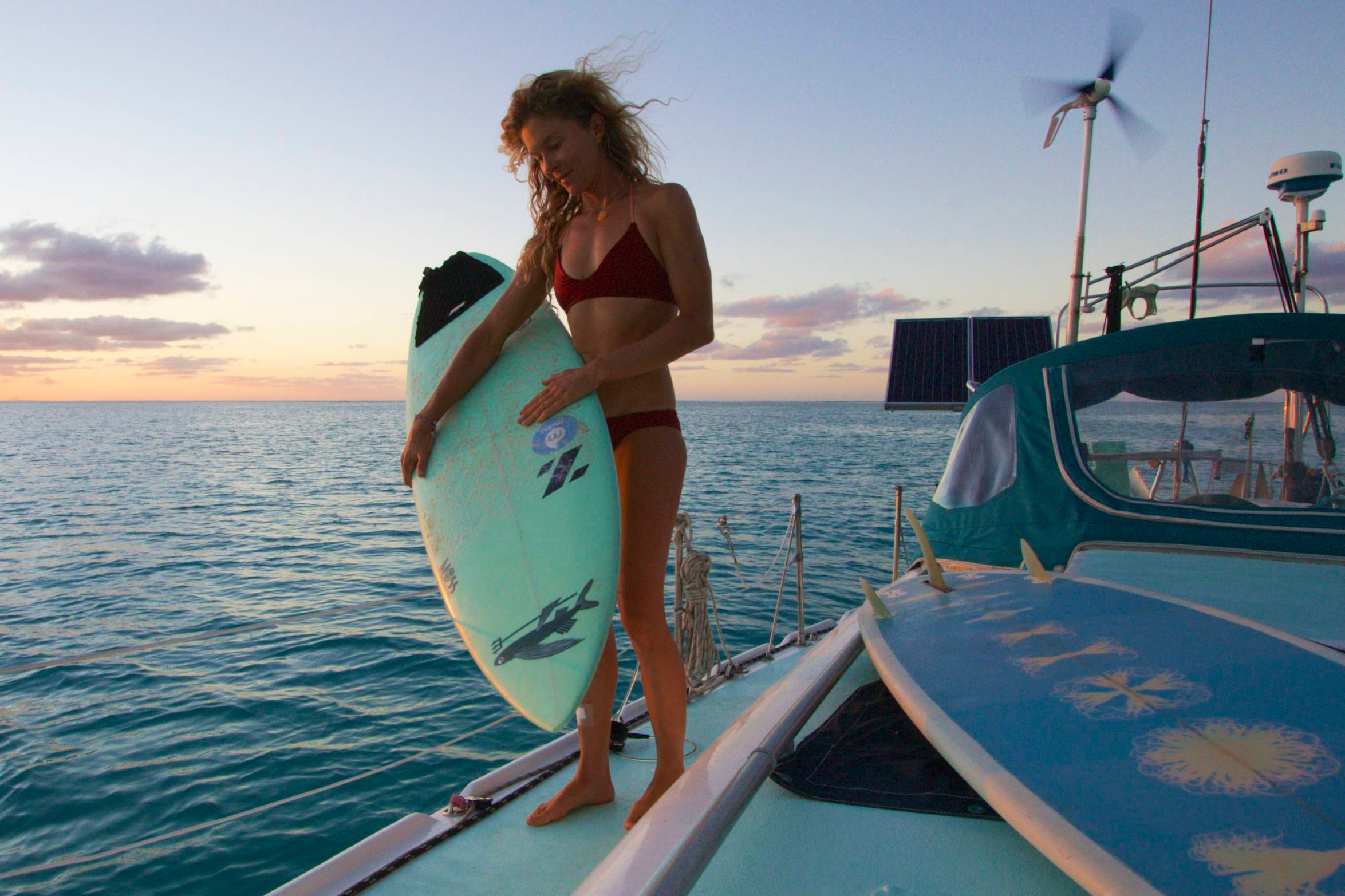
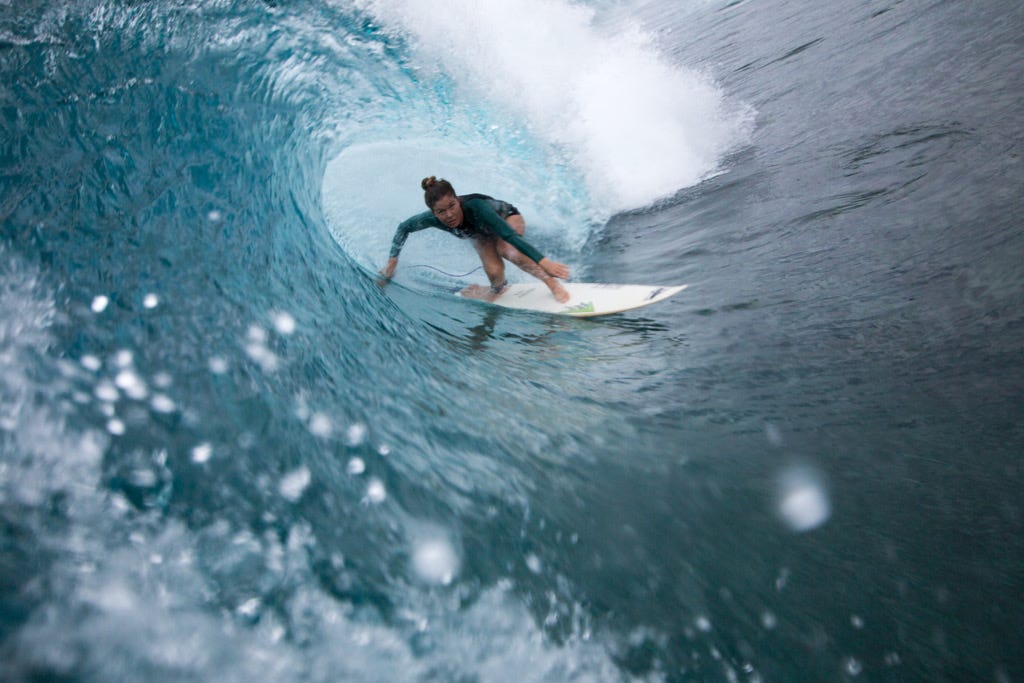
A universe apart from the $150 million, high-tech, Formula One speed-demon cult of the America’s Cup is Liz Clark and her Cal 40, Swell. Clark has been voyaging the Pacific, mostly solo, for the past fifteen-plus years, in search of meaning, alternatives to the planet-wrecking consumerist lifestyle, and tasty waves. Lots and lots of tasty waves.
I just finished her book, Swell: A Sailing Surfer’s Voyage Of Awakening. I didn’t really have any expectations for the book, but it totally surprised me. In fact, I’m going to just come out and say that it is one of the best contemporary voyaging journals I have read.
Clark is just in her mid-20s when she sets out, yet she overcomes endless setbacks—weather, boat problems, problem men, injuries—with an unyielding persistence and a relentless desire to learn and grow that is both moving and inspiring. She combines insightful descriptions of sailing, the oceanscape, and weather, with a Moitessier-like journey of the inner soul. And pulls it off. Despite her constant self-doubt, she is clearly a remarkable human being. That’s all I’ll say. Read it and see if you agree. Here’s a teaser:
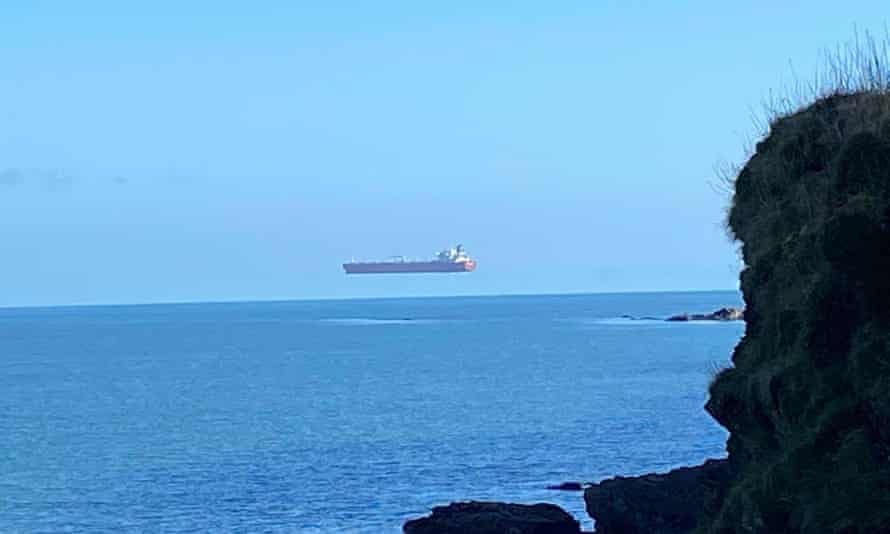
Moment of Zen: The Flying Ship
Wait? What? Here is an unedited photo, taken by a perplexed walker along the Cornish coast.
It is known as a “superior mirage,” and you can read about the effect and the photo here. Or you can skip the explanation and enjoy living in a world where enormous cargo ships float in the air.
If you would like to receive the latest Wetass Chronicles in your inbox when they are published, please subscribe here.
Um, after hopping onto to Substack to start a newsletter focused on the environment and how to live lighter, I realized that what I really wanted to do was start a newsletter that revived my very first blog, The Wetass Chronicles. So I did, and you can find it here.
It will be more personal, feature more sailing, cycling and the other outdoor adventures I like to have. And also include tips and data on how to live lighter.
This seemed like a better formula to me, so that’s where I am ending up, Substack-wise. Apologies for the wild swerving.
Over the years I have somewhat randomly dabbled in various social media platforms to share writing and stories. And as my interests evolve, what appears on this blog evolves. Nothing has appeared in a while, mostly because I have been trying to figure out what the &*^ to do next. After much self-reflection I have figured out an ambitious project that will once again reflect my interest in the dysfunctional relationship between Man and Nature. I am starting to develop that idea and will post about it when I have wrestled it under control.
In the meantime, I have also realized now is a good time to be more purposeful and organized about what I post on different platforms. In effect, it makes sense to me to create (trigger warning: digital media-speak imminent) different channels.
So….
This blog will start to feature more about sailing, voyaging, and adventuring (which is something the pandemic has helped me realize is important to sanity–also, in the way of all aging persons I feel a desire to circle back to an earlier life, in this case an earlier life in which being on the water was routine, and a source of great meaning and excitement to me).
I know. That is not something that most of you were here for. I understand. Stick around if you want to follow my efforts to sail and race boats, frequently solo or shorthanded, or embark on other adventures. I’ll do my best to keep it entertaining. But if your real interest is the planet, animal welfare, and how we live in a climate-impacted world, then I invite you over to the free newsletter I am starting on Substack (where all the cool kids are these days; though I am way too late to that party to be cool). I’ll write a couple of times a week, I think, about the sorts of things I used to write about here. Simple, right?
Finally, I’ll continue to use Twitter and my Facebook Page to keep posting links and thoughts about all the sorts of things I have long posted on those two platforms.
Oh, and one more thing. Mostly because I wanted to see what my teens are up to, and also understand how they manage to waste so much time every day, I created an Instagram profile. I didn’t really know what to do with it, but it gave me access to lots of people and organizations that are doing interesting things (so now I can waste time even more effectively). But it does lend itself to pics and videos of the outdoors, so that will kind of become my default social media channel for doing sh*t outdoors or on the water.
Option 1: Stay home and stress over incremental cable news updates about the election.
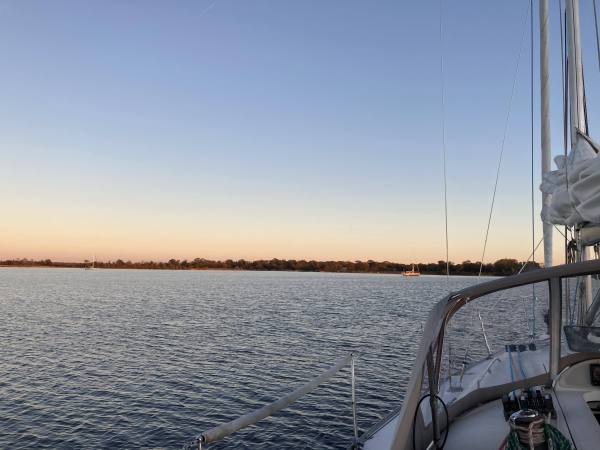
Option 2: Take advantage of a perfect November Indian Summer weather window and head out onto the Chesapeake Bay.
I chose….Option 2. And on Wednesday after Election Day, sailed over to Shaw Bay on the beautiful Wye River.
On a summer weekend there would be 30-plus boats in Shaw Bay
The only gabbling I heard was not on cable news, but above my head…
I guarantee they were not arguing about Biden vs. Trump…
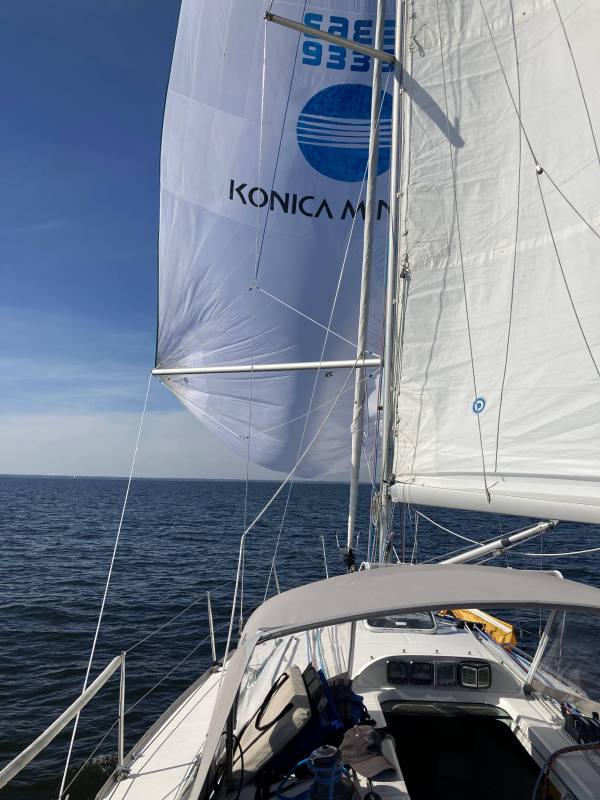
The next day I set off back across the Bay, headed for Harness Creek on the South River. Crossing the Bay, I finally got to fly a spinnaker solo. It worked.
I waited all summer to do this…
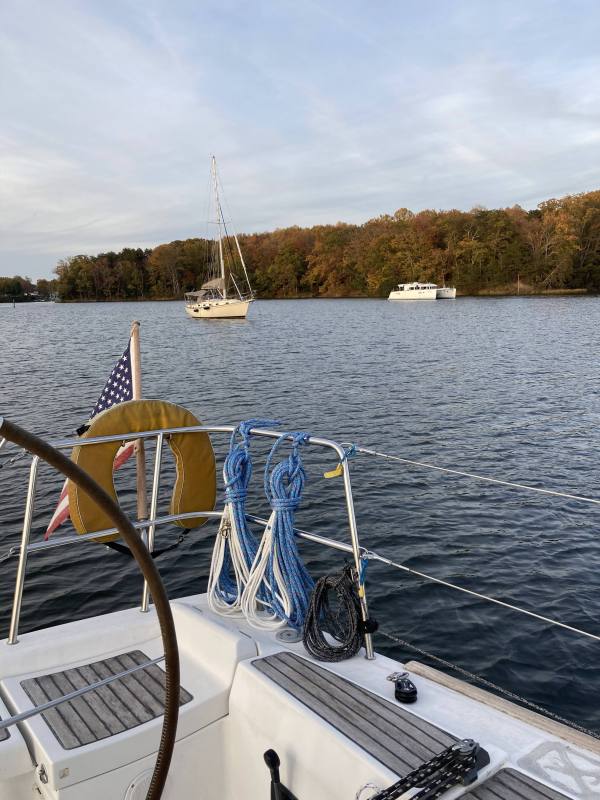
Harness Creek was also nearly empty. In warm weather there are usually rafts of powerboats blasting bad music. When you have the anchorage (almost) to yourself there is none more beautiful and relaxing.
It’s never like this…Or this…
I did check FiveThirtyEight’s live election updates every once in a while, and by Friday morning was starting to feel more re-assured. So I fried some toast, in honor of my Mother (who for some reason did that most days) and also because I don’t have a toaster on board.
I may do this more often…
And that was all I needed to feel re-charged and ready to return to the real world. There wasn’t much wind, but it was still a beautiful morning to be on the water.
Once I got home I discovered that the real world is still a little too (un)real, and that the breathless live election updates on cable news continued. No peace of mind yet. Sadly, it is now rainy and cold. So no new escape. But the last one was a good one.






 The Earthist Chronicles