The Exploitation Of Navy Dolphins

“Dude, I know you don’t have much for me to do, but spinning me in circles to research dizziness is ridiculous.”

I have long heard terrible tales of invasive and cruel research done by the US Navy’s marine mammal program. So it doesn’t really surprise me to know that the dolphins the US Navy is currently keeping in San Diego are also subject to invasive research that has little benefit to dolphins (as usual, Naomi Rose of the Animal Welfare Institute is on the case). From a CBS News 8 report:

Kept in pens on San Diego Bay for decades, the Navy dolphins have developed a number of chronic diseases similar to those in humans; diseases like kidney stones, liver disease, iron overload and prediabetes symptoms.

“The prevalence of these conditions in the Navy dolphin program is much higher than in the wild,” said Dr. Naomi Rose, a marine mammal scientist with the Animal Welfare Institute in Washington, DC.

Dr. Rose believes Navy dolphin research should be more about conservation than curing human diseases.

“If you’re going to keep them in captivity then the research you do with them has to have a direct, positive input into their conservation in the wild.  It has to be of value to (the dolphins),” Dr. Rose said.

Some of the research the NMMF conducts does, in fact, focus on conservation.  It can also be invasive to varying degrees.

In a 2016 study, dolphins were given cortisone – a hormonal steroid – to determine what levels can be measured in the animal’s blubber.  The study required up to nine blubber biopsies, obtained from the dolphins’ backs over five days.

“A cold pack was placed on the skin of the biopsy site for several minutes just prior to the biopsy procedure in order the numb the site,” the study’s researchers wrote.

“Two to three needle punches were required per sample to obtain sufficient blubber,” the study revealed.

Scientists also obtained daily fecal samples using a 15-inch catheter tube inserted into the animal’s anus.

In a 2008 study and another study in 2011, the Navy dolphins were subjected to near freezing water, in part, to find out if the animals could live in the frigid ocean waters of a Navy sub base in Washington State.

Over the course of ten days, the dolphins were monitored for indications of cold stress, such as increased respiration rate and shivering.

“They basically forced these animals into temperature conditions that were completely outside their physiological norm. All to justify moving them to this submarine base,” said Dr. Rose, referring to the 2008 study.

In a 2010 study, NMMF scientists used a feeding tube it force a gallon of seawater into the stomachs of Navy dolphins.  The purpose was to monitor osmoregulation – water and salt levels – in the dolphin’s body.

A catheter was placed into the dolphin’s bladder to obtain urine samples over a period of 25 hours.

Some of the dolphins objected to the procedure and the study on those animals was halted, according to the published paper.

“Objected.” That is a nice euphemism.

This is just one more example of the way in which animals, especially dolphins, are commoditized for human purposes. Animal welfare counts for little; human welfare counts for everything (though in this case the benefits aren’t even very clear).

The Navy dolphins are in some ways surplus, as their mine-hunting and other missions are increasingly supplanted by underwater drones and robots. But the Navy really doesn’t know what to do with them. That makes them a fat target for self-interested researchers who want to keep grant money rolling in regardless of whether the research is particularly useful or damaging to the dolphins. That’s messed up.
Video report here. And more from Naomi Rose here.

Animal Welfare Quote Of The Day

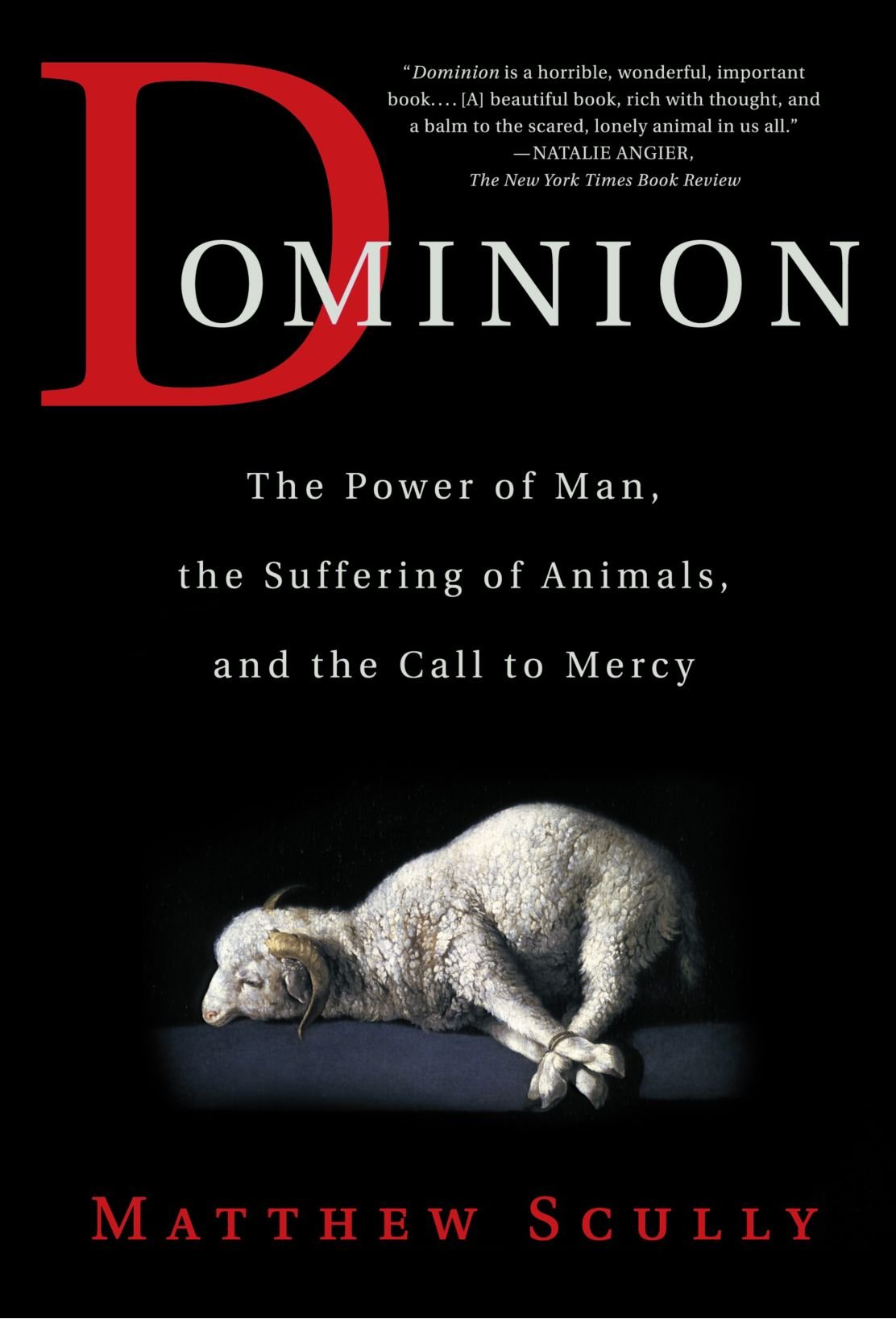
Another from my ongoing reading about morality and our treatment of animals, found in Matthew Scully’s Dominion. The quote is from Ecclesiastes 3:19-20, and perfectly captures the humility and sense of connection we need to see animals as worthy of moral consideration:

“For that which befalleth the sons of men befalleth beasts. Even one thing befalleth them: as the one dieth, so the other; yea, they have all one breath; so that a man hath no pre-eminence above a beast: for all is vanity. All go unto one place; all are of the dust, and all turn to dust again.

That puts it in some perspective, no?

Photo Of The Times: Realism Rather Than Romanticism

“Sewage Surfer.” Photo by Justin Hofman / Wildlife Photographer of the Year

This photo is both very sad and very powerful, and tells you all you need to know about what we are doing to our oceans. Fittingly, it is a finalist in the Wildlife Photographer Of The Year competition, and that is a good thing because it is important that wildlife photography do more to show things as they are instead of romanticizing a pristine and unspoiled natural world that no longer exists.

Here is the explanation of the photo provided by the UK Natural History Museum:

Hopping from one floating object to another, seahorses often hitch rides on currents and grasp onto ocean debris with their delicate tails.

But the subject of photographer Justin Hofman’s lens swam into trouble when it let go of a piece of seagrass and seized a thin piece of clear plastic. As a brisk wind picked up at the surface of a reef near Indonesia’s Sumbawa Island, the small swimmer’s ride became a rough one.

In search of a more stable raft, the seahorse then landed upon a waterlogged cotton bud that washed in on the incoming tide.

Indonesia is known for having the broadest selection of marine biodiversity in the world. But the country is also second only to China in its contribution to marine plastic – fuelling the growing concern that unnatural ocean waste could outweigh fish by 2050.

Justin not only captured the seahorse and its unnatural vehicle, but also murky water filled with debris.

Indonesia has pledged that by 2025 it will reduce the amount of waste being discharged into the ocean by 70%.

You can get more of the backstory of the photo, and comments from Justin Hofman, here. And follow Justin’s Instagram here.

Escaped Atlantic Salmon Dispersing Into The Pacific

Not a surprise (to me, anyhow), but Atlantic salmon that escaped as a result of the great Pacific Northwest fish spill have now been spotted more than 250 kilometers from the San Juan islands, the site of their collapsed net pens:

The non-native species of salmon have been reported as far north as Tofino on the west side of Vancouver Island and Campbell River on the island’s east side, according to Byron Andres, head of the federal Atlantic Salmon Watch program.

“Quite a distance. I’m not sure whether we should be surprised by that but they have travelled further than I initially anticipated,” Andres told Gregor Craigie, host of On the Island.

The Atlantic Salmon Watch program has been monitoring B.C. waters since 1991 and in that time has rarely logged confirmed sightings.

Between 2011 and 2017, there were only three confirmed reports of Atlantic salmon in B.C., with some appearing as far north as Hecate Strait and the Kitimat River. There had been zero reports in the three years leading up to the escape.

So now we monitor and try to assess what happens when you release hundreds of thousands of salmon from one ocean into an entirely different ocean. Exactly the sort of science project you get when you play Sorcerer’s Apprentice by manipulating and short-circuiting nature with the goal of farming lots of affordable salmon.

Here’s the audio for a fuller version of the story.

The Demand For Soybeans For Animal Feed Is Deforesting The Planet

The conversion of forest to field for soybeans is not news. But the use of drones is opening up a new perspective on this problem:

The hamburger chain Burger King has been buying animal feed produced in soy plantations carved out by the burning of tropical forests in Brazil and Bolivia, according to a new report.

Jaguars, giant anteaters and sloths have all been affected by the disappearance of around 700,000 hectares (1,729,738 acres) of forest land between 2011 and 2015.

The campaign group Mighty Earth says that evidence gathered from aerial drones, satellite imaging, supply-chain mapping and field research shows a systematic pattern of forest-burning.

Local farmers carried out the forest-burning to grow soybeans for Burger King’s suppliers Cargill and Bunge, the only two agricultural traders known to be operating in the area.

Mighty Earth’s devastating report can be found here. Perhaps it will help people connect their love of fast food and burgers to the changing face of the planet. Have to hope at least…

The Aftermath Of Harvey

A short, moving film on the impacts of Harvey, from the Washington Post.

(Irony watch: video is preceded by an ad from BP).

https://www.washingtonpost.com/video/c/embed/3f480b7c-93f1-11e7-8482-8dc9a7af29f9

Preach It, Guardian…

I think this is the first mainstream newspaper editorial I have seen advocating for veganism. With puns!

Vegans are often unreasonably mocked as do-gooders and sniped at for making dinner parties awkward for those who don’t like lentils quite so much. This is unfair: the diet does do the world good and if vegans provoke their friends into going vegan too, so much the better.

There is now a great deal of convincing data that breeding animals for food dirties the air and chews up the earth. One recent peer-reviewed study from the London School of Hygiene and Tropical Medicine calculates that should the world go vegan, annual greenhouse gas emissions would halve and the new land used every year for each person would near-halve. The diet is also healthier: some meat products have been linked to cancer and saturated fat from meat and dairy products can cause heart disease. A study published in Proceedings of the National Academy of Sciences of the USA predicts that global veganism would lead to 8.1 million fewer deaths per year.

Vegans should be encouraged: their choice is high in moral as well as digestive fibre. Their detractors should stop crying over spelt milk.

Okay, it is the Guardian newspaper, so very far to the progressive end of the mainstream. But still, on the edge of the mainstream. I am noting this as a milestone.

More Octopus Homagery

The latest paean in the recent gush of Octopus love. It is by now a legit genre in nature writing. Anyhow, this one in particular deserves some sort of prize for this lead:

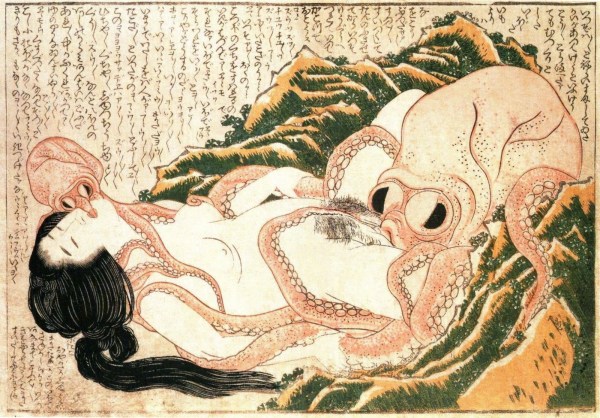
In 1815, 15 years before he made his most famous print, The Great Wave, Hokusai published three volumes of erotic art. In one of them there is a woodcut print known in English as ‘The Dream of the Fisherman’s Wife’ and in Japanese as ‘Tako to ama’, ‘Octopus and Shell Diver’. It depicts a naked woman lying on her back, legs spread and eyes closed, while a huge red octopus performs cunnilingus on her. The octopus’s slit eyes bulge between the woman’s legs and its suckered limbs wrap around her writhing body. A second, smaller octopus inserts its beak into the woman’s mouth while curling the thin tip of an arm around her left nipple. In Europe, the print was interpreted as a scene of rape, but the critics didn’t read Japanese. In the text arranged in the space around the three entwined bodies, the shell diver exclaims: ‘You hateful octopus! Your sucking at the mouth of my womb makes me gasp for breath! Ah! Yes … it’s … there! With the sucker, the sucker! … There, there! … Until now it was I that men called an octopus! An octopus! … How are you able? … Oh! Boundaries and borders gone! I’ve vanished!’

Ok, I’ll save you the trouble of Googling the Hokusai print (NSFW, obviously). I don’t put it here (purely) for prurience, but at least partly because it suggests at least one interesting, offbeat (and subconscious?) element to the seemingly endless human fascination with the highly intelligent, supremely sinuous, creature.

Fish Consumption and Collateral Damage (Round 2)

Crabcakes? No chickpea cakes. It’s just not that hard. (via: https://www.pinterest.com/cookitkind/)

Of course, another semi-obscure impact of fish consumption is the varied environmental impacts of fish farming, especially in net pens–recently highlighted by the escape of a few hundred thousand Atlantic salmon into Pacific Northwest waters.

Hakai magazine does a nice job of looking at better alternatives to net-pen aquaculture, and discovers that there are no easy answers:

Moving from marine- to land-based or closed-containment aquaculture is a decidedly uphill battle. Terrestrial systems can cost several times as much as sea pens. Even though net-pen farms are restricted to suitable coastal sites, the ocean provides space and water, and free access to water circulation. On land, a similar arrangement may work on a small scale, but be prohibitively expensive on a commercial scale.

Land operations have hidden costs, too, says Tony Farrell, an animal physiologist at the University of British Columbia. Existing terrestrial operations take a lot of energy and produce a lot of greenhouse gases, he says. “They will get better,” he says, but the development of new technologies should proceed in a “positive, but cautious, way.”

I once looked into the many impacts of fish consumption, and how to reduce the impact of eating fish if you give a damn. And while there are definitely better and worse ways to consume fish (the best I concluded is to stick to farmed mussels), I came away thinking it just seems easier to me to simply not eat fish. The impact of that choice is both positive and beneficial to the oceans in countless ways.

Is it really that hard to not eat salmon and tuna? I feel completely out of touch with consumers who feel that their desire to please their palates (yes, salmon is healthy, but there are other ways to eat healthy) outweighs all the profound impacts of fishing and aquaculture on the planet. Yes, that is a judgement. But the cold balance of logic just seems so clear to me.

Fishing’s Collateral Damage

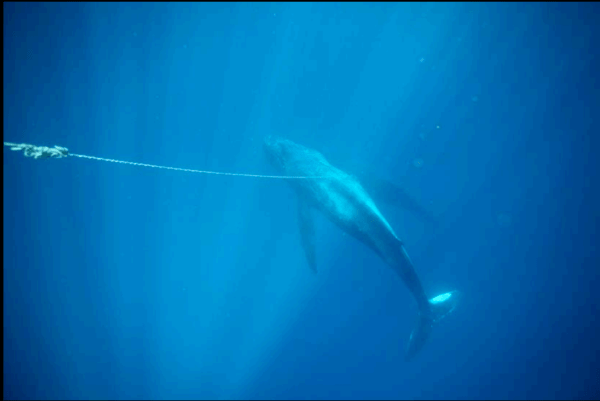
When people think of environmental impacts of fishing, they usually think about overfishing (which endangers fish stocks) and unintended bycatch (which is ridiculously wasteful). What should also be considered is all the fishing gear out there, either operative or drifting through the seas, that entangles marine mammals.

Entanglement is one of the major threats to large whale species (and turtles) and the numbers just keep going up (despite all the inspiring whale disentanglement videos you love on Facebook). It’s just one more problem with the human love of fish protein.

There are many places on the planet where human populations really do rely on the bounty of the sea to eat (though most of those fishing operations are more subsistence than industrial). But most of the entanglement damage is being done by fisheries that are feeding people who could easily choose not to eat fish. Sure, people like crab, lobsters, and swordfish. But they are a matter of taste and preference, not of nutritional requirement. At some point it is important to consider whether simple taste and culinary preferences are worth the collateral damage. Because they really aren’t.